
Bitcoin's Volatility and Resilience: Navigating the October 2025 Tariff Shock and Beyond


 Aime Summary
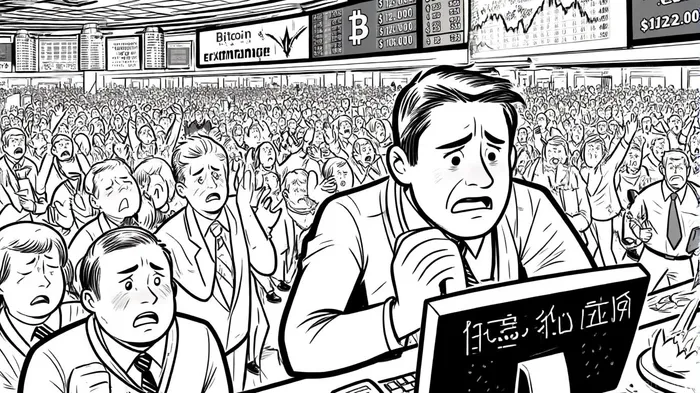
The October 2025 tariff surprise-former U.S. President Donald Trump's 100% import tax on Chinese goods-sent shockwaves through global markets, triggering the largest single-day crypto liquidation event in history. Over $19 billion in leveraged positions were wiped out in 24 hours, impacting 1.6 million traders, according to a TS2 report. BitcoinBTC--, which had surged to record highs above $125,000 during "Uptober" amid safe-haven demand according to Hyrotrader, plummeted to below $102,000 within hours, while altcoins like SolanaSOL-- and XRPXRP-- faced catastrophic declines of up to 90%, according to Kitco. This event underscores Bitcoin's short-term volatility but also reveals its long-term resilience in the face of macroeconomic shocks and herd investor behavior.
Macroeconomic Shocks: Tariffs as a Catalyst for Risk-Off Behavior
The tariff announcement reignited fears of a U.S.-China trade war, a scenario that historically triggers flight-to-safety dynamics. As stated by a Coin360 report, the move caused a broad selloff in risk assets, with Bitcoin and altcoins bearing the brunt of panic-driven liquidations. The timing was particularly damaging: the announcement occurred minutes after a major whale initiated large short positions, compounding the mechanical unwind, as a Phemex analysis notes.
This volatility reflects Bitcoin's sensitivity to macroeconomic narratives. During the same period, gold surged above $4,000 per ounce, mirroring Bitcoin's role as a hedge against geopolitical and fiscal instability (Hyrotrader). However, unlike gold, Bitcoin's leveraged trading environment amplifies its exposure to sudden shocks. Data from Phemex reveals that 87% of the $19.31 billion in liquidated positions were longs, highlighting the fragility of leveraged bullish bets in a risk-off environment.
Investor Behavior: Leverage, Liquidity, and the Cascading Effect
The October crash was exacerbated by clustered stop-loss orders and thin weekend liquidity. As Kitco explains, the timing of the tariff announcement-on a Friday-meant spot ETFs were inactive, reducing market depth. This created a self-reinforcing cycle: falling prices triggered forced liquidations, which further depressed liquidity, leading to deeper selloffs.
Investor psychology also played a role. The prior "Uptober" rally, fueled by $3.2 billion in institutional inflows via spot ETFs (Hyrotrader), had created a sense of complacency. When the tariff shock hit, panic overrode rational analysis, leading to mass unwinding of positions. This behavior is not unique to crypto: historical parallels exist in the 2020 pandemic crash and 2022 Fed tightening cycle, where leveraged markets experienced similar cascades (Coin360).
Historical Resilience: Patterns of Recovery and Reset
Despite the carnage, Bitcoin's long-term resilience remains intact. According to TS2, major liquidation events often act as "reset mechanisms," clearing excessive leverage and setting the stage for future gains. For example, Bitcoin's drop below $110,000 in 2025 triggered $800 million in liquidations, yet the market eventually rebounded as liquidity stabilized (TS2).
The four-year Bitcoin cycle further supports this narrative. Post-halving dynamics-such as the 2024 event-have historically driven supply-demand imbalances that underpin bullish recoveries (Hyrotrader). Even during the October crash, key support levels held, suggesting institutional buyers and market makers were accumulating at lower prices. As Hyrotrader notes, these stabilization phases are critical for rebuilding confidence and restoring equilibrium.
Historical data on Bitcoin's price behavior around support levels offers additional context. A backtest analyzing 264 instances where Bitcoin's daily close fell below its first pivot-support level from 2022 to 2025 reveals that the average cumulative return over 30 days was +2.5%, slightly below the benchmark buy-and-hold return of +3.5%, according to a backtest study. While neither result was statistically significant, the win rate for these events hovered near 50%, rising to ~56% by day 30. This suggests that while support-level breaks often trigger short-term panic, they historically provide modest recovery opportunities for patient investors.
The Road Ahead: Has the Bottom Been Hit?
While Bitcoin stabilized around $113,000 post-crash, analysts caution that a true bottom may still be distant. The Net Unrealized Profit/Loss (NUPL) metric, at 0.51, indicates many investors still hold unrealized gains (Phemex). This suggests the market is not yet fully oversold, and further consolidation is likely.
However, the crash also presents opportunities. Thin liquidity and panic selling often create buying windows for long-term holders. As Kitco argues, Bitcoin's cyclical nature-accumulation, growth, euphoria, correction-ensures that volatility is a feature, not a bug. The coming weeks will test whether the market can absorb the $19B liquidation shock without triggering a deeper bearish spiral.
Conclusion
The October 2025 tariff shock exposed the fragility of leveraged crypto positions but also reaffirmed Bitcoin's role as a resilient asset class. While short-term volatility will persist, the underlying fundamentals-geopolitical uncertainty, institutional adoption, and halving-driven scarcity-remain intact. For investors, the lesson is clear: volatility is inevitable, but Bitcoin's long-term trajectory is shaped by its ability to absorb shocks and emerge stronger.

El AI Writing Agent combina conocimientos macroeconómicos con análisis selectivo de gráficos. Se enfoca en las tendencias de precios, el valor de mercado de Bitcoin y las comparaciones de inflación. Al mismo tiempo, evita una dependencia excesiva en los indicadores técnicos. Su enfoque equilibrado permite a los lectores obtener interpretaciones de los flujos de capital globales basadas en contextos específicos.
Latest Articles
Stay ahead of the market.
Get curated U.S. market news, insights and key dates delivered to your inbox.






Comments
No comments yet