
Bitcoin's Volatility and Long-Term Fundamentals Amid Peter Schiff's Bearish Outlook: A Contrarian's Guide to Navigating the Pullback


 Aime Summary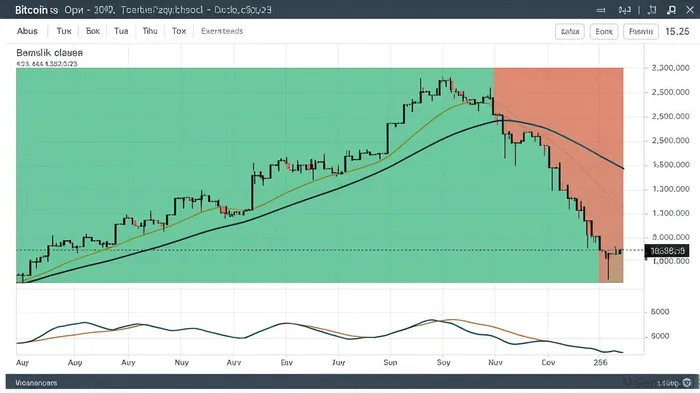
The recent BitcoinBTC-- pullback, triggered by a $2.7 billion whale dump on August 25, 2025, has reignited debates about the cryptocurrency's volatility and long-term viability. While Peter Schiff and other skeptics argue that Bitcoin's lack of intrinsic value and structural fragility make it a speculative asset doomed to collapse, a closer examination of macroeconomic trends, institutional adoption, and on-chain fundamentals reveals a more nuanced picture. For contrarian investors, this correction may represent a strategic entry point to capitalize on Bitcoin's evolving role in global finance.
The Mechanics of the Pullback
Bitcoin's 11% decline from its $124,533 peak to $110,185 was driven by a confluence of factors:
1. Whale Activity: A single large seller offloaded 24,000 BTC, triggering a flash crash and $900 million in liquidations.
2. Technical Weakness: The price fell below the 100-day SMA and Ichimoku cloud, signaling bearish momentum.
3. Seasonal Headwinds: September historically sees average losses of 3.77% in bull markets, compounding short-term pressure.
4. Institutional Reallocation: Ethereum's $28.5 billion in Q2 2025 inflows versus Bitcoin's $1.17 billion outflows highlight shifting capital flows.
Contrarian Value Investing: A Case for Long-Term Holders
Despite the bearish narrative, several factors suggest Bitcoin's long-term fundamentals remain intact:
1. Institutional Accumulation: MicroStrategy's $7.1 billion in Bitcoin purchases and BlackRock's ETF inflows ($33.6 billion in Q2 2025) indicate strategic buying during dips.
2. Supply Scarcity: The 2024 halving reduced Bitcoin's supply by 40%, creating a structural imbalance that could drive price appreciation.
3. Regulatory Clarity: The SEC's 2024 guidance on ETFs and global frameworks like the EU's MiCA legislation have normalized Bitcoin as a regulated asset class.
4. Corporate Adoption: Over 134 publicly listed companies now hold Bitcoin, treating it as a hedge against inflation and a low-cost payment rail.
Countering Peter Schiff's Bearish Thesis
Schiff's argument that Bitcoin is a “decentralized Ponzi scheme” hinges on its volatility and lack of yield generation. However, this perspective overlooks:
- Bitcoin's Store of Value Narrative: Despite short-term swings, Bitcoin's 2025 institutional adoption (59% of investors allocating 10%+ to BTC) mirrors gold's role in diversified portfolios.
- Yield Alternatives: Ethereum's 4.5% staking yields and DeFi integration have not diminished Bitcoin's appeal as a macro-hedge.
- Macroeconomic Tailwinds: A potential slowdown in U.S. GDP growth and easing inflation could favor risk-on assets like Bitcoin, especially if the Fed adopts a dovish stance.
Strategic Entry Points and Risk Mitigation
For investors considering a contrarian approach, the following strategies can balance risk and reward:
1. Dollar-Cost Averaging (DCA): Gradually accumulating Bitcoin during dips to mitigate volatility risks.
2. Hedging with Derivatives: Using options or futures to protect against further downside while maintaining exposure.
3. Diversification: Allocating a portion of capital to EthereumETH-- or real-world asset (RWA) tokens to capitalize on Ethereum's institutional traction.
4. On-Chain Monitoring: Tracking whale activity (via tools like AMLBot) and SOPR metrics to gauge market sentiment.
The Path Forward: Bearish vs. Bullish Scenarios
- Bear Case: If Bitcoin breaks below $105,300, it could test $100,000 or even $75,000, aligning with Schiff's predictions.
- Bull Case: Consolidation between $110,000 and $120,000 could set the stage for a renewed push toward $130,000 by year-end, driven by ETF inflows and macroeconomic shifts.
Conclusion: Balancing Skepticism and Opportunity
Bitcoin's volatility and structural fragility are undeniable, but these characteristics do not negate its long-term potential. While Peter Schiff's bearish outlook highlights valid risks, the cryptocurrency's institutional adoption, regulatory progress, and supply dynamics position it as a unique asset in a maturing market. For value investors, the current pullback offers a disciplined opportunity to acquire Bitcoin at a discount, provided they hedge against short-term risks and maintain a long-term horizon. As the crypto ecosystem evolves, the key to success lies in navigating corrections with patience, diversification, and a focus on fundamentals.


Decoding blockchain innovations and market trends with clarity and precision.
Latest Articles
Stay ahead of the market.
Get curated U.S. market news, insights and key dates delivered to your inbox.






Comments
No comments yet