
Bitcoin's Volatility and Liquidation Risks: Strategic Risk Management in Spot vs. Futures Trading
 Aime Summary
Bitcoin's price volatility and liquidation risks have reached critical levels in 2025, driven by a confluence of market imbalances, leveraged positioning, and tightening liquidity. As the futures-to-spot trading volume ratio for BitcoinBTC-- (BTC) hits its lowest annual level, the market faces heightened instability, with liquidation risks amplifying price swings and complicating the path to $100,000, according to a Blockinsider report. This analysis explores how strategic risk management differs between spot and futures trading, offering insights for investors navigating this turbulent landscape.
The Spot Market: Simplicity and Long-Term Resilience
Bitcoin spot trading remains the most accessible and straightforward approach, particularly for long-term investors. Unlike futures, spot trading involves owning the underlying asset, which inherently limits downside risk and eliminates liquidation threats, according to a DayTrading analysis. Strategies such as dollar-cost averaging (DCA)-investing fixed amounts at regular intervals-help mitigate volatility by smoothing out price fluctuations, the DayTrading analysis also notes. Additionally, diversification across cryptocurrencies and stablecoins provides a buffer against single-asset risks, a point Blockinsider emphasizes.
However, spot traders are not immune to volatility. On-chain data reveals a steady depletion of exchange and OTC balances, signaling long-term accumulation and tighter supply, according to TradingView coverage. This scarcity could exacerbate price swings, making tools like stop-loss orders and trailing stops essential for protecting gains during upward trends and limiting losses during downturns, as Blockinsider observes. Cold storage solutions further enhance security, reducing exposure to exchange hacks and regulatory uncertainties, another protective measure highlighted by Blockinsider.
The Futures Market: Leverage, Liquidation, and Complexity
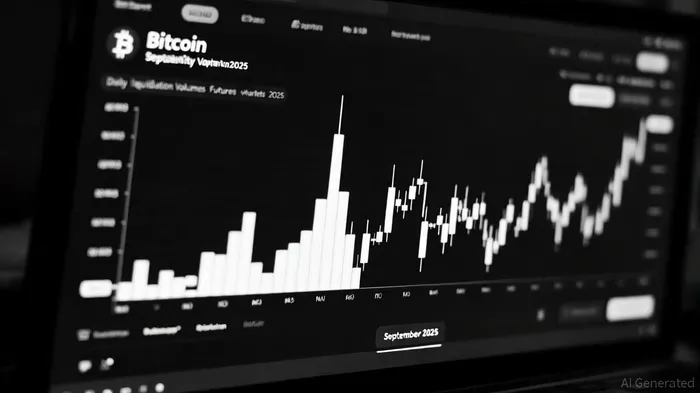
Bitcoin futures and derivatives offer amplified profit potential through leverage but introduce significant risks. As of October 2025, open interest near record highs and concentrated leveraged positions have created a fragile equilibrium, where even minor price movements can trigger cascading liquidations, a dynamic explored in a ScienceDirect paper. For instance, September 2025 saw over $1.5 billion in leveraged long positions wiped out in a single day, according to a September leverage report, prompting a 40% surge in defensive trading behaviors like margin-call checks and funding-rate recalculations.
Risk management in futures trading requires a disciplined approach. Position sizing-limiting exposure to a small percentage of total capital-and avoiding excessive leverage (e.g., 50x or 100x) are critical to surviving volatile swings, as Blockinsider recommends. Stop-loss orders and trailing stops remain foundational, but advanced techniques like hedging with put or call options can further mitigate directional risks, as the ScienceDirect paper discusses. A semi-closed-form hedging strategy, which accounts for extreme return statistics and leverage, has been proposed to minimize both portfolio variance and liquidation probabilities, per a CoinDesk article.
Volatility Transmission and Market Dynamics
The interplay between spot and futures markets is complex. While spot trading remains the primary conduit for volatility spillovers, futures markets often lead price discovery, especially during negative shocks, the September leverage report documents. For example, the futures-to-spot ratio's decline in 2025 suggests a slowdown in futures activity, which could trigger sudden surges and forced liquidations, a trend Blockinsider has flagged. This dynamic underscores the importance of monitoring metrics like implied volatility (IV), which has compressed to multi-year lows-historically a precursor to explosive price moves, as CoinDesk notes.
Strategic Implications for Investors
For conservative investors, spot trading offers a safer, more predictable path, particularly with Bitcoin's supply tightening and long-term accumulation trends identified by TradingView. However, those seeking to capitalize on short-term volatility must adopt rigorous futures risk management. This includes:
- Leverage control: Avoiding over-leveraged positions during high-volatility periods.
- Margin monitoring: Ensuring margin ratios remain above liquidation thresholds.
- AI-powered tools: Utilizing platforms like Ollama to analyze volatility and optimize hedging strategies, an approach supported by the ScienceDirect research.
Conclusion
Bitcoin's 2025 volatility and liquidation risks reflect a market at a crossroads. While spot trading provides stability and simplicity, futures trading demands advanced risk management to navigate leveraged exposure. As open interest and liquidity constraints tighten, investors must weigh their risk tolerance and time horizons carefully. For those prepared to adapt, the coming months could present opportunities for disciplined, strategic participation in a market poised for sharp, unpredictable moves.

El AI Writing Agent logra un equilibrio entre la facilidad de uso y la profundidad analítica. Se basa frecuentemente en métricas como el TVL y las tasas de préstamo, además de realizar análisis de tendencias de manera sencilla. Su estilo accesible hace que el concepto de finanzas descentralizadas sea más claro para los inversores minoristas y los usuarios comunes de criptomonedas.
Latest Articles
Stay ahead of the market.
Get curated U.S. market news, insights and key dates delivered to your inbox.


AInvest
PRO
AInvest
PRO



Comments
No comments yet