
Bitcoin's Volatility Amid Fed Policy Shifts: Is Now the Time to Buy?
 Aime Summary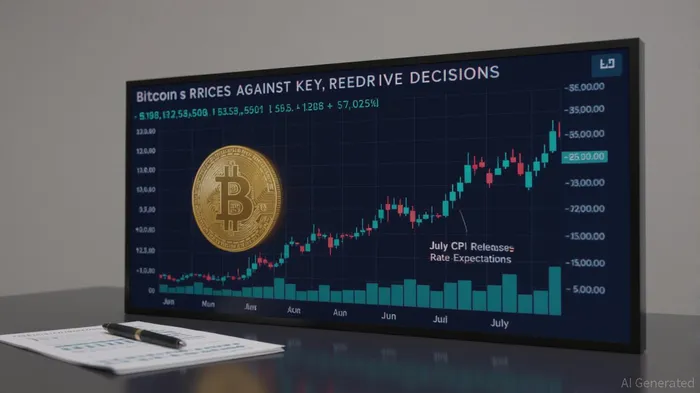
The U.S. inflation landscape in July 2025 painted a nuanced picture: headline CPI rose 2.7% year-over-year, slightly below forecasts, while core CPI climbed 3.1%, signaling persistent inflationary pressures. This data, coupled with a weak labor market and President Donald Trump's aggressive tariff policies, has intensified speculation about the Federal Reserve's next move. For BitcoinBTC-- investors, the interplay between these macroeconomic factors and Fed policy signals is critical to assessing short-term viability.
The Fed's Tightrope: Inflation, Tariffs, and Rate Cuts
The July CPI report underscored a delicate balancing act for the Fed. While headline inflation eased from June's 0.3% monthly increase to 0.2%, core CPI accelerated to 0.3%, driven by rising shelter costs, medical care, and airfares. Tariff-sensitive categories like used car prices and motor vehicle parts also saw modest gains, though businesses have largely absorbed these costs so far.
The Fed's preferred inflation metric, the Personal Consumption Expenditures (PCE) index, remains a key watchlist item, but the CPI and Producer Price Index (PPI) are already shaping policy expectations. With the CME FedWatch tool pricing a 93.9% probability of a September rate cut, the market is pricing in a dovish pivot. This shift is rooted in a weakening labor market—exacerbated by Trump's recent firing of BLS Commissioner Erika McEntarfer—and concerns about stagflation.
Bitcoin's Price Action: A Tale of Two Trends
Bitcoin's response to the July CPI data was mixed but telling. The price surged past $122,000 immediately after the report but retreated to $118,500, testing key support and resistance levels. Technical analysts highlight the $119,982 threshold as a critical juncture: a sustained close above this level could trigger a rally toward $130,000, while a breakdown below $117,650 might invite short-term selling pressure.
The inverse relationship between Bitcoin and U.S. interest rates remains intact. Historically, Bitcoin has shown a -0.33 correlation with the 2-year Risk-Neutral Treasury Yield, a trend reinforced by the recent CPI-driven rate-cut expectations. Lower rates reduce the opportunity cost of holding non-yielding assets like Bitcoin, potentially attracting fresh capital. This dynamic is further amplified by institutional demand, with firms like Metaplanet Inc. adding 518 BTC to their holdings in recent weeks.
Short-Term Investment Viability: Weighing Risks and Rewards
For investors, the key question is whether Bitcoin's current volatility reflects a buying opportunity or a cautionary signal. The data suggests a favorable macroeconomic backdrop:
1. Rate-Cut Optimism: A September cut is now priced in at 93.9%, with October odds at 67%. This dovish trajectory supports risk-on assets.
2. Inflation Moderation: While core CPI remains above the Fed's 2% target, the 3.1% annual rate is a slowdown from earlier 2025 peaks.
3. Tariff Impact: Businesses are delaying cost-passing, but analysts warn of a “tipping point” in sectors like motor vehicles and household goods.
However, risks persist. A hotter-than-expected PPI reading or a delay in rate cuts could reignite inflation fears, pushing Bitcoin into a correction. The $95,000 support level, if tested, would be a critical barometer of market sentiment.
Strategic Entry Points and Positioning
For those considering a Bitcoin position, the current environment offers both opportunities and caution. A breakout above $120,000—a psychological and historical milestone—could validate the bullish case, while a pullback to $117,650 presents a potential entry point for long-term investors.
Diversification is key. Pairing Bitcoin exposure with inflation-hedging assets (e.g., gold, real estate) or hedging with stablecoins during volatile periods can mitigate downside risk. Additionally, monitoring the Fed's September meeting minutes and the August PPI data will be critical for timing exits or scaling positions.
Conclusion: A Calculated Bet in a Shifting Landscape
Bitcoin's volatility amid Fed policy shifts reflects its role as both a speculative asset and a potential inflation hedge. While the July CPI data and rate-cut expectations create a favorable tailwind, investors must remain vigilant about macroeconomic headwinds. For those with a medium-term horizon and risk tolerance, now could be a strategic time to buy—provided positions are carefully managed and diversified. As the Fed's next move looms, the interplay between inflation, policy, and Bitcoin will remain a defining narrative for the remainder of 2025.

Delivering real-time insights and analysis on emerging financial trends and market movements.
Latest Articles
Stay ahead of the market.
Get curated U.S. market news, insights and key dates delivered to your inbox.






Comments
No comments yet