
Bitcoin's Recent Volatility: Is This a Buying Opportunity or a Warning Sign?


 Aime Summary
Bitcoin's recent price swings in November 2025 have reignited debates about whether the cryptocurrency is entering a cyclical bottom or facing a deeper correction. A 5.49% drop in 24 hours, pushing the price to $95,383 before stabilizing above $96,000,
coincided with the Bitcoin Fear and Greed Index plummeting to 15-a level classified as "Extreme Fear." This sharp sell-off, however, must be contextualized within broader macroeconomic shifts and regulatory developments that are reshaping the crypto landscape.
Market Psychology: Extreme Fear as a Historical Indicator
The BitcoinBTC-- Fear and Greed Index has long served as a barometer of investor sentiment. At 15, the index
reflects a level of panic not seen since February 27, 2025, when it hit 10 amid a multi-week selloff. Historically, such extreme fear readings have often aligned with local market bottoms. For instance, the index's previous dip to 24 in late October 2025 and its current trajectory suggest that retail and institutional investors are increasingly capitulating to short-term losses.
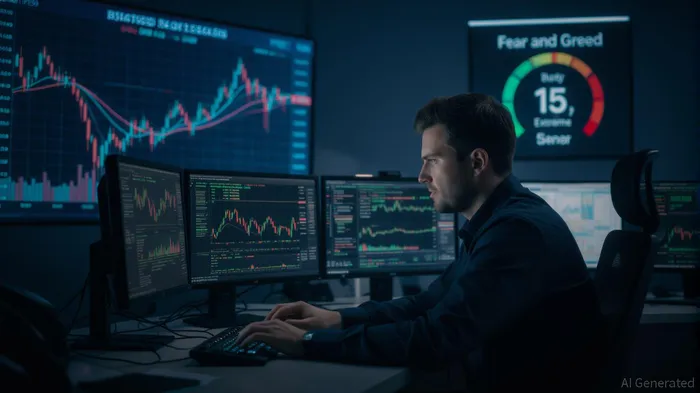 This psychological dynamic is critical for assessing the current dip. When fear dominates, selling pressure tends to peak, and contrarian investors often view such levels as entry points. However, the key question remains: Is this capitulation a sign of a temporary correction, or does it reflect a broader loss of confidence in Bitcoin's long-term narrative?
Macroeconomic Catalysts: Fed Policy and Liquidity Dynamics
The recent volatility cannot be divorced from macroeconomic developments. The Federal Reserve's decision to reject a potential December rate cut-despite cooling inflation and rising unemployment-
triggered a 2% decline in the Nasdaq and exacerbated Bitcoin's sell-off. This move underscored the central bank's prioritization of inflation control over market stability, creating a ripple effect across risk assets.
Yet, the Fed's broader policy trajectory in November 2025 has
shifted toward quantitative easing (QE), a stark contrast to the earlier quantitative tightening (QT) regime. This pivot aims to inject liquidity into financial markets, which could eventually support risk assets like Bitcoin. Additionally, the end of the October 2025 federal government shutdown
injected $226 billion in fiscal stimulus into the economy, with $87 billion in credit creation by the banking sector further bolstering liquidity. These developments suggest that the macroeconomic environment may soon tilt in favor of a Bitcoin rebound.
Regulatory and Structural Risks
While the Fed's accommodative pivot offers hope, structural risks persist. Rising Treasury yields and tightening liquidity conditions continue to weigh on investor risk appetite. Moreover, the synchronized outflows observed in both traditional and crypto markets
highlight Bitcoin's heightened sensitivity to macroeconomic shifts. Regulatory uncertainty-though not explicitly flagged in late 2025-remains a wildcard, as policymakers globally grapple with how to balance innovation and investor protection.
Strategic Outlook: Buying Opportunity or Cautionary Tale?
The interplay of market psychology and macroeconomic catalysts presents a nuanced picture. On one hand, the Fear and Greed Index's extreme fear readings historically precede rebounds, and the Fed's shift to QE could provide a tailwind for Bitcoin in the coming months. On the other, the synchronized nature of the sell-off and lingering macroeconomic headwinds (e.g., inflationary pressures, liquidity constraints) suggest that the path to recovery may be protracted.
For investors, the dip raises a critical strategic question: Should they capitalize on fear-driven undervaluation, or wait for clearer signs of macroeconomic stabilization? Given the historical precedent of extreme fear levels acting as bottoms and the Fed's dovish trajectory, a measured entry into Bitcoin at current levels could be justified. However, position sizing and risk management remain paramount, as the market's sensitivity to macroeconomic news could prolong volatility.
Conclusion
Bitcoin's November 2025 volatility reflects a confluence of psychological panic and macroeconomic uncertainty. While the Fear and Greed Index signals a potential inflection point, the broader economic environment-marked by Fed policy shifts and fiscal stimulus-adds complexity to the outlook. For long-term investors, this dip may represent a buying opportunity, but it demands a disciplined approach to navigate the inherent risks of a market still grappling with macroeconomic headwinds.

Stay ahead of the market.
Get curated U.S. market news, insights and key dates delivered to your inbox.






Comments
No comments yet