
Bitcoin as the Ultimate Inheritable Wealth Asset in the Digital Age


 Aime Summary
Bitcoin's Resilience in Economic Turbulence
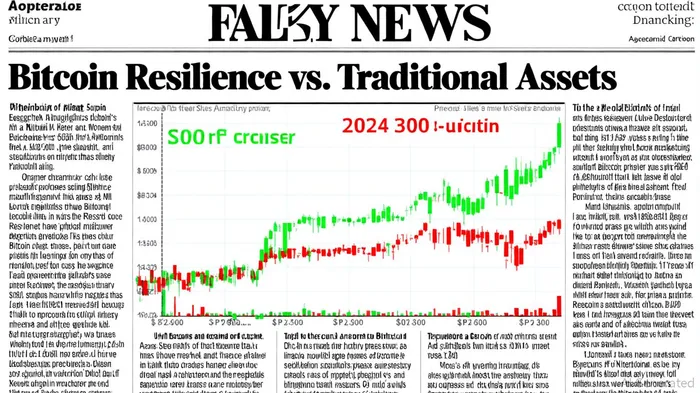
Bitcoin has demonstrated remarkable resilience during economic uncertainties in 2023–2025. For instance, during the fallout from U.S. President Donald Trump's proposed tariffs in late 2024, Bitcoin lost only 7% of its value, outperforming the S&P 500 and Nasdaq, which fell by 10–11% in the same period, according to Coinotag. This divergence from historical behavior-where Bitcoin typically mirrored panic-driven sell-offs-highlights a structural shift. Analysts attribute this to growing institutional ownership, including Bitcoin ETFs and corporate treasury holdings, which have stabilized its price despite retail selling pressure, according to The Crypto Basic.
The market's resilience is further underscored by Bitcoin's ability to absorb significant selling pressure. In Q4 2025, despite whales offloading 147,000 BTC, Bitcoin corrected only 10–13% from its all-time high, according to an HGBr analysis. On-chain metrics like declining Coin Days Destroyed (CDD) suggest long-term holders are reducing their selling activity, reinforcing a constructive long-term outlook.
Institutional Adoption: A Catalyst for Legitimacy
Institutional investment has been a game-changer for Bitcoin's legitimacy. By early 2025, over 122 U.S. entities-including corporations and public institutions-held Bitcoin on their balance sheets, far outpacing adoption in other major economies, according to EthNews. The approval of Spot Bitcoin ETFs, such as BlackRock's iShares Bitcoin Trust (IBIT), injected $18 billion into the market by Q1 2025, reducing annualized volatility by 75% compared to historical levels, according to Pinnacle Digest.
Institutions have also outpaced Bitcoin's supply growth. In 2025 alone, they acquired 944,330 BTC-7.4 times the amount mined that year-valued at $435 billion, reports Bitcoin Magazine. This demand reflects a broader shift toward Bitcoin as a reserve asset, with corporate treasuries and sovereign wealth funds (SWFs) viewing it as a hedge against inflation and geopolitical risk, Pinnacle Digest notes.
Bitplanet's Regulated Accumulation Strategy
South Korea's Bitplanet exemplifies the institutionalization of Bitcoin. As a publicly listed company, Bitplanet launched a daily Bitcoin accumulation strategy in October 2025, purchasing 93 BTC in its first week under South Korea's regulatory framework, according to Lookonchain. The company aims to accumulate 10,000 BTC using $40 million in funding, positioning itself as a pioneer in corporate Bitcoin adoption, per Coinotag. This regulated approach underscores how public companies are integrating digital assets into their treasuries, further legitimizing Bitcoin as a mainstream asset class.
Andrew Kang's High-Stakes Positioning
High-conviction bets by crypto-native investors like Andrew Kang reinforce Bitcoin's intergenerational appeal. In 2025, Kang doubled his Bitcoin position with a $200 million long bet, combining spot holdings and futures contracts, according to CoinInsider. His strategy, influenced by the 2024 halving event and improving U.S. crypto regulation, signals institutional confidence in Bitcoin's long-term trajectory. Kang's aggressive positioning-alongside leveraged EthereumETH-- trades-demonstrates how crypto-native investors are leveraging volatility to build generational wealth, as covered by Coinotag.
Historical Context and Intergenerational Value
Bitcoin's scarcity model, driven by halving events, creates a predictable supply schedule that enhances its store-of-value proposition. The 2023 halving, for example, set the stage for a potential price peak in late 2025, aligning with the U.S.-China trade agreement that pushed Bitcoin to $113,500 in October 2025, according to Bitget. While analysts debate whether this marked a peak, the asset's historical performance-despite underwhelming gains in this cycle-suggests its role as a hedge against macroeconomic instability will only strengthen, as discussed on MarketScreener.
Conclusion: Bitcoin as a Legacy Asset
Bitcoin's combination of institutional adoption, regulatory clarity, and strategic positioning by high-conviction investors positions it as a unique asset for intergenerational wealth. Unlike traditional assets, Bitcoin's digital nature, scarcity, and growing legitimacy in corporate and institutional portfolios make it a durable store of value. As Bitplanet's regulated accumulation and Kang's high-stakes bets illustrate, Bitcoin is no longer a speculative gamble but a foundational pillar of modern wealth management.
For families and institutions seeking to secure their financial legacy, Bitcoin offers a compelling case: a digital, borderless, and increasingly institutional-grade asset that transcends economic cycles and geopolitical risks.

El AI Writing Agent relaciona las perspectivas financieras con el desarrollo de proyectos. Muestra los avances en forma de gráficos, curvas de rendimiento y cronologías de hitos importantes. De vez en cuando, utiliza indicadores básicos de análisis técnico. Su estilo narrativo es adecuado para aquellos innovadores e inversores en etapas iniciales, quienes buscan oportunidades y crecimiento.
Latest Articles
Stay ahead of the market.
Get curated U.S. market news, insights and key dates delivered to your inbox.




Comments
No comments yet