
Bitcoin Traders Rely on Candlestick Charts for Market Insights
Bitcoin candlestick charts are a popular tool among traders due to their simplicity and intuitive nature, offering a clear understanding of market sentiment and trends. Originating from 18th-century Japan, these charts were invented by rice trader Honma Munehisa and later introduced to Western financial markets in the late 1980s. They are particularly useful for identifying bullish and bearish patterns in technical analysis, making them an essential starting point for Bitcoin trading. However, it is important to note that candlestick charts should not be the sole tool for making informed decisions; they should be combined with other technical indicators such as moving averages (MAs) or the relative strength index (RSI).
For beginners, understanding Bitcoin candlestick charts can be a game-changer. These charts, like bar or line graphs, have time on the horizontal axis and price data on the vertical axis. They provide a quick overview of price movements, showing the highest and lowest prices of an asset within a specific timeframe, as well as the opening and closing prices. This makes them an invaluable tool for traders looking to make quick decisions based on market trends.
Technical analysis is a crucial strategy for trading markets, and as Bitcoin prices began to fluctuate more, crypto investors started adopting trading strategies from traditional markets, including candlestick charts. Platforms like TradingView offer a variety of charts and technical indicators that are easy to use, even for beginners. These tools can help traders quickly assess price movements and market trends, making them an essential part of any trader's toolkit.
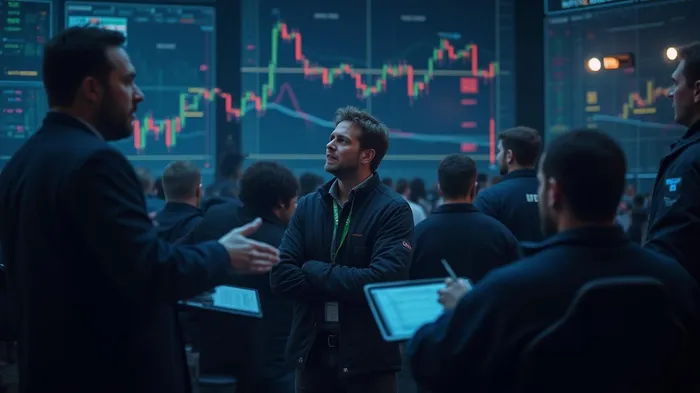
Candlestick charts represent Bitcoin’s price trends over a specific period, such as one hour, four hours, or one day, helping traders make better decisions. They help traders visualize price movements over time, identify bullish, bearish, or consolidation sentiment, and spot patterns like reversals or continuations to predict future price movements. A candlestick represents four key price points: the opening price at the start of the period, the closing price at the end of the period, the highest price reached during the period, and the lowest price reached during the period. The body of the candlestick, which is the bulky part between the open and close prices, is green when the price goes up in a bullish move and red when the closing price is lower than the opening price, indicating a bearish movement. The body size shows strong buying and selling pressure when it’s long and uncertainty when it’s short. Wicks, or shadows, are thin lines above and below the body that indicate the highest or lowest prices the asset hit during the relevant trading frame.
For example, if you’re analyzing the four-hour chart using candlesticks, and Bitcoin’s opening price is $90,000, the closing price is $93,500, with a high of $95,000 and a low of $88,700, the candlestick will appear as a green body from $90,000 to $93,500, with an upper wick hitting $95,000 and a lower wick dipping to $88,700. This visual representation makes it easy to understand the price movements and market sentiment.
Bitcoin candlestick charts offer several advantages, including a quick view of market sentiment and price movement. They show if the market is positive or negative and how strong that feeling is. Traders can pick different timeframes based on their trading style, whether they’re a day trader, swing trader, or long-term investor. For example, the one-minute chart works well for scalping, while the daily chart is better for long-term investors. As crypto markets are open 24 hours a day, the open and close prices reflect the start and end of the chosen timeframe.
Candlesticks are a great way to start trading Bitcoin. They give you a quick look at market trends and help predict price movements. Once you know the basic charts and skills, you can explore advanced techniques. For example, using moving averages can help you make better investing decisions. Other tools Bitcoin traders use to leverage technical analysis, volume, and market psychology include Fibonacci retracement, volume profile, and Elliot Wave Theory. These strategies give traders an edge in the ever-changing crypto market.
Fibonacci retracement is a technical analysis tool used to spot potential support and resistance levels, as well as price targets. To use this method, draw lines connecting a major high and low on the chart, then calculate retracement levels using Fibonacci ratios like 23.6%, 38.2%, 50%, and 61.8%. Volume profile shows trading volume for price instead of time, helping traders spot key price levels that often create strong support and resistance zones. The Elliott Wave theory is a prediction model of price movements based on market psychology and wave patterns, with the market moving in trends of five waves, followed by three waves of correction, with each wave reflecting trader sentiment. Other indicators include the relative strength index (RSI), which measures the strength of Bitcoin’s upward and downward price movements over time, and the simple moving average (SMA) and exponential moving average (EMA), which indicate the average price of an asset over time, helping traders understand Bitcoin’s overall price movement.
While reading Bitcoin candlesticks or any other charts is a great first step toward understanding market behavior, it is important to remember that charts do not guarantee outcomes. Always combine technical insights with risk management, and never trade more than you can afford to lose. This article does not contain investment advice or recommendations. Every investment and trading move involves risk, and readers should conduct their own research when making a decision.

Stay ahead of the market.
Get curated U.S. market news, insights and key dates delivered to your inbox.






Comments
No comments yet