
Bitcoin's Sudden Slide: Is This a Buying Opportunity or a Deeper Crisis?


 Aime Summary
Market Psychology: Fear, Panic, and the Fear & Greed Index
Bitcoin's November 2025 slide has been exacerbated by a toxic mix of extreme fear and herd behavior. The Crypto Fear & Greed Index hit 11/100-a level not seen since the 2022 bear market-highlighting the depth of investor pessimism. This metric reflects a classic panic-driven sell-off, where traders, spooked by macroeconomic uncertainty and regulatory ambiguity, liquidate positions to mitigate losses.
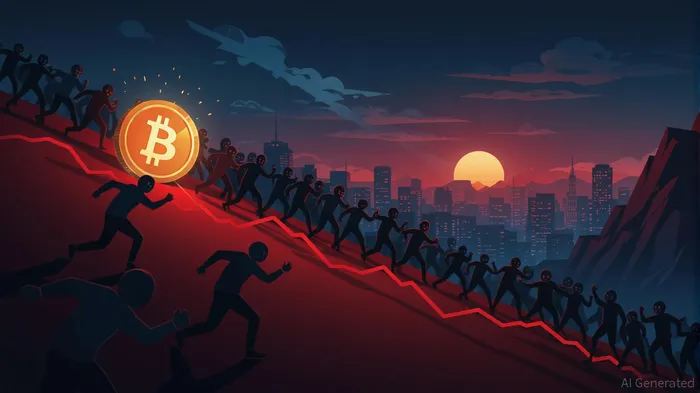
Historical patterns reinforce this dynamic. During the 2022 Terra/LUNA collapse and the February 2025 BitcoinBTC-- crash, loss aversion and the anchoring effect led investors to overreact to negative news, selling at troughs despite long-term fundamentals remaining intact. The current environment mirrors these cycles, with social media amplifying FOMO (fear of missing out) during rallies and panic during dips. For instance, Strategy (MSTR), a major Bitcoin treasury company, continued bulk purchases in November, yet its stock plummeted 60% as investors focused on short-term losses rather than strategic accumulation.
However, psychological extremes often create asymmetric opportunities. When sentiment reaches extreme fear, contrarian investors historically find value, as seen in 2017 and 2021, when Bitcoin rebounded sharply after periods of panic. The study shows that fear and panic moves decide market cycles. The question is whether this time is different-or if the market is simply repeating its cyclical script.
Macroeconomic Vulnerabilities: Fed Policy, Liquidity, and Correlation Risks
Bitcoin's price action in 2025 has been inextricably linked to Federal Reserve policy. The Fed's shift from quantitative tightening (QT) to quantitative easing (QE)-set to begin in January 2026-has created a dual-edged sword for crypto. While QE is expected to inject liquidity into risk assets, potentially boosting Bitcoin, the delayed transition has left markets in limbo.
In November 2025, the Fed's rate-cutting cycle and delayed employment data (due to a 43-day government shutdown) have heightened uncertainty. Bitcoin's 13.5% weekly drop in November was partly driven by fears that the Fed might delay rate cuts to combat inflation, which, though cooling from 7% in 2022 to 2.6% in mid-2025, remains a concern. This uncertainty has amplified Bitcoin's correlation with traditional markets, where it currently shares a 0.6–0.7 correlation with equities during volatility. The data shows that Bitcoin's price correlates with macroeconomic indicators.
The macroeconomic risks extend beyond policy. Bitcoin's role as a hedge against fiat devaluation-bolstered by its fixed 0.78–0.83% inflation rate-is being tested as investors weigh the Fed's prolonged inflation risks. Cleveland Fed President Beth Hammack has warned that rate cuts to support the labor market could prolong inflation, creating a "risk-on" environment that favors Bitcoin but at the cost of financial stability. The warning suggests that rate cuts may prolong inflation.
Is This a Buying Opportunity? A Balancing Act
The case for a strategic entry point hinges on two factors:
1. QE-Driven Liquidity: The Fed's planned QE in 2026 could revive risk appetite, historically benefiting Bitcoin. For example, the 2021 rally coincided with Fed asset purchases, and similar dynamics may reemerge.
2. ETF Inflows and Institutional Demand: July 2025's ETF-driven surge to $118,000 demonstrated institutional adoption's power. If macroeconomic clarity returns, such inflows could reaccelerate.
Yet the risks are equally pronounced:
- Prolonged Volatility: Without clear regulatory frameworks or Fed guidance, Bitcoin may remain a "barometer" of macroeconomic fears, prone to sharp corrections.
- Delayed Data Risks: The absence of October/November employment data until December 16 leaves investors in the dark, increasing the likelihood of abrupt market swings.
For long-term investors, the current price (around $91,000) may represent a discounted entry if macroeconomic stability materializes. However, those with shorter time horizons or low risk tolerance should tread cautiously, as the market remains vulnerable to further shocks.
Conclusion: A Crossroads for Bitcoin
Bitcoin's November 2025 slide is a collision of psychological panic and macroeconomic uncertainty. While the Fed's policy pivot and Bitcoin's inflation hedge appeal offer hope for a rebound, the path forward is fraught with risks. Investors must weigh the allure of discounted prices against the potential for prolonged volatility.
For now, the market is in a wait-and-see mode, with the December 16 jobs report and January 2026 QE launch serving as critical inflection points. Until then, Bitcoin's price will likely remain a barometer of both Fed policy and investor sentiment-a volatile but potentially rewarding test of patience.

Delivering real-time insights and analysis on emerging financial trends and market movements.
Latest Articles
Stay ahead of the market.
Get curated U.S. market news, insights and key dates delivered to your inbox.






Comments
No comments yet