
Bitcoin's Sudden Drop: A Volatility Warning or a Buying Opportunity?


 Aime Summary
Macroeconomic Triggers: Central Banks and Liquidity Pressures
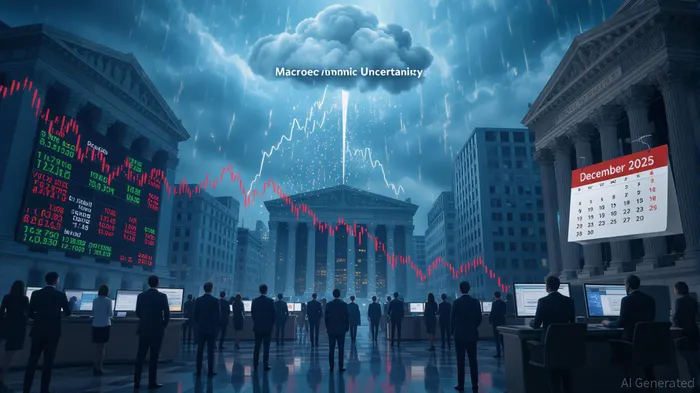
The Federal Reserve's recent signaling has been a primary catalyst. For months, markets had priced in a near-guaranteed rate cut by December 2025, but the Fed's pivot toward ambiguity-stemming from stubborn inflation and a resilient labor market-has created uncertainty. This hesitancy has fueled a risk-off sentiment, disproportionately impacting BitcoinBTC-- and other high-beta assets. Compounding this, the Bank of Japan's hints at a potential rate hike in December reignited fears of the unwinding of the yen carry trade, a move that historically amplifies global market volatility.
Liquidity concerns have further exacerbated the decline. Bitcoin's order book depth has shrunk significantly, leaving the market vulnerable to large trades and shocks. Meanwhile, outflows from Bitcoin ETFs and fears of forced selling by large holders-such as digital asset treasury companies-have added downward pressure. These factors highlight a fragile ecosystem where even minor shifts in macroeconomic expectations can trigger cascading sell-offs.
The December Fed Pivot: A Potential Catalyst
The coming weeks will be pivotal, with the Federal Reserve's December 1 speech by Chair Jerome Powell and the official end of its quantitative tightening (QT) program serving as key inflection points. The end of QT, which had reduced the Fed's balance sheet from nearly $9 trillion to $6.6 trillion, could inject liquidity into markets, historically benefiting risk assets like Bitcoin. Analysts estimate an 87.6% chance of a rate cut at the December 10 meeting, contingent on data like the November ADP Employment Report and PCE inflation figures.
Optimism is further fueled by speculation that Kevin Hassett, a self-described dove, could be nominated as the next Fed chair. Such a shift might accelerate easing in 2026, providing a tailwind for Bitcoin's price recovery. Notably, figures like Tom Lee and Cathie Wood have argued that a dovish Fed stance could trigger a rapid rebound, driven by pent-up buyer demand.
Market Sentiment: Fear vs. Optimism
Despite these potential catalysts, market sentiment remains fragile. Bitcoin's technical breakdown-falling below critical support levels-has intensified fears of a deeper bearish trend. Additionally, increased inflows to exchanges have raised concerns about further selling pressure, reminiscent of the October 10 liquidation event. The broader market environment, dominated by AI-driven optimism and worries about an overvalued tech bubble, has also contributed to a cautious stance.
However, history suggests that Bitcoin's volatility often precedes sharp recoveries. The current decline, while painful, may be testing the resilience of institutional investors and ETF structures. If the Fed delivers on its easing promises, liquidity improvements could stabilize sentiment and reignite buying interest.
Conclusion: Navigating the Crossroads
Bitcoin's sudden drop reflects a complex interplay of macroeconomic uncertainty and liquidity fragility. While the risks-such as the unwinding of the yen carry trade and forced selling by large holders-remain significant, the potential for a Fed-driven liquidity boost in December offers a compelling counterpoint. Investors must weigh these factors carefully: the drop could either signal a deeper bearish phase or present a strategic entry point for those comfortable with short-term volatility.
As the December 1 speech and QT end loom, the coming days will be critical in determining whether this correction marks a turning point or a continuation of the bearish trend. For now, the market remains at a crossroads, where macroeconomic clarity-or lack thereof-will dictate Bitcoin's next move.

Blending traditional trading wisdom with cutting-edge cryptocurrency insights.
Latest Articles
Stay ahead of the market.
Get curated U.S. market news, insights and key dates delivered to your inbox.






Comments
No comments yet