
Bitcoin as a Strategic National Reserve: The Philippines' Bold Move and Its Implications for Global Crypto Markets


 Aime Summary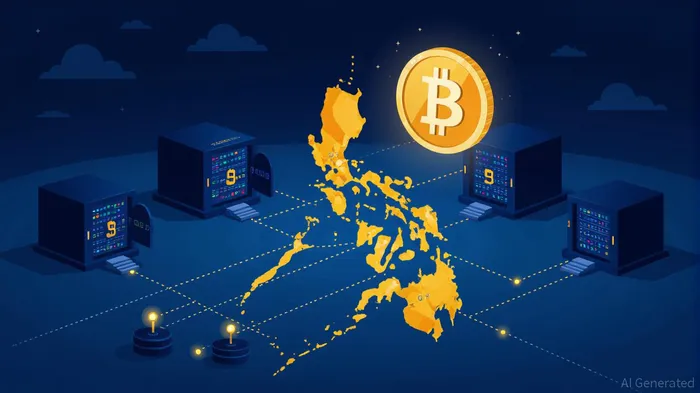
In August 2025, the Philippines made headlines with a bold proposal that could redefine the future of global finance. Congressman Miguel Luis Villafuerte introduced House Bill No. 421, the Strategic BitcoinBTC-- Reserve Act, aiming to establish a sovereign Bitcoin reserve of 10,000 BTC over five years. This move positions the Philippines as a trailblazer in Southeast Asia and a key player in a global shift toward digital assets as central bank reserves. For investors, this initiative is not just a political gamble—it's a signal of Bitcoin's growing legitimacy as a high-conviction, inflation-resistant store of value.
The Global Trend: From Gold to Bitcoin
The Philippines' proposal is part of a broader trend where governments are rethinking their reserve strategies. As of 2025, 11 countries collectively hold 480,196 BTC, or 2.29% of Bitcoin's total supply. The U.S. leads with 198,022 BTC, followed by China (190,000 BTC) and the U.K. (61,245 BTC). These nations are not merely speculating—they're hedging against the fragility of fiat currencies, which have expanded at alarming rates since 2020. The U.S. public debt alone now exceeds $36 trillion, or 123% of GDP, while global M2 money supply has surged by over 50% in five years.
Bitcoin's fixed supply of 21 million coins makes it a stark contrast to fiat's infinite inflation potential. Unlike gold, which requires physical storage and has limited utility in digital transactions, Bitcoin offers programmability, verifiability, and near-instant global transferability. This has led central banks and sovereign wealth funds to view Bitcoin as a modern-day “digital gold”—a hedge against both inflation and geopolitical risk.
The Philippines' Economic Rationale: A 20-Year Play
The Philippines' 10,000 BTC reserve is designed to be a long-term asset, with the Bangko Sentral ng Pilipinas (BSP) acquiring 2,000 BTC annually and holding it in cold storage for at least 20 years. This lock-up period ensures Bitcoin is treated as a strategic reserve rather than a speculative tool. The reserve can only be liquidated in limited scenarios, such as retiring sovereign debt, and no more than 10% of the holdings can be sold every two years.
This approach mirrors the U.S. Strategic Bitcoin Reserve (SBR), which aims to acquire 1 million BTC by 2027. Both initiatives reflect a recognition that Bitcoin's scarcity and decentralization make it a superior hedge against fiat devaluation. For the Philippines, which has a national debt of $285 billion and a domestic debt-to-GDP ratio of 68%, diversifying reserves into Bitcoin could reduce reliance on U.S. dollars and gold, which are vulnerable to geopolitical tensions and inflation.
Bitcoin's Performance: Outpacing Gold and Fiat
From 2020 to 2025, Bitcoin has demonstrated its value as an inflation-resistant asset. Its annualized return of 165% far outpaces gold's 7.6% and U.S. Treasuries' near-zero yields. During the same period, Bitcoin's price closely tracked global M2 money supply growth, reflecting investor concerns about fiat devaluation. In contrast, gold's role as a safe-haven asset is being challenged by Bitcoin's technological advantages—its divisibility, portability, and programmability.
The 2024 Bitcoin Halving, which reduced blockXYZ-- rewards to 3.125 BTC, further reinforced its scarcity narrative. As supply growth slows, demand from institutions and sovereigns is accelerating. By 2025, corporate holdings of Bitcoin had surpassed 1 million BTC, with firms like MicroStrategy and TeslaTSLA-- allocating billions to their treasuries. This institutional adoption, coupled with the launch of U.S. spot Bitcoin ETFs, has normalized Bitcoin as a legitimate asset class.
Implications for Investors: Positioning for the Next Phase
The Philippines' initiative signals a critical inflection point for Bitcoin. For institutional investors, the move validates Bitcoin's role in diversified portfolios. A 4% allocation to Bitcoin can improve a portfolio's Sharpe ratio, offering superior risk-adjusted returns. Retail investors, too, should consider Bitcoin as a long-term hedge against fiat erosion. With the Philippines joining the U.S., China, and others in sovereign accumulation, Bitcoin's supply-side tightening could drive further price appreciation.
However, risks remain. Bitcoin's volatility, regulatory uncertainty, and limited adoption for settlement are hurdles. Yet, the Philippines' emphasis on transparency—quarterly audits and public disclosures—addresses many of these concerns. By treating Bitcoin as a 20-year asset, the country is signaling confidence in its long-term value.
Conclusion: A New Era of Sovereign Reserves
The Philippines' Strategic Bitcoin Reserve Act is more than a national policy—it's a catalyst for global adoption. As central banks and sovereigns increasingly allocate to Bitcoin, the asset's market cap could surpass gold's $10 trillion by the end of the decade. For investors, this represents a unique opportunity to position for a future where digital assets redefine financial stability.
In a world of infinite money printing and geopolitical uncertainty, Bitcoin's finite supply and decentralized nature make it the ultimate store of value. The Philippines' bold move is a testament to this reality—and a call to action for investors to embrace the next phase of Bitcoin's journey.

Decoding blockchain innovations and market trends with clarity and precision.
Latest Articles
Stay ahead of the market.
Get curated U.S. market news, insights and key dates delivered to your inbox.


AInvest
PRO
AInvest
PRO



Comments
No comments yet