
Bitcoin Could See Strategic Government Purchases and Institutional Staking Expansion in 2026
 Aime Summary
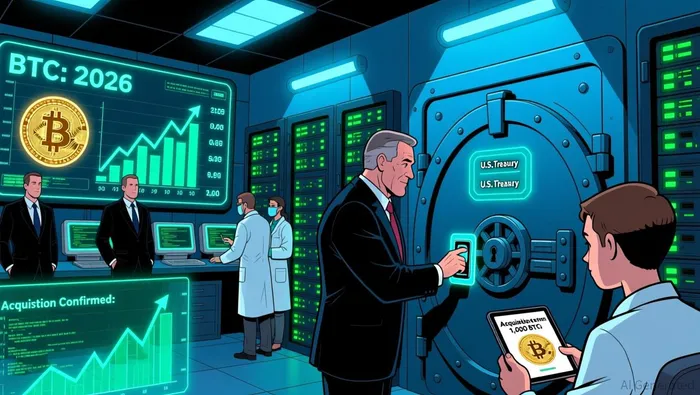
The U.S. government may move beyond using seized bitcoinBTC-- and start purchasing BTC actively, potentially reinforcing its scarcity value and influencing the market according to Bitcoin Magazine.
Bitcoin price forecasts for 2026 range from $75,000 to $225,000, with regulatory clarity and macroeconomic conditions cited as key factors as reported by CNBC.
Institutional staking capabilities are expanding, with CoinbaseCOIN-- and Figment now supporting staking across multiple Proof-of-Stake networks according to Blockworks.
The possibility of the U.S. government purchasing bitcoin is gaining attention as a potential policy shift. Cathie Wood suggests this could be part of a broader digital asset strategy, especially as the supply of bitcoin nears 20 million out of 21 million as reported by Bitcoin Magazine.
Such a move could signal increased legitimacy for bitcoin as a strategic asset class and may influence market dynamics.
Price volatility continues to be a dominant factor in the bitcoin market, with analysts citing a range of outcomes for 2026. Some predictions are optimistic, with a peak of $225,000, while others remain cautious, forecasting a lower bound of $75,000 as CNBC reports.
These variations reflect the impact of macroeconomic trends, interest rate decisions, and regulatory developments.
Institutional infrastructure is evolving to support a broader adoption of digital assets. Coinbase and Figment's expanded partnership allows institutional clients to stake tokens on multiple blockchain networks without moving assets according to Blockworks.
This development is significant as it enhances both security and decentralization for institutional investors.
Will Government Policy Influence Bitcoin's Market Value in 2026?
The U.S. government's potential to purchase bitcoin is being viewed as a strategic and symbolic move. Cathie Wood highlights that this could go beyond holding seized BTC and involve active purchases to build a national reserve according to Bitcoin Magazine.
Such a development might reinforce the perception of bitcoin as a scarce digital asset, potentially impacting its valuation.
Government actions are often market-moving events, and a shift in policy toward active BTC purchases could serve as a catalyst for broader adoption and institutional interest.
This could also align with Trump's broader pro-crypto stance, which includes creating a digital asset stockpile and a bitcoin reserve as reported by Bitcoin Magazine.
What Institutional Staking Developments Are Emerging in 2026?
Coinbase and Figment's integration of multi-chain staking is a significant step for institutional investors. This allows clients to stake across multiple Proof-of-Stake networks without transferring assets out of Coinbase's custody platform according to Blockworks.
This expansion supports a range of assets including SolanaSOL--, EthereumETH--, and others, offering institutions greater flexibility and security in managing their staking portfolios.
Such partnerships are indicative of a growing institutional confidence in the digital asset ecosystem. By providing a seamless interface for staking, trading, and financing, Coinbase is addressing the operational needs of institutional asset managers according to Blockworks.
What Are the Key Drivers of Bitcoin's Price Volatility in 2026?
Bitcoin price forecasts for 2026 are wide-ranging, influenced by macroeconomic conditions, regulatory clarity, and institutional adoption as CNBC reports.
Factors such as interest rate changes, the regulatory environment under the current administration, and the potential impact of the Clarity Act are being closely watched by investors.
Lower interest rates and a more favorable regulatory environment have boosted investor sentiment. However, risks remain, including inflation, Fed policy errors, and geopolitical uncertainties as CNBC reports.
These factors highlight the complexity of predicting bitcoin's price trajectory and the importance of diversified investment strategies.
As the market continues to evolve, investors are encouraged to adopt gradual and process-driven approaches to buying bitcoin according to Yahoo Finance.
This includes strategies like dollar-cost averaging, position sizing, and avoiding overexposure to mitigate the risks of market volatility.
The broader financial landscape is also changing, with fintech companies like Stripe and PayPal expanding their focus on cryptocurrency as reported by Yahoo Finance.
This shift reflects a broader industry trend toward blockchain-based financial tools, signaling the integration of digital assets into mainstream financial systems.
JPMorgan's expansion of its JPM Coin to multiple blockchain networks is another indicator of the growing acceptance of digital assets according to CoinDesk.
This move aims to enhance interoperability and support broader adoption among institutional users, further cementing the role of blockchain in modern finance.
Digital finance is becoming more mainstream, with regulated stablecoins and tokenized assets gaining traction. However, experts warn of the risks of fragmentation and regulatory challenges as reported by South China Morning Post.
The development of interoperable systems aligned with clear regulatory and use-case objectives will be critical for successful adoption in 2026.
As the crypto market continues to mature, security remains a top priority. Historical crashes have highlighted the importance of self-custody and cold wallet storage according to OSL.
To mitigate risks, investors are advised to use hardware wallets, verify addresses, and manage seed phrases securely.
Address validation is a foundational control in blockchain payments, helping to prevent transaction errors and reduce operational costs as CryptoAPIs reports.
This process ensures that wallet addresses are correctly formatted for the intended blockchain network before funds are sent.
The rise of crypto in global travel is also notable, offering instant cross-border payments and eliminating traditional banking fees as reported by YDR.
This shift is reshaping the travel industry by providing financial control and convenience for travelers, with crypto-friendly destinations integrating blockchain technology into their ecosystems.

Blending traditional trading wisdom with cutting-edge cryptocurrency insights.
Latest Articles
Stay ahead of the market.
Get curated U.S. market news, insights and key dates delivered to your inbox.
AInvest
PRO
AInvest
PRO



Comments
No comments yet