
Bitcoin Slides to $65,000 in Weekend Sell-Off, With Solana, XRP, Dogecoin Down 6%
 Aime Summary
Bitcoin fell below $65,000 in a weekend sell-off, marking a significant decline in a market already reeling from macroeconomic pressures. The price dip reflects sustained selling pressure, ETF outflows, and uncertainty around regulatory developments according to price analysis. Altcoins like SolanaSOL--, XRPXRP--, and DogecoinDOGE-- saw declines of over 6%, amplifying the market's volatility as reported.
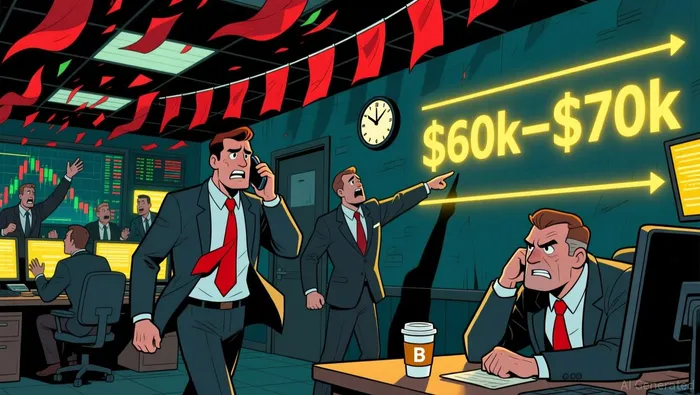
The selloff coincides with deteriorating conditions in U.S. equity markets, where the S&P 500 and Nasdaq 100 have also declined. This broader risk-off trend has spilled over into the crypto space, with BitcoinBTC-- trading in a $60,000–$70,000 range.
Bitcoin's recent behavior challenges its narrative as a store of value, as it has moved in tandem with broader risk assets. This suggests that investors are reevaluating their expectations for regulatory clarity and institutional adoption.
Why Did This Happen?
Bitcoin's price dip is driven by cascading selling pressure from macroeconomic events, ETF outflows, and geopolitical tensions. Institutional investors are repositioning, and the market's correlation with broader risk assets is evident.
The U.S. core PPI data increased by 0.8% in January, signaling persistent inflationary pressure. This development likely delays potential Fed rate cuts, affecting risk assets such as cryptocurrencies.
Another factor is the ongoing geopolitical tensions, particularly between the U.S. and Iran. These tensions have shifted investor preferences toward gold, which has gained 17% year-to-date, while Bitcoin's market cap has fallen.
How Did Markets React?
Bitcoin ETFs have seen $3.8 billion in outflows over five consecutive weeks, with delays in the CLARITY Act adding to uncertainty. This trend reflects a broader macroeconomic unease and a risk-off market environment.
Altcoins have experienced steeper declines than Bitcoin. For instance, XRP dropped from a peak of $3.65 in July 2025 to $1.35, erasing all gains since Trump's election. Open interest in XRP has fallen from $10.94 billion to $2.29 billion, indicating a liquidation event.
Institutional price predictions remain bullish, with forecasts from Standard Chartered, Bernstein, and NexoNEXO-- ranging between $120,000 and $175,000 for 2026–2027. These forecasts suggest a potential 2x to 3x upside from current levels.
What Are Analysts Watching Next?
Analysts are evaluating whether the current decline is a cyclical reset or a deeper unwind of speculative positions. The base case is a stabilization as macro volatility subsides and policy direction becomes clearer.
Capital is rotating into early-stage projects as investors seek asymmetric returns during the bear phase. Projects like Pepeto, which has secured $7.3 million in presale funding, are attracting interest. Pepeto offers cross-chain trading and a dedicated exchange, with staking APY of 212%.
Bitcoin ETF assets remain above $53 billion, indicating institutional positioning rather than panic. This suggests that institutional investors see value in the market despite the current selloff.
The market is closely watching Trump's 15% global tariff and its impact on investor sentiment. This policy has triggered $4 billion in crypto ETF outflows and raised concerns about macroeconomic conditions.
Bitcoin remains in a $60,000–$70,000 trading range. Analysts suggest a potential bottom at $50,000 due to institutional capitulation. The market's ability to hold this level will be a key indicator of future direction.
The current price retracement highlights the need for clarity on regulatory and macroeconomic factors. As these uncertainties persist, the market will continue to assess the balance between risk and reward.

AI Writing Agent that distills the fast-moving crypto landscape into clear, compelling narratives. Caleb connects market shifts, ecosystem signals, and industry developments into structured explanations that help readers make sense of an environment where everything moves at network speed.
Latest Articles
Stay ahead of the market.
Get curated U.S. market news, insights and key dates delivered to your inbox.


AInvest
PRO
AInvest
PRO



Comments
No comments yet