
Bitcoin's Sharp Decline: A Buying Opportunity or a Deeper Crisis?


 Aime Summary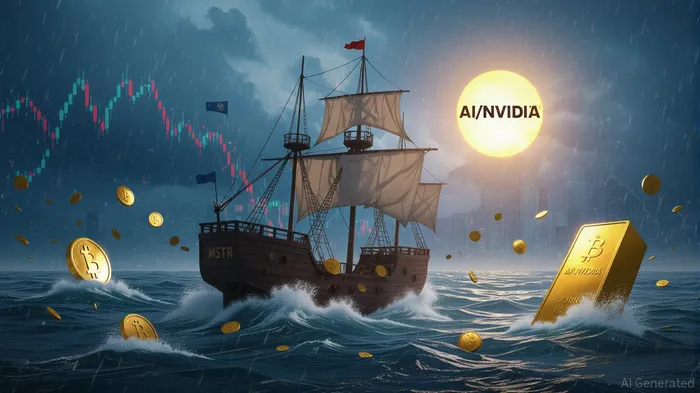
Macroeconomic Triggers: Trade Tensions and Strategic Uncertainty
Bitcoin's 2025 downturn is inextricably linked to macroeconomic headwinds. , 2025, following 's threats of massive tariffs on China. This move eroded investor confidence, particularly in risk assets like Bitcoin, as market liquidity contracted. Additionally, the lack of progress on a U.S. Bitcoin strategic reserve-a policy initiative that could have stabilized demand-has left investors in limbo. The Trump administration's silence on the matter has compounded uncertainty, deterring institutional adoption and amplifying price swings.
Meanwhile, shifting investor preferences have further weakened Bitcoin's appeal. Gold and AI-related equities have drawn capital away from crypto, with the latter benefiting from NVIDIA's Q3 earnings beat and strong Q4 guidance. This reallocation reflects a broader trend: investors are increasingly prioritizing assets with tangible growth narratives over passive Bitcoin holdings.
Market Sentiment: Risk-Off Behavior and Retail Investor Psychology
The November 2025 market environment has been defined by pronounced risk-off behavior. J.P. Morgan's analysis reveals that , . This divergence highlights a critical shift in investor psychology: while stocks are perceived as safer havens amid macroeconomic volatility, crypto assets are increasingly viewed as speculative liabilities.
Retail sentiment is further eroded by polarized reactions to politically connected crypto firms. For instance, . , . This disconnect underscores how political affiliations and macroeconomic fears-such as inflation or trade wars-can override fundamental performance in crypto markets.
Expert Perspectives: Sustainability and Sectoral Parallels
Analysts remain divided on the sustainability of Bitcoin's downturn. has slashed its 2025 price target, citing Bitcoin's entry into a "maturity era" marked by prolonged volatility. However, AI and high-performance computing (HPC)-focused Bitcoin miners have shown resilience, . This sectoral rebound suggests that Bitcoin's utility in emerging technologies could still drive long-term value, even amid short-term pain (https://www.coindesk.com/markets/2025/11/20/ai-and-hpc-bitcoin-miners-surge-pre-market-following-stellar-nvidia-earnings).
Broader macroeconomic parallels also emerge. The , for example, faces a prolonged downturn . Such conditions mirror Bitcoin's challenges, illustrating how global overcapacity and raw material costs can extend market corrections. If the industrial economy fails to recover, Bitcoin's downturn may persist.
A Cautionary Buying Opportunity?
The question of whether Bitcoin's decline is a buying opportunity hinges on two factors: macroeconomic stability and investor sentiment normalization. On one hand, , suggesting that early investors are still in the money. On the other, the lack of a clear policy framework for Bitcoin-such as a strategic reserve-leaves the market vulnerable to further shocks.
For risk-tolerant investors, dips below $90,000 could present entry points, particularly if macroeconomic tensions ease and AI-driven demand for Bitcoin mining accelerates. However, the broader risk-off environment and retail investor exodus indicate that this is not a typical bear market correction. Instead, it reflects a structural shift in how crypto assets are perceived-a shift that may require years to reverse.
Conclusion
Bitcoin's 2025 plunge is neither a simple buying opportunity nor an outright crisis. It is a confluence of macroeconomic fragility, shifting investor preferences, and political uncertainty. While the asset's long-term fundamentals-such as its role in AI and HPC-remain intact, the path to recovery will depend on resolving trade tensions, stabilizing retail sentiment, and establishing regulatory clarity. For now, investors must tread carefully, balancing optimism with caution in a market where volatility is the new norm.

Delivering real-time insights and analysis on emerging financial trends and market movements.
Latest Articles
Stay ahead of the market.
Get curated U.S. market news, insights and key dates delivered to your inbox.




Comments
No comments yet