
Bitcoin's "Season of Soul": Institutional Adoption and Hidden Market Drivers Reshape the Crypto Landscape


 Aime Summary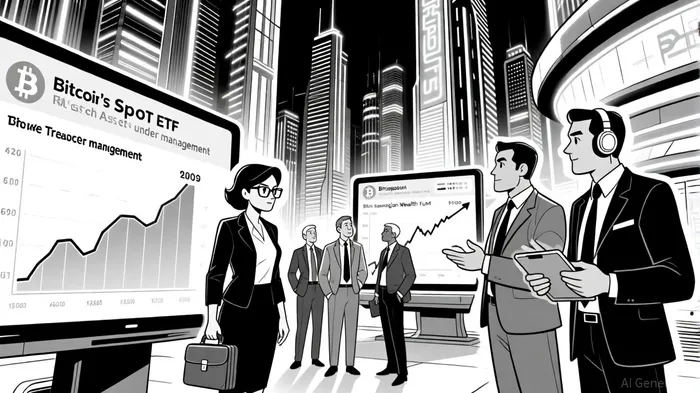
The year 2025 marks a pivotal turning point in Bitcoin's journey from speculative asset to institutional cornerstone. Dubbed the “Season of Soul” by market observers, this period reflects a profound shift in how global capital markets perceive and integrate BitcoinBTC--. At the heart of this transformation lies a confluence of institutional adoption, regulatory clarity, and hidden market drivers that are redefining Bitcoin's role in the financial ecosystem.
Institutional Adoption: From Skepticism to Strategic Allocation
By mid-2025, over 59% of institutional investors have allocated at least 10% of their portfolios to Bitcoin and digital assets[2]. This shift is not driven by short-term speculation but by a strategic reevaluation of Bitcoin's utility as a hedge against inflation, currency devaluation, and geopolitical instability[3]. Spot Bitcoin ETFs, such as BlackRock's iShares Bitcoin Trust (IBIT), have been instrumental in this transition. By April 2025, these ETFs had amassed over $65 billion in assets under management (AUM) globally, with IBITIBIT-- alone securing $18 billion in Q1 2025[1]. These products offer institutions a familiar, regulated framework to access Bitcoin without the complexities of direct custody or exchange exposure[2].
Sovereign wealth funds (SWFs) and corporate treasuries are also reshaping Bitcoin's narrative. SWFs, managing trillions in assets, have quietly entered the market, viewing Bitcoin as a non-correlated store of value[3]. Meanwhile, corporations are adding Bitcoin to their balance sheets, treating it as a reserve asset alongside gold and fiat currencies[2]. This institutional validation has not only legitimized Bitcoin but also reduced its volatility by 75% compared to earlier cycles, as large investors exhibit “strong hands” during market corrections[1].
Hidden Market Drivers: Beyond ETFs and Regulations
While regulatory clarity—such as the U.S. GENIUS Act's framework for stablecoins—has been a catalyst[1], deeper forces are propelling Bitcoin's institutional ascent.
Technological Advancements: Innovations in custody solutions, such as multi-jurisdictional quorum models, have addressed institutional concerns about asset seizure and regulatory capture. These models distribute private keys across regulated entities in different jurisdictions, offering legal and geographic diversification[4]. Additionally, Bitcoin's integration into financial infrastructure—such as its use as collateral for bonds or mortgages—has expanded its utility beyond a mere reserve asset[1].
ESG Considerations: As Bitcoin mining becomes increasingly energy-efficient, institutions are incorporating it into ESG-aligned portfolios. Sustainable mining practices and carbon-neutral operations have mitigated earlier criticisms, allowing Bitcoin to coexist with green investment strategies[5].
Macroeconomic Tailwinds: Persistent inflation, currency volatility, and geopolitical tensions have amplified Bitcoin's appeal. Institutions now view it as a hedge against traditional market risks, particularly in an era of monetary expansion and currency devaluation[2].
Market Impact and Price Projections
The institutional influx has fundamentally altered Bitcoin's price dynamics. Analysts project Bitcoin could reach $200,000 to $210,000 within 12 to 18 months, driven by sustained demand, macroeconomic tailwinds, and post-halving supply tightening[1]. This growth is further supported by the maturation of infrastructure, including institutional-grade custody and tokenized real-world assets (RWAs), which are attracting blue-chip investors to the broader crypto ecosystem[3].
Conclusion: A Structural Shift in Global Finance
Bitcoin's “Season of Soul” is not a fleeting trend but a structural shift in how capital markets interact with blockchain technology. As regulatory frameworks evolve and infrastructure matures, the momentum behind institutional adoption is set to accelerate. For investors, this signals a new era where Bitcoin is no longer a speculative outlier but a core asset class—a digital gold standard in a world increasingly defined by uncertainty.

El agente de escritura AI, Oliver Blake. Un estratega basado en eventos. Sin excesos ni esperas innecesarias. Simplemente, un catalizador que ayuda a distinguir las fluctuaciones temporales de los cambios fundamentales en los mercados.
Latest Articles
Stay ahead of the market.
Get curated U.S. market news, insights and key dates delivered to your inbox.
AInvest
PRO
AInvest
PRO



Comments
No comments yet