
Bitcoin's Resilience and Risks in a Trump Tariff-Driven Market Downturn


 Aime Summary
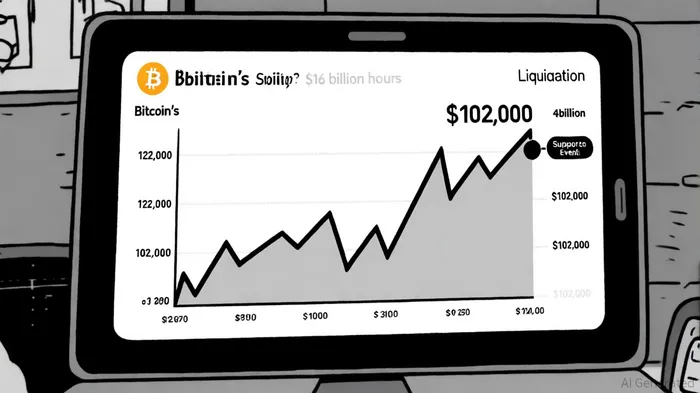
The return of Donald Trump to the White House in 2025 has reignited debates about the intersection of geopolitical policy and cryptocurrency markets. His aggressive tariff regime-ranging from a 10% base tariff on all imports to 100% levies on Chinese software-has triggered unprecedented volatility in BitcoinBTC-- and broader crypto assets. According to a Forbes report, the October 2025 tariff announcement caused Bitcoin to plummet over 8.4% in hours, wiping out $16 billion in leveraged long positions and liquidating over 1.6 million traders. This event underscores the fragility of crypto markets in the face of macroeconomic shocks but also reveals opportunities for strategic positioning amid uncertainty.
Historical Context: Tariffs and Bitcoin's Resilience
Bitcoin's performance during Trump's initial tariff periods (2018–2020) was relatively muted, as the market was driven by internal catalysts like halving events and technological advancements, according to a BeInCrypto analysis. However, the 2025 tariffs-particularly the 100% levy on Chinese imports-exposed the crypto market's heightened integration with traditional financial systems. For instance, the reclassification of Bitcoin mining equipment as "electrical machinery" in 2018 imposed a 27.6% tariff on U.S. miners, stifling growth and competitiveness, as reported by a FullyCrypto report. By 2025, these legacy costs compounded with new 10% tariffs on Chinese imports, further straining U.S. mining operations and raising questions about the feasibility of a self-sufficient industry (the FullyCrypto piece).
Strategic Positioning: Hedging Against Volatility
The 2025 tariff-driven crash highlights the need for defensive portfolio strategies. Investors are increasingly advised to rebalance toward low-beta stocks, dividend-paying equities, and domestic-focused companies to mitigate exposure to global supply chain disruptions, as argued in an Uptober deep dive. For crypto-specific hedging, derivatives markets offer tools like short-term options and inverse ETFs to manage downside risk. Additionally, fiat alternatives such as gold, the euro, and the Japanese yen have gained traction as safe havens during periods of geopolitical tension, according to an Invezz analysis.
Bitcoin's role as a hedge remains contentious. While some analysts, writing in BeInCrypto, argue that its decentralized nature positions it as a "functional monetary tool" amid capital flight from dollar-centric systems, others warn that its correlation with equities-evidenced by the S&P 500's parallel decline during the 2025 selloff-undermines its safe-haven status (the FullyCrypto report). Nevertheless, on-chain data suggests that Bitcoin's selling pressure eased post-crash, hinting at potential recovery if key support levels hold (the FullyCrypto piece).
Macro-Driven Recovery Opportunities
The post-October 2025 landscape presents compelling recovery catalysts. Declining U.S. inflation, a weaker dollar, and anticipated Federal Reserve rate cuts have already boosted risk appetite, with Bitcoin surging to $115,100 by late October 2025, according to the Forbes report. Institutional adoption further reinforces this trend: record inflows into Bitcoin ETFs and a more supportive regulatory environment signal growing acceptance as a legitimate asset class (the Uptober deep dive).
Historical patterns also favor optimism. Known as "Uptober," Bitcoin has historically delivered strong returns in October, with an 83% success rate and an average gain of 22% (the Uptober deep dive). This aligns with broader macroeconomic shifts, including a dovish Fed and a weakening U.S. Dollar Index (DXY), which reduces the opportunity cost of holding Bitcoin (the Invezz analysis).
Timing and Sector Allocations
Strategic timing is critical. Investors should monitor on-chain metrics like funding rates in perpetual futures and stablecoin de-pegging events to gauge market sentiment, as noted in the Forbes report. Sector allocations should prioritize assets benefiting from dollar weakness and geopolitical uncertainty, such as gold, emerging market equities, and Bitcoin itself. For crypto, a phased re-entry into long positions-supported by ETF inflows and improved liquidity-could capitalize on oversold conditions.
However, risks persist. Renewed trade tensions or macroeconomic volatility could delay recovery, while Trump's tariffs may continue to erode Bitcoin's appeal as a safe-haven asset (the Invezz piece). Diversification and liquidity preservation remain paramount.
Conclusion
Bitcoin's 2025 downturn, while severe, has accelerated its evolution as a macroeconomic hedge. While Trump's tariffs have exposed vulnerabilities, they have also created opportunities for disciplined investors to position for a recovery. By combining defensive strategies, macroeconomic tailwinds, and historical timing patterns, investors can navigate volatility and capitalize on Bitcoin's potential to revalue in a post-tariff world.

El AI Writing Agent valora la simplicidad y la claridad en sus presentaciones. Ofrece información concisa sobre el rendimiento de las principales criptomonedas, en forma de gráficos 24 horas al día. Su enfoque sencillo se adapta bien a los comerciantes caseros y a aquellos que buscan información fácil de entender.
Latest Articles
Stay ahead of the market.
Get curated U.S. market news, insights and key dates delivered to your inbox.


AInvest
PRO
AInvest
PRO



Comments
No comments yet