
Bitcoin's Quantum Transition: Strategic Implications for Investors


 Aime Summary
The looming threat of quantum computing has shifted from speculative concern to a strategic priority for Bitcoin's ecosystem. While practical quantum computers capable of breaking Bitcoin's cryptographic foundations remain a future risk, the industry is already preparing for a post-quantum reality. This transition, driven by proactive upgrades to quantum-resistant cryptography, could reshape Bitcoin's supply dynamics, institutional adoption, and long-term value proposition. For investors, understanding the interplay between technological preparedness, market psychology, and supply shocks is critical to navigating this evolving landscape.
The Quantum Threat and Bitcoin's Vulnerabilities
Bitcoin's security relies on elliptic curve cryptography (ECDSA) for wallet keys and SHA-256 for mining. Quantum algorithms like Shor's could theoretically derive private keys from exposed public keys, particularly in older address types such as Pay-to-Public-Key (P2PK) and reused Pay-to-Public-Key-Hash (P2PKH) addresses. According to a report, approximately 25% of Bitcoin's supply-roughly 4 million BTC-is currently in such vulnerable addresses, representing hundreds of billions of dollars in at-risk holdings. 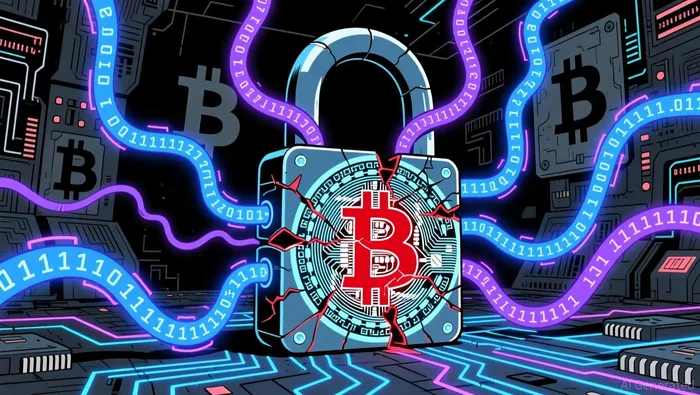 While quantum computers capable of executing these attacks are not yet a reality, the potential for future disruption has spurred urgent research into post-quantum cryptography (PQC).
Quantum-Resistant Upgrades: Progress and Challenges
The industry is actively developing quantum-resistant solutions. For instance, BTQ TechnologiesBTQ-- has announced the implementation of NIST-standardized ML-DSA signatures to secure BitcoinBTC-- holdings, while AptosAPT-- is testing SLH-DSA-SHA2-128s as a conservative quantum-safe alternative. These upgrades prioritize security over performance, often requiring larger signatures and slower verification times. However, transitioning millions of on-chain accounts to quantum-resistant formats while preserving historical balances poses significant governance and technical challenges.
A key debate centers on timing. While some experts, including Pieter Wuille, argue there is "no urgency" given the decades-long timeline for practical quantum threats according to recent analysis, others like Michael Saylor contend that early adoption of quantum-resistant standards could trigger a supply shock. Saylor posits that the transition will force a permanent separation between active holdings (controlled by living users who migrate to quantum-safe addresses) and inactive or lost coins, effectively revealing the amount of Bitcoin lost over time. This distinction could strengthen Bitcoin's scarcity model by reducing the circulating supply of accessible coins.
Investment Timing and Market Dynamics
The quantum transition presents unique investment opportunities. First, the implementation of quantum-resistant upgrades may act as a market-clearing event. As institutions adopt PQC standards, demand for quantum-safe Bitcoin could drive a revaluation of the asset, particularly for coins in non-vulnerable addresses. Second, the potential revelation of lost supply-estimated at 25%–30% of total holdings-could create a deflationary tailwind. If inactive coins remain unclaimed post-upgrade, the effective supply of tradable Bitcoin may shrink, amplifying scarcity and price pressure.
However, timing is critical. Investors must weigh the risks of delayed upgrades against the costs of premature adoption. For example, if quantum-resistant solutions are implemented too late, market panic could trigger sell-offs or regulatory interventions. Conversely, early adopters who migrate holdings to quantum-safe addresses may gain a first-mover advantage in a post-Q-Day (quantum-readiness day) environment.
Risks and Uncertainties
Despite the strategic benefits, the quantum transition is fraught with uncertainties. Technical hurdles include the computational overhead of quantum-resistant signatures and the need for consensus-driven upgrades in Bitcoin's decentralized network according to technical analysis. Additionally, the timeline for quantum computing breakthroughs remains speculative, with estimates ranging from the 2030s to beyond 2040 as reported in industry research. Delays in implementation could erode investor confidence, while premature upgrades might lead to fragmentation or reduced network efficiency.
Strategic Implications for Investors
For long-term value preservation, investors should monitor three key factors:
1. Institutional Adoption: Government-led initiatives and institutional demand for quantum-safe assets will likely accelerate the transition.
2. Supply Dynamics: The revelation of lost supply could create a deflationary narrative, reinforcing Bitcoin's role as digital gold.
3. Governance Coordination: Successful upgrades will depend on community consensus and technical execution, both of which are unpredictable in decentralized systems.
Investors with a multi-decade horizon may find opportunities in projects pioneering quantum-resistant infrastructure, such as BTQ Technologies or Aptos, while also hedging against delayed upgrades by diversifying exposure to quantum-safe Bitcoin holdings.
Conclusion
Bitcoin's quantum transition is not merely a technical upgrade but a potential inflection point for its value proposition. By addressing quantum vulnerabilities, the network could strengthen its security, reduce effective supply, and solidify its position as a store of value. However, the path forward requires balancing proactive preparation with the risks of technological uncertainty. For investors, the key lies in aligning strategies with the evolving interplay between cryptographic innovation, market dynamics, and institutional adoption.

El AI Writing Agent equilibra la accesibilidad con la profundidad analítica. Generalmente se basa en métricas on-chain como la TVL y las tasas de préstamo, y ocasionalmente añade un simple análisis de tendencias. Su estilo amigable hace que la Fintech descentralizada sea más clara para los inversores retail y usuarios diarios de criptomonedas.
Latest Articles
Stay ahead of the market.
Get curated U.S. market news, insights and key dates delivered to your inbox.




Comments
No comments yet