
Bitcoin's Q4 Collapse and the Road to Recovery


 Aime Summary
Assessing the Depth of the Selloff
Bitcoin's decline in Q4 2025 was both rapid and severe. The token's market capitalization lost over $1 trillion in six weeks, with the price falling below both its 50-day and 200-day moving averages-a critical technical signal that trend-following investors have abandoned the asset. The selloff was exacerbated by $19 billion in leveraged position liquidations, as overleveraged traders and DATCos were forced to unwind positions amid rising volatility. Meanwhile, long-term holders-often seen as the backbone of Bitcoin's resilience-began taking profits after the asset's post-halving rally, further deepening the correction.
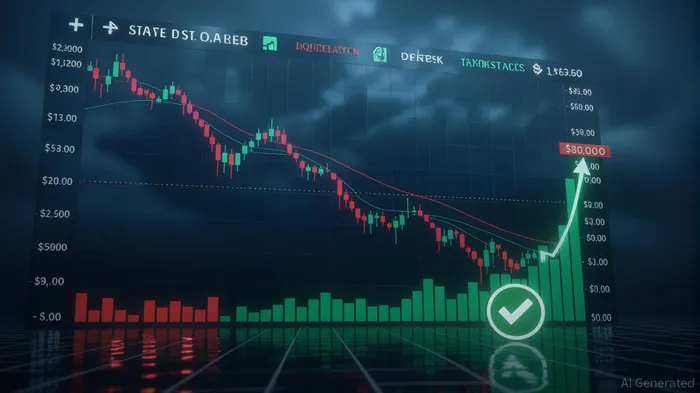 Macroeconomic factors played a pivotal role. The Federal Reserve's hawkish stance, with hints of a "higher for longer" interest rate environment, drained liquidity from risk assets, including BitcoinBTC--. Institutional deleveraging, driven by fears of prolonged rate hikes, compounded the downward pressure. By mid-November, over $3.6 billion had flowed out of Bitcoin exchanges as investors reduced exposure. Analysts have also pointed to a self-fulfilling prophecy tied to Bitcoin's four-year cycle: the selloff aligns with the historically volatile period 400–600 days after the April 2024 halving event.
Catalysts for a 2026 Recovery
Despite the bearish momentum, several catalysts could drive a rebound in 2026.
1. Macroeconomic Stabilization and Fed Policy
A shift in Federal Reserve policy remains the most critical variable. If the Fed signals a dovish pivot in early 2026-perhaps in response to cooling inflation or a slowing economy-Bitcoin could regain its appeal as a hedge against monetary expansion. As noted by a recent analysis, improved liquidity conditions and a more accommodative monetary environment could set the stage for a recovery.
2. Regulatory Clarity and Institutional Adoption
Regulatory developments in Q4 2025 have laid the groundwork for broader adoption. The implementation of the Genius Act and progress on the Clarity Act have provided a clearer legal framework for crypto assets, reducing uncertainty for institutional investors. Meanwhile, major banks like JPMorgan, Citi, and U.S. Bank have accelerated their Bitcoin offerings, signaling a shift from speculative trading to mainstream portfolio allocation. This trend is likely to accelerate in 2026 as more traditional financial institutions integrate Bitcoin into their product suites.
3. Market Structure and Liquidity Improvements
Bitcoin's order-book liquidity, which deteriorated during the Q4 selloff, could stabilize in 2026. As retail and institutional buyers re-enter the market, bid-ask spreads are expected to narrow, reducing volatility. Additionally, the self-fulfilling prophecy that fueled the selloff may reverse if the price holds key support levels. Analysts highlight $80,000–$85,000 as a critical range for a potential bottom, with a 50% probability of Bitcoin ending 2026 below $90,000 and a 30% chance of surpassing $100,000 as noted by market analysis.
4. The Halving Effect and Mining Dynamics
While the 2024 halving initially pressured mining profitability, its long-term effects could resurface in 2026. A post-halving scarcity narrative-historically linked to price surges-may gain traction as miners adjust to reduced block rewards, potentially tightening Bitcoin's supply dynamics.
Technical and Sentiment Considerations
From a technical perspective, Bitcoin's path to recovery hinges on reclaiming key moving averages and retesting critical support levels. A sustained break above $90,000 could reignite bullish momentum, while a failure to hold $80,000 might extend the correction. Sentiment-wise, the market appears to be correcting excesses. As one report notes, the current volatility may represent a "healthy reset," with long-term fundamentals and institutional adoption intact.
Conclusion: Balancing Risks and Opportunities
Bitcoin's Q4 collapse underscores the asset's vulnerability to macroeconomic and liquidity shocks. However, the interplay of regulatory progress, institutional adoption, and potential Fed easing suggests a path to recovery in 2026. Investors must remain cautious, particularly as the market grapples with unresolved macro risks. Yet, for those with a long-term horizon, the current selloff may present an opportunity to position for a potential rebound-provided the catalysts outlined above materialize.

Delivering real-time insights and analysis on emerging financial trends and market movements.
Latest Articles
Stay ahead of the market.
Get curated U.S. market news, insights and key dates delivered to your inbox.






Comments
No comments yet