
Bitcoin Price Volatility and Market Dynamics Remain Key Investor Considerations in 2026
 Aime Summary
Bitcoin's price has fallen to 40–43% below its 2025 peak, reflecting its historical boom-and-bust pattern and heightened market volatility in 2026. - Investors are weighing the risks and opportunities of Bitcoin's current price drop, with some viewing it as a cyclical correction and others as a potential signal of sustained weakness. - Bitcoin's fixed supply cap and broader adoption by merchants and institutions make it a more compelling long-term investment compared to alternatives like DogecoinDOGE--.
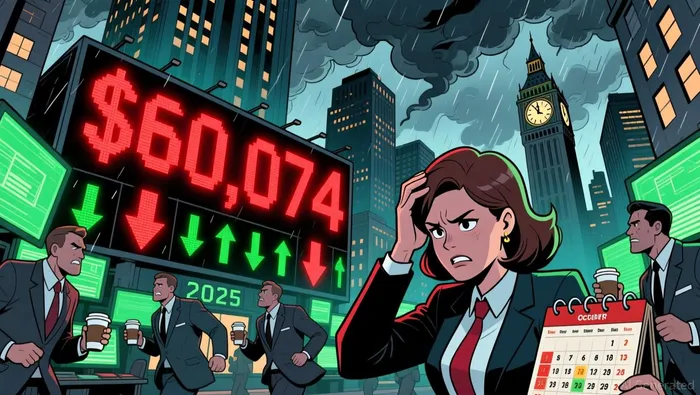
Bitcoin's price has declined significantly from its all-time high reached in October 2025, with the asset trading at around $60,074 as of February 6, 2026. This decline aligns with the historical pattern of volatility associated with the cryptocurrency. Investors are now assessing whether this drop is a short-term correction or a more prolonged bearish trend. The uncertainty highlights the need for market participants to understand the dynamics of crypto price swings before making investment decisions.
Bitcoin's unique attributes, such as its hard supply cap of 21 million units, contribute to its appeal as a long-term investment. This scarcity, combined with its adoption by over 22,200 merchants and growing institutional interest, differentiates it from altcoins like Dogecoin, which lack a supply cap and face weaker adoption. These structural advantages make BitcoinBTC-- more attractive to investors seeking digital assets with deflationary properties and greater market penetration.
Secure storage is a critical concern for Bitcoin holders. The use of hardware wallets and cold storage is recommended to protect against cyber threats and ensure full control over private keys. Holding Bitcoin on exchanges introduces risks, as users typically do not control their private keys. Best practices include using authenticator apps for two-factor authentication, securing seed phrases, and isolating holdings in offline environments. These measures help reduce the risk of theft or loss due to exchange vulnerabilities or cyberattacks.
What recent developments have influenced Bitcoin's price trajectory?
Bitcoin's price movement in 2026 reflects broader market sentiment and macroeconomic factors. The decline from its October 2025 peak has been sharp, with the asset trading at nearly half of its previous high. This correction fits into the historical cycle of boom and bust observed in the cryptocurrency market. Investors are now evaluating whether this drop presents a buying opportunity or signals a deeper bearish trend. Understanding these cycles is essential for making informed decisions in the current climate.
The market's volatility is further compounded by the broader digital asset industry's challenges. Bitcoin's recent underperformance has weighed on the overall crypto market, with other coins also suffering significant declines. This environment underscores the importance of risk management and diversification for investors exploring the crypto space.
Why is Bitcoin's supply cap and adoption significant for long-term investors?
Bitcoin's hard supply cap of 21 million units is a key structural feature that sets it apart from many other cryptocurrencies. This scarcity contributes to its perceived value and long-term appeal, particularly among investors who view Bitcoin as a store of value. In contrast, altcoins like Dogecoin have no supply cap and continue to issue new tokens annually, which can dilute their value over time. The supply constraints of Bitcoin make it a compelling asset for those seeking digital equivalents of traditional commodities like gold.
Adoption is another critical factor. Bitcoin's growing acceptance by merchants, financial institutions, and corporations enhances its utility and credibility as a digital asset. The fact that it is now used by over 22,200 merchants globally supports its potential for wider adoption. Institutional interest is also rising, as evidenced by the launch of Ethereum staking ETFs by firms like BlackRock, which signals a maturing phase for institutional crypto adoption.
What security measures are essential for holding Bitcoin and related assets?
Security is a top priority for cryptocurrency investors. Holding Bitcoin on exchanges carries inherent risks, as users typically do not control their private keys. This dependence on third-party custodians increases the risk of theft or loss due to exchange vulnerabilities or cyberattacks. Self-custody, on the other hand, allows users to maintain full control over their assets by securely storing private keys in hardware wallets or cold storage.
Best practices include using hardware wallets for long-term holdings, ensuring that seed phrases are stored securely, and employing multi-factor authentication for account access. Investors are also advised to avoid SMS-based two-factor authentication and instead use authenticator apps for added security. These measures help reduce the likelihood of unauthorized access and protect against common attack vectors.
In addition to wallet security, investors should remain vigilant about social engineering attempts and phishing schemes. Staying informed about the latest threats and security protocols is essential for maintaining the integrity of digital assets. By following these best practices, investors can better protect their holdings in an environment where cyber threats are increasingly prevalent.

Blending traditional trading wisdom with cutting-edge cryptocurrency insights.
Latest Articles
Stay ahead of the market.
Get curated U.S. market news, insights and key dates delivered to your inbox.


AInvest
PRO
AInvest
PRO



Comments
No comments yet