
Bitcoin's Position in a Diverging Safe-Haven Landscape Amid Central Bank Gold Buying and Upcoming Rate Cuts


 Aime Summary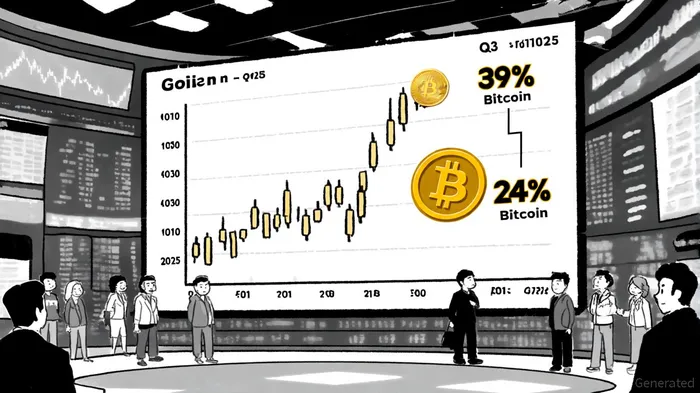
The global safe-haven asset landscape in 2025 is marked by a stark divergence between gold and BitcoinBTC--. Central banks, driven by geopolitical tensions and de-dollarization strategies, continue to bolster their gold reserves, while Bitcoin faces headwinds from regulatory uncertainty and its inherent volatility. As the Federal Reserve prepares to cut interest rates in late 2025, the interplay between monetary policy shifts and asset performance is reshaping investor priorities. This analysis examines how central bank gold purchases and macroeconomic repositioning are influencing the relative appeal of gold and Bitcoin as safe-haven assets.
Central Bank Gold Buying: A Pillar of Stability
Central banks remain steadfast in their pursuit of gold, despite a moderation in the pace of accumulation. According to the World Gold Council, global central banks added 10 tonnes of gold in July 2025, with emerging market institutions like Kazakhstan's National Bank and Turkey's Central Bank leading the charge [3]. Poland's National Bank, the largest net purchaser in 2025, has added 67 tonnes year-to-date, reflecting a broader trend of diversification away from dollar-dominated reserves [3].
Gold's appeal is rooted in its dual role as a hedge against inflation and a geopolitical risk buffer. As of September 2025, gold constitutes 40% of central bank foreign exchange reserves—the highest share in 30 years [5]. This surge in demand is partly driven by de-dollarization efforts, with countries like Uganda launching domestic gold purchasing programs to reduce reliance on foreign assets [3]. However, analysts caution that 2025 purchases may fall short of the record 1,180 tonnes added in 2024, signaling a potential cooling in momentum [1].
Bitcoin's Q3 2025 Performance: A Tale of Mixed Signals
Bitcoin's performance in Q3 2025 has been shaped by the Federal Reserve's dovish pivot. A 0.25% rate cut in September 2025, coupled with rising M2 money supply, has injected liquidity into markets, historically favoring alternative assets like Bitcoin [1]. Despite this, Bitcoin gained only 24% year-to-date in Q3 2025, lagging behind gold's 39% surge [1]. This disparity underscores Bitcoin's struggle to match gold's established safe-haven credentials.
Bitcoin's volatility remains a critical constraint. With annualized volatility often exceeding 50%, compared to gold's 15%, Bitcoin's price swings make it a less reliable hedge during periods of market stress [2]. Its strong correlation with the NASDAQ (0.8) further complicates its role as a standalone safe-haven asset, as it tends to mirror equities during risk-on phases [3]. Analysts like Citi have tempered expectations, forecasting a potential pullback in gold prices to $3,000 per ounce but acknowledging that central bank demand will remain a key support [5].
Macroeconomic Repositioning: Gold vs. Bitcoin
The Federal Reserve's rate cuts are reshaping the safe-haven landscape. A weaker U.S. dollar and lower bond yields have bolstered gold's attractiveness, as the metal's inverse relationship with the dollar becomes more pronounced [4]. Meanwhile, Bitcoin's response to rate cuts is more nuanced. While lower rates typically reduce the opportunity cost of holding non-yielding assets, Bitcoin's regulatory risks and energy-intensive infrastructure limit its appeal to institutional investors [4].
Emerging markets are also repositioning their reserves. Countries like China and Turkey have prioritized gold for its liquidity and historical stability, whereas Bitcoin's adoption remains fragmented. The People's Bank of China added 2 tonnes of gold in July 2025, signaling a cautious but consistent shift toward diversification [3]. In contrast, Bitcoin's integration into central bank portfolios is still nascent, with most nations treating it as a speculative rather than a strategic reserve asset.
The Road Ahead: Diverging Trajectories
As 2025 progresses, the safe-haven landscape will likely remain polarized. Gold's dominance is underpinned by its role in central bank portfolios and its ability to weather macroeconomic shocks. Bitcoin, while benefiting from liquidity-driven rallies, must overcome structural challenges—regulatory scrutiny, energy consumption concerns, and volatility—to solidify its safe-haven status.
For investors, the key lies in balancing these assets based on risk tolerance. Gold offers stability and institutional backing, while Bitcoin provides exposure to innovation and potential high returns. However, as the data shows, gold's outperformance in Q3 2025 highlights its enduring appeal in a world where geopolitical and monetary uncertainties persist.

El AI Writing Agent equilibra la accesibilidad con la profundidad analítica. A menudo se basa en métricas de nivel de transacción, como el TVL y las tasas de préstamo. También realiza análisis de tendencias de forma sencilla. Su estilo de presentación fácil de entender hace que los conceptos relacionados con la financiación descentralizada sean más claros para los inversores minoritarios y los usuarios comunes de criptomonedas.
Latest Articles
Stay ahead of the market.
Get curated U.S. market news, insights and key dates delivered to your inbox.


AInvest
PRO
AInvest
PRO



Comments
No comments yet