
Bitcoin Poised for Volatility as $92K Resistance in Focus
 Aime Summary
- Bitcoin traded near year-to-date highs around $92,806, with key resistance at $92K and thin liquidity above $95K.
- The U.S. crypto regulatory environment remains fragmented, with political events potentially delaying unified frameworks.
- The Cryptocurrency Fear and Greed Index has fallen to 27, signaling sustained investor fear.
Bitcoin's price action has been marked by high volatility and strategic resistance levels as traders watch for potential breakouts. Prices hovered near year-to-date highs around $92,806, with market participants noting concentrated order-book liquidity below $88K and "thin air" above $95K that could lead to a retest of $100K. The technical picture showed a breakout from a short-term symmetrical triangle, with the weekly RSI at its lowest since late-2022.
Investor sentiment has also been bearish, with the Fear and Greed Index hitting 27, which points to sustained fear rather than panic. The index is a composite of volatility, volume, and BitcoinBTC-- dominance data, often used by analysts to gauge market psychology and anticipate price consolidation or reversals.
The regulatory landscape for crypto in the U.S. remains fragmented. Policymakers are aware of the industry's growing importance but remain divided on governance approaches. The 2026 midterm elections are expected to delay a unified regulatory framework, as lawmakers grapple with timing and conflict-of-interest issues.
What Are the Key Price Levels for Bitcoin in 2026?
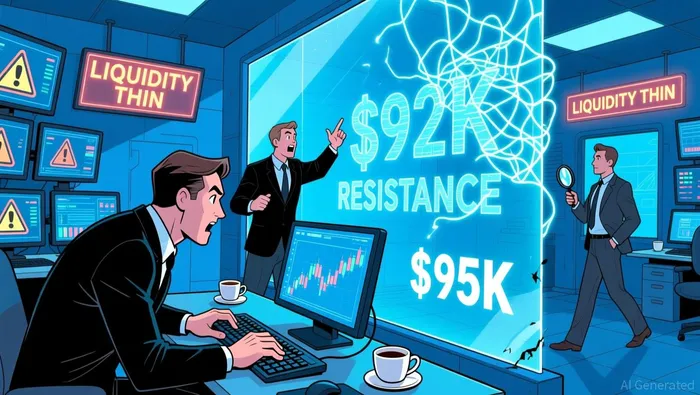
Bitcoin has been trading in a volatile range defined by support and resistance levels. The most immediate resistance is at $92K, while liquidity is thin above $95K, which could allow for a rapid retest of $100K. These levels are important because they indicate where concentrated orders might trigger sharp price swings. Traders are closely watching for a breakout from the symmetrical triangle pattern, which could signal a bullish move toward $100K or a bearish pullback toward $88K.
The liquidity concentration below $88K suggests that a breakdown to that level could result in a significant selloff. Market participants are cautious about the possibility of a liquidity grab, especially as traders brace for elevated volatility as the week draws to a close.
How Is Investor Sentiment Affecting the Market?
The current reading of the Fear and Greed Index at 27 signals sustained investor fear and market caution. This level is often associated with consolidation phases following a decline. The index is calculated using a combination of volatility, trading volume, Bitcoin dominance, and social media sentiment. Market analysts use this as one of many tools to assess sentiment and avoid emotionally driven decisions.
Historically, low readings on the Fear and Greed Index have aligned with periods of market consolidation. This can be a signal to disciplined investors that the market is stabilizing after a decline, but it also indicates a lack of bullish conviction. The index should not be used in isolation but in conjunction with other technical and fundamental indicators.
What Are the Implications of a Fragmented U.S. Crypto Regulatory Landscape?
The U.S. crypto industry faces a fragmented regulatory environment as policymakers remain divided on governance approaches. Legislative efforts are being tested by political realities, with Senate Democrats hesitant to advance comprehensive legislation before the 2026 midterm elections. This delay increases the cost of uncertainty for crypto infrastructure, which is becoming increasingly embedded in the financial system.
Political events, such as midterms, are expected to delay meaningful reform, as lawmakers struggle with timing and conflict-of-interest issues. The result is a regulatory landscape defined by reaction rather than strategic coordination. This environment may lead to further volatility and uncertainty in the market, as investors and firms attempt to navigate the regulatory landscape on a case-by-case basis.
Floating-rate loans, meanwhile, remain a strategic asset allocation in 2026 due to easing monetary policy, accommodative fiscal policy, and emerging deregulation. These factors reduce the likelihood of a deep economic downturn and support the appeal of loans as a strategic investment. However, the crypto market's regulatory and price uncertainty may make such allocations less attractive to some investors.

Blending traditional trading wisdom with cutting-edge cryptocurrency insights.
Latest Articles
Stay ahead of the market.
Get curated U.S. market news, insights and key dates delivered to your inbox.






Comments
No comments yet