
Bitcoin Ordinals Enable New Digital Artifact Ecosystem
 Aime Summary
- Bitcoin Ordinals leverage Ordinal Theory and the Taproot upgrade to assign unique identifiers to satoshis and allow arbitrary data inscription.
- Participation in the BitcoinBTC-- Ordinals ecosystem requires specialized wallets like Xverse or Hiro Wallet, which can display and manage inscribed data.
- Users must withdraw Bitcoin to personal wallets, use inscription services like Gamma or Unisat, and pay service and network fees to inscribe digital artifacts.
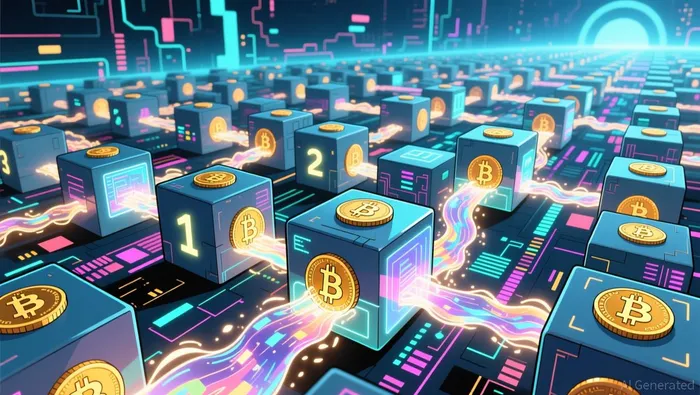
Bitcoin Ordinals introduce a novel way to assign value and uniqueness to individual satoshis by inscribing arbitrary data directly onto them. This functionality is enabled through the Taproot upgrade, which allows for more flexible transaction scripting and data embedding.
The process of creating and managing Ordinals requires a specific set of tools and understanding. Standard wallets may not recognize or display inscribed data, necessitating the use of specialized wallets that support Ordinals.
Security considerations are essential when working with Ordinals. Users must be aware of the risks of accidental spending, which can lead to the loss of inscribed data. Implementing UTXO locking and coin control features in Ordinals-compatible wallets is recommended.
How do Bitcoin Ordinals impact the broader digital asset ecosystem?
Bitcoin Ordinals represent an evolution in the utility of the Bitcoin blockchain. By allowing data inscription on individual satoshis, they introduce a new form of digital artifact creation that differs from traditional NFTs or token-based systems.
This innovation may influence how investors perceive and value Bitcoin, potentially altering its role in the financial infrastructure. The ability to store unique data on the Bitcoin blockchain could expand its use cases beyond simple value transfer.
However, there are technical and security challenges to consider. Wallet compatibility and network fees can affect the accessibility and efficiency of the Ordinals ecosystem.
What are the technical and operational requirements for managing Ordinals?
To participate in the Ordinals ecosystem, users need to first acquire Bitcoin on a supported exchange. Exchanges like Bitget, Binance, and Kraken offer varying fee structures and coin support.
Once Bitcoin is acquired, it must be transferred to a personal wallet for full control. Inscription services such as Gamma, OrdinalsBot, and Unisat facilitate the creation of Ordinals by allowing users to upload content and specify a recipient address.
The inscription process involves paying both service and network fees. The processing time depends on the selected fee rate, and users must be mindful of these costs when engaging in the Ordinals ecosystem.
Security remains a critical concern. Hot wallets offer convenience but expose holdings to online threats, whereas cold storage solutions like hardware wallets from Ledger and Trezor provide enhanced security.
What are the implications for digital asset security and management?
Managing Ordinals requires a robust understanding of wallet architecture and security practices. Backup and recovery procedures should be tested with small amounts of Bitcoin to ensure they work correctly.
Users should document their wallet software versions, derivation paths, and other custom configurations to ensure complete recovery of their Ordinals.
The potential for accidental spending of inscribed satoshis is a unique risk. Using wallets that implement UTXO locking or coin control features can help mitigate this issue.
Blockchain explorers like ordinals.com and ord.io can be used to verify the status of Ordinals and ensure they are properly recorded on the Bitcoin blockchain.
Overall, the rise of Ordinals introduces a new dimension to Bitcoin's functionality, potentially influencing investor behavior and market dynamics as the ecosystem matures.

Blending traditional trading wisdom with cutting-edge cryptocurrency insights.
Latest Articles
Stay ahead of the market.
Get curated U.S. market news, insights and key dates delivered to your inbox.


AInvest
PRO
AInvest
PRO



Comments
No comments yet