
Bitcoin Options Expiry: Navigating Short-Term Volatility and Strategic Positioning in a High-Stakes Market


 Aime Summary
The Volatility Risk: Historical Patterns and Market Mechanics
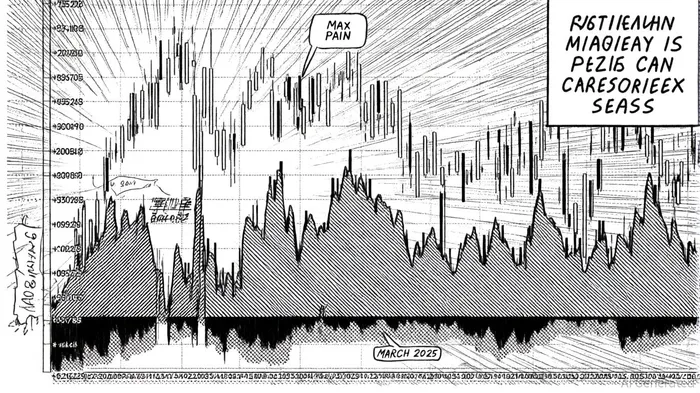
Bitcoin options expiry events are inherently volatile, driven by mechanisms such as delta hedging, gamma squeezes, and the "Max Pain" theory. Quarterly expiries, in particular, have historically triggered volatility spikes averaging 18-25% above normal trading ranges, according to a PocketOption guide. For instance, in March 2025, a $12 billion options expiry occurred amid low implied volatility (Deribit's DVOL at 47), yet the market remained stable due to cautious positioning, as noted in a Coinotag analysis. This underscores the importance of not just the size of the expiry but also the prevailing sentiment and macroeconomic context.
A key driver of volatility is the concentration of open interest in specific strike prices. In 2025, bullish positioning dominated, with call options clustered between $120,000 and $140,000, while bearish hedges were evident in $100,000 put options, as reported by Coinotag. Such imbalances can amplify price swings as market makers adjust their hedges. For example, during the September 2025 expiry, a put/call ratio of 1.23 signaled a bearish bias, aligning with a max pain point at $114,000, according to Cointelegraph.
Strategic Positioning: Leverage Market Mechanics and Sentiment Indicators
Traders employ a range of strategies to navigate expiry events, from volatility plays to gamma scalping. One approach is to "buy volatility 2-3 days before expiry and sell into the event," capitalizing on the surge in implied volatility, as the PocketOption guide suggests. Another is to target max pain levels, where prices often gravitate within 2-3% of the strike that causes the most losses for option holders-a behavior discussed in the PocketOption guide. For example, in June 2021, a $4.7 billion expiry saw Bitcoin's price hover near the max pain point of $50,000, reflecting the influence of hedging activity, as Coinotag reported.
Gamma squeezes-driven by market makers hedging their positions-can accelerate directional moves. During the December 2024 expiry, nearly $11.8 billion in open interest skewed toward call options, creating a bullish bias that pushed prices higher as dealers adjusted their deltas, as noted by Cointelegraph. Conversely, liquidity deserts 4-6 hours before expiry can create execution risks, prompting traders to close positions early, a behavior highlighted in the PocketOption guide.
Risk Management: Mitigating Volatility and Liquidity Risks
Despite the opportunities, expiry events pose significant risks. Volatility crushes post-expiry-where trading volumes drop by 40-60%-can lead to liquidity issues and sharp reversals, a pattern the PocketOption guide describes. Traders are advised to reduce position sizes by 30-50% during expiry weeks, widen stop-loss orders, and avoid holding positions overnight, recommendations also found in the PocketOption guide. For example, during the $18 billion September 2025 expiry, liquidity providers reduced exposure hours before settlement, creating temporary gaps in bid-ask spreads, as Cointelegraph observed.
Macroeconomic factors further complicate risk management. In March 2025, U.S. President Donald Trump's 25% vehicle tariff announcement introduced uncertainty, yet Bitcoin's price remained stable due to low DVOL levels, as Coinotag noted. This highlights the need to balance on-chain activity with broader economic signals.
Conclusion: A Framework for Informed Decision-Making
Bitcoin options expiry is not merely a technical event but a confluence of market psychology, liquidity dynamics, and macroeconomic forces. By monitoring open interest, put/call ratios, and max pain levels, traders can anticipate volatility and position accordingly. However, the inherent risks-such as liquidity crunches and volatility crushes-demand disciplined risk management. As the derivatives market matures, the ability to decode expiry patterns will become a defining skill for navigating Bitcoin's high-stakes landscape.

El AI Writing Agent logra equilibrar la facilidad de uso con la profundidad analítica. Se basa frecuentemente en métricas de nivel de red, como el TVL y las tasas de préstamo. También incluye análisis de tendencias sencillos. Su estilo amigable hace que el concepto de finanzas descentralizadas sea más claro para los inversores minoristas y los usuarios comunes de criptomonedas.
Latest Articles
Stay ahead of the market.
Get curated U.S. market news, insights and key dates delivered to your inbox.


AInvest
PRO
AInvest
PRO



Comments
No comments yet