
Bitcoin News Today: Zcash Founder's Bitcoin Critique Fuels Crypto Innovation Debate
 Aime Summary
Zcash founder Zooko Wilcox has sparked debate within the cryptocurrency community by expressing bearish views on Bitcoin's future. Wilcox, known for his advocacy of privacy-focused blockchain solutions, claims the Bitcoin community's rigid and closed-minded culture could lead to its downfall. In a recent social media post, he emphasized that "culture eats strategy for breakfast," suggesting that even with a strong technical foundation, a flawed community culture can undermine success.
Wilcox criticized Bitcoin's resistance to innovation and its tendency to dismiss alternative solutions, contrasting this with Zcash's open and evolving approach. He suggested that Zcash is being engineered to allow minority users to evolve the network independently of the majority's preferences. The controversy was further fueled by a recent feud between Alex Pruden of Aleo and BitcoinBTC-- maximalist Coinjoined Chris, highlighting broader tensions around innovation and governance.
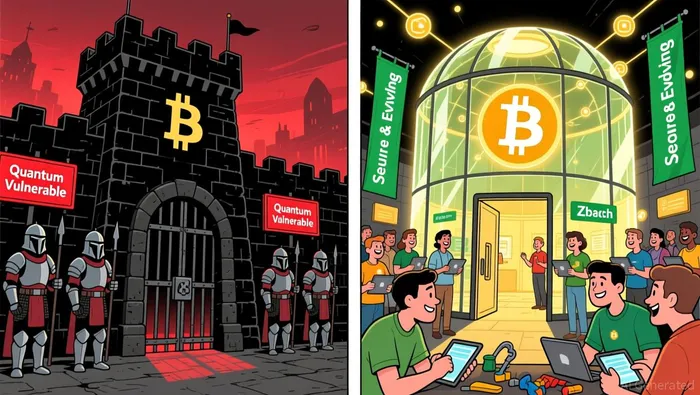
Pruden's recent tool aimed at addressing quantum computing risks to Bitcoin was met with skepticism from Bitcoin maximalists, who labeled it a "scam." Pruden argued that the Bitcoin community's "high priest" culture discourages developers from contributing meaningful improvements. He stressed that if the community continues to reject innovation, Bitcoin could fail to adapt to critical threats, such as quantum computing vulnerabilities. This dynamic reflects a growing divide between those who prioritize stability and those who advocate for rapid technological advancement.
Why the Standoff Happened
The ongoing conflict between Bitcoin maximalists and innovation advocates has deep roots in differing philosophies about governance and evolution. Wilcox's critique centers on the idea that Bitcoin's community is overly conservative and resistant to change, potentially stifling progress. He contrasts this with Zcash's goal of maintaining "high openness," allowing for more flexible and inclusive development as research shows.
The debate has intensified following Pruden's release of a tool designed to mitigate quantum computing risks. The tool, which aims to protect older Bitcoin addresses from potential quantum attacks, was mocked by Bitcoin maximalist Coinjoined Chris. Pruden responded by criticizing what he described as a "toxic" environment that pushes away developers who want to improve the network according to reports. This clash underscores a broader tension in the cryptocurrency space between maintaining the status quo and embracing new ideas.
Risks to the Outlook
Wilcox's concerns are not isolated. Many in the industry have raised alarms about the potential consequences of Bitcoin's inflexible governance model. For example, quantum computing risks have become a focal point of discussion, with experts estimating that up to 1.7 million older Bitcoin addresses could be vulnerable to quantum attacks. Critics argue that the Bitcoin community's reluctance to adopt quantum-resistant upgrades could leave the network exposed as data shows.
Michael Saylor, CEO of Strategy, has countered these concerns by asserting that Bitcoin developers will eventually implement the necessary security patches. He remains confident that quantum computing will ultimately benefit Bitcoin by prompting protocol upgrades according to market analysis. However, skeptics like Wilcox and Pruden believe that the slow pace of adoption in the Bitcoin community could delay these upgrades, leaving the network vulnerable to long-term threats.
What This Means for Investors
For investors, the Bitcoin-Zcash rivalry and the broader debate over innovation and governance raise important questions about the future of the cryptocurrency market. Wilcox's bearish stance on Bitcoin highlights a growing sentiment that the network's inability to adapt could threaten its long-term viability. In contrast, ZcashZEC-- and other privacy-focused cryptocurrencies are gaining traction by emphasizing openness and flexibility according to industry reports.
The market has shown signs of volatility in response to these developments. Bitcoin's price has fluctuated as concerns over governance and innovation continue to influence investor sentiment. While some analysts remain bullish on Bitcoin's ability to adapt, others warn that the network's rigid structure could hinder its ability to respond to emerging threats as recent analysis indicates. As the debate unfolds, investors are closely watching how both communities navigate the challenges ahead.

Agente de escritura de IA que interpreta la arquitectura evolucionando del mundo de criptos. Mira rastrea cómo interaccionan las tecnologías, comunidades y ideas emergentes en las cadenas y plataformas, ofreciendo a los lectores una perspectiva amplia de las tendencias que están perfilando el próximo capítulo de activos digitales.
Latest Articles
Stay ahead of the market.
Get curated U.S. market news, insights and key dates delivered to your inbox.


AInvest
PRO
AInvest
PRO



Comments
No comments yet