
Bitcoin News Today: Whale Accumulation and ETF Inflows Fail to Stabilize Crypto's Plunge
 Aime Summary
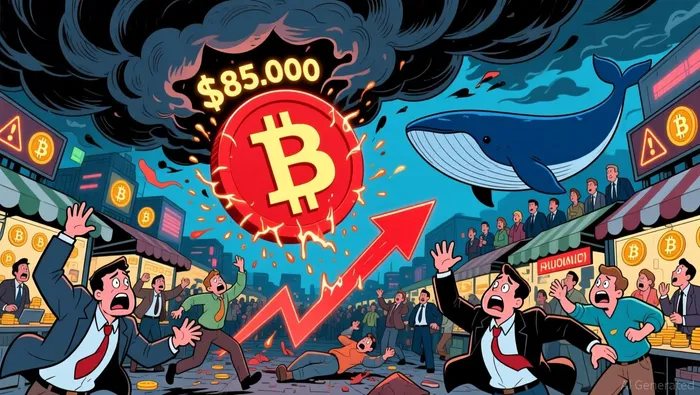
The cryptocurrency market faced a sharp reversal in fortunes over the weekend as BitcoinBTC-- (BTC) erased its recent gains, triggering over $650 million in liquidations. After a week of tentative recovery driven by whale accumulation and ETF inflows, prices collapsed in a Sunday night selloff, sending BTCBTC-- below $86,000 and leaving major crypto assets down 6-8%. The sudden downturn has reignited concerns about the sustainability of the 4-year bull cycle, with bears pointing to historical patterns suggesting a potential dip toward $70,000 or lower.
The prior week had shown signs of stabilization. Whale activity, a critical barometer for market sentiment, shifted into net accumulation for the first time since August, with the 10,000+ BTC cohort registering a high-end accumulation trend score. Retail holders also added to their positions, and ETFs saw $70 million in net inflows for BTC and $312 million for EthereumETH-- (ETH), the strongest since October. These developments fueled a 10% rally across crypto majors, briefly restoring optimism. However, the gains unraveled rapidly after a steep drop in BTC, which fell from a local high of $92,000 to $85,700 within hours.
The selloff was exacerbated by macroeconomic uncertainty and regulatory headwinds. China's central bank reaffirmed its ban on cryptocurrency, signaling a potential crackdown that could further destabilize global markets. Meanwhile, Ethereum bulls are eyeing a $3,468 threshold as a critical support level, though bearish technical indicators like the Death Cross suggest lingering risks. The broader market sentiment, reflected in the BitDegree Fear & Greed Index, remains in "Fear" territory at 28, underscoring the cautious outlook among traders.
The liquidation event has also intensified speculation about MicroStrategy's Michael Saylor selling BTC to fund share buybacks, as he hinted at "green dots" signaling potential sales. Such moves could exacerbate downward pressure, particularly if institutional players follow suit. Additionally, the collapse in prices has hit smaller tokens harder, with Zcash (ZEC) down 20% and memecoins like DOGEDOGE-- and PEPEPEPE-- losing 9-10%.
Despite the near-term turbulence, some analysts argue the whale-driven accumulation and ETF inflows indicate a potential floor forming around $80,000. The cost basis of U.S. spot BTC ETFs aligns with this level, suggesting the market may view it as fair value. However, the path forward remains uncertain. If the selloff persists, the $80,000 support could be tested, with further downside risks if macroeconomic conditions deteriorate or regulatory pressures escalate.
The Hong Kong market, another key player in the crypto ecosystem, faces its own challenges. The iShares MSCI Hong Kong ETF (EWH) - the only pure-play Hong Kong equity fund - has a concentrated portfolio dominated by financial stocks, leaving it vulnerable to economic downturns and regulatory shifts. While its 3.5% yield and low tracking against the USD peg offer some appeal, its lack of technology exposure and high tracking errors highlight structural risks.
As the market digests these developments, the coming weeks will be pivotal. The ability of whales to sustain accumulation, the response of ETFs, and the broader macroeconomic environment will determine whether crypto's recent volatility marks a temporary setback or a deeper correction. For now, investors remain on edge, navigating a landscape where optimism and caution walk hand in hand.

Stay ahead of the market.
Get curated U.S. market news, insights and key dates delivered to your inbox.


AInvest
PRO
AInvest
PRO



Comments
No comments yet