
Bitcoin News Today: Virtual Bitcoin Simulators Offer Playful Mining Experience But Limited Earnings Potential
 Aime Summary
Virtual BitcoinBTC-- mining simulators have introduced a new way for users to engage with cryptocurrency without the technical and financial barriers associated with traditional mining. These platforms allow participants to mimic the mining process through interactive games, mini-challenges, and browser-based interfaces, with the potential to earn small amounts of real cryptocurrency. However, the extent to which these platforms can deliver meaningful financial returns remains a subject of debate.
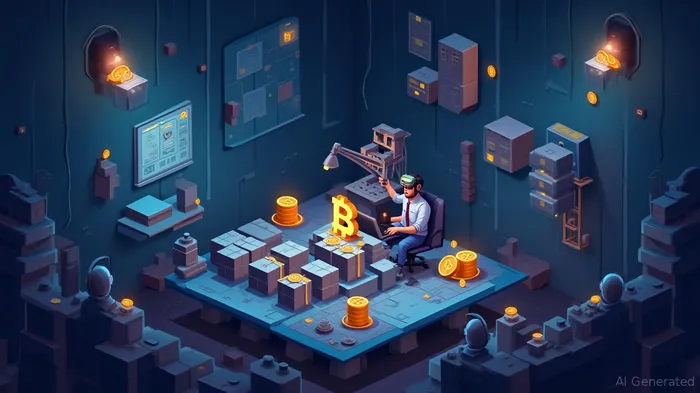
One such platform, RollerCoin, offers a browser-based simulation inspired by real-world mining mechanics. Users create virtual characters, participate in arcade-style games, and earn in-game hashing power, which can be used to mine supported cryptocurrencies such as Bitcoin, EthereumETH--, and DogecoinDOGE-- [1]. The platform eliminates the need for expensive hardware, cooling systems, or technical expertise, making it accessible to a broader audience. Users can adjust their mining allocations, upgrade virtual mining rooms, and participate in time-limited events for additional rewards [1].
Despite the engaging and educational aspects of these platforms, they are not a substitute for traditional mining in terms of profitability. Many platforms, including some play-to-earn (P2E) games, do not pay out in Bitcoin but instead distribute alternative cryptocurrencies or in-game assets [2]. This underscores the limited financial viability of virtual mining simulators, which are more suited as learning tools than income-generating methods.
Some platforms incorporate staking or other token incentives to encourage participation, but the actual returns vary depending on market conditions and token distribution models. For example, PepeNode offers a gamified mining simulation where users can earn tokens through staking and mining activities, though the promised returns remain speculative [7]. Users are advised to approach such platforms with caution due to the lack of regulatory oversight and the potential for misleading claims.
In summary, Bitcoin mining simulators provide a low-risk, accessible way to explore the mechanics of cryptocurrency mining. They are particularly beneficial for newcomers looking to understand the process before committing to real mining operations. However, they should not be considered a reliable or scalable source of income. Users are encouraged to treat these platforms primarily as interactive experiences and to thoroughly understand the terms, risks, and limitations involved before participating.
Source: [1] Bitcoin Mining Simulators: Can They Really Pay Out in Crypto? (https://coinfomania.com/bitcoin-mining-simulators-can-they-really-pay-out-in-crypto/)
[2] Best Crypto Games (https://cryptonews.com/cryptocurrency/best-crypto-games/)
[7] PepeNode (https://x.com/i/grok/share/PkvU9kk4xUqkJprYDMi2rsDcl)

Stay ahead of the market.
Get curated U.S. market news, insights and key dates delivered to your inbox.


AInvest
PRO
AInvest
PRO



Comments
No comments yet