
Bitcoin News Today: Trump Highlights Bitcoin as Public Digital Payments Infrastructure
 Aime Summary
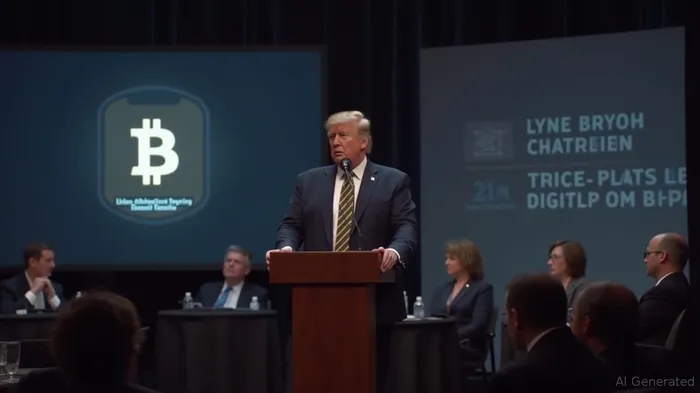
President Donald Trump has shared a congressional hearing video featuring Coin Center Director of Research Peter Van Valkenburgh delivering what Trump called the “greatest BitcoinBTC-- explanation of all time.” The clip shows how Van Valkenburgh articulated his defense of cryptocurrency and decentralized technology during committee testimony.
Van Valkenburgh’s explanation positions Bitcoin as the world’s first public digital payments infrastructure, comparing it to the Internet’s role in communications. His testimony describes Bitcoin as revolutionary because it allows value transfer without the need to trust corporate intermediaries. The Coin Center director emphasizes that Bitcoin allows anyone to send and receive value globally using only a computer and an internet connection. He contrasts this capability with traditional payment systems that require private banks to manage ledger entries between different account holders.
Van Valkenburgh draws parallels between Bitcoin and existing public infrastructure. He also noted that while society has public systems for information sharing through the Internet, cash remains the only public payments infrastructure for face-to-face transactions. The testimony highlights Bitcoin’s accessibility, stating that anyone regardless of nationality, race, religion, gender, or creditworthiness can create Bitcoin addresses at no cost to receive digital payments. This universal access contrasts with traditional banking systems that impose barriers and requirements.
Van Valkenburgh acknowledges Bitcoin’s limitations while defending its potential. He compares Bitcoin’s current state to email in 1972, suggesting that imperfect early implementations can evolve into transformative technologies over time. The presentation argues that corporate intermediaries providing critical infrastructure are becoming fewer, larger, and more powerful while their failures grow more severe. Van Valkenburgh cites multiple examples, including the EquifaxEFX-- breach affecting 143 million Americans and SWIFT network vulnerabilities.
His testimony references the Punjab National Bank fraud totaling $1.8 billion, describing it as the largest electronic bank robbery in history. These examples support his argument for decentralized alternatives that eliminate single points of failure. The Internet of Things vulnerabilities receive attention in Van Valkenburgh’s presentation, citing hacked pacemakers, baby monitors, and vehicles as evidence that centralized systems create security risks. He argues that distributed blockchain networks can address these systemic weaknesses.
Trump’s endorsement of the video elevates Van Valkenburgh’s explanation to presidential attention, providing mainstream credibility to Bitcoin education efforts. Social media amplification exposes cryptocurrency concepts to broader audiences beyond traditional cryptocurrency communities. The timing of Trump’s post aligns with his administration’s pro-cryptocurrency policies including support for the GENIUS Act and digital asset framework development. Van Valkenburgh’s explanation provides educational foundation supporting these legislative initiatives.

Stay ahead of the market.
Get curated U.S. market news, insights and key dates delivered to your inbox.


AInvest
PRO
AInvest
PRO



Comments
No comments yet