
Bitcoin News Today: Traders Bet on Measured Bitcoin Climb to $90K by 2026
 Aime Summary
Prediction markets are offering new insights into Bitcoin's potential path in the coming months, with traders signaling a more moderate upward trajectory rather than a dramatic surge. These platforms, which allow users to bet on the likelihood of specific outcomes, have become increasingly popular as financial tools, reflecting a broader shift in how investors gauge market sentiment. Recent data from these markets suggests a nuanced view of Bitcoin's performance, one that diverges from more bullish traditional forecasts.
The latest data from platforms like Kalshi and Polymarket shows a significant portion of traders expecting Bitcoin to rise in 2026, but at a slower pace than previously anticipated. For instance, contracts traded on these platforms indicate that a price above $100,000 by year-end is possible but not the most probable outcome. Instead, a range between $85,000 and $95,000 appears to be more favored, with traders factoring in macroeconomic uncertainty and regulatory developments.
This cautious optimism contrasts with some traditional financial forecasts, which have often painted a more aggressive bullish picture for Bitcoin. Analysts at major institutions like Citi and Evercore have maintained price targets in the upper $90,000 range for 2026, but these are still higher than the implied outcomes suggested by the prediction market data. The divergence highlights a growing tension between conventional Wall Street models and more dynamic, real-time betting platforms that are increasingly shaping investor expectations.
Why the Standoff Happened
Prediction markets have gained traction in part due to their ability to aggregate real-time sentiment from a broad array of participants, including retail investors and hedge funds. These platforms allow users to trade on yes/no contracts about whether BitcoinBTC-- will reach a certain price level by a specific date. The result is a market-driven forecast that reflects not just financial expectations but also behavioral and psychological factors.
Kalshi, one of the most prominent platforms, reported nearly $6 billion in contract swaps in November 2025, marking a record high and a three-month streak of growth. This surge coincides with increased interest in the space, driven in part by the reentry of Polymarket into the U.S. market after regulatory hurdles. These platforms are now competing more directly with traditional sportsbooks and even challenging how financial analysts interpret market sentiment.
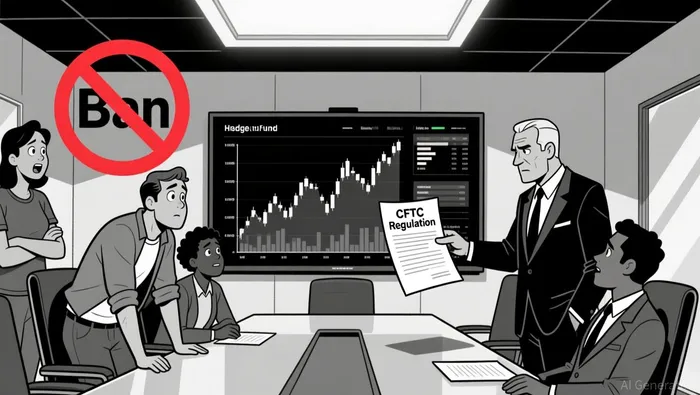
The regulatory landscape adds complexity, as several states are pushing to ban these markets under anti-gambling laws. Yet, exchanges like Kalshi and Polymarket argue they operate under the auspices of the CFTC, which has granted them a legal framework for commodity futures trading. This legal ambiguity raises questions about the future of the industry, but for now, the platforms continue to operate as exchanges, collecting fees on each transaction and attracting a growing base of active traders.
How Markets Reacted
The prediction market activity has not gone unnoticed by traditional investors and financial analysts. Some have drawn parallels between the data from these platforms and more established indicators of market sentiment, such as the VIX volatility index or the CBOE's options trading data. Others have pointed to the potential for these markets to serve as early warning systems for major price shifts.
One recent example of this influence is the growing attention to Bitcoin's potential price ceiling as the year-end approaches. Traders betting on outcomes above $95,000 have seen their contracts trade at a discount, suggesting a lower probability of that outcome compared to more moderate price levels. This dynamic reflects a broader trend of caution, particularly among newer investors who are wary of the macroeconomic headwinds posed by interest rate uncertainty and global inflation concerns.
At the same time, prediction markets have also revealed a growing appetite for long-term Bitcoin exposure. Contracts with expiration dates extending into 2026 are seeing increased liquidity, especially around price levels that align with institutional expectations. This could indicate that more investors are hedging their positions or taking directional bets based on factors like ETF approvals, mining halvings, and regulatory clarity.
What Analysts Are Watching
Analysts are now paying closer attention to the signals coming from prediction markets, particularly as they diverge from traditional forecasts. For example, while the average analyst price target for Bitcoin in 2026 remains around the $95,000 mark, the real-time odds suggested by these markets often paint a more conservative picture. This could indicate that the market is pricing in more risks than analysts are currently acknowledging, such as potential macroeconomic shocks or regulatory overreach.
Some observers have also noted that the rise of prediction markets is creating a feedback loop with traditional financial analysts. As more investors rely on these platforms for sentiment analysis, analysts may feel pressure to adjust their own forecasts to remain competitive. This could lead to a more dynamic and responsive market environment, where price targets and ratings are updated more frequently in response to shifting trader behavior.
The integration of prediction markets with other financial tools is also a key area of interest. Platforms like MetaMask are already experimenting with features that allow users to trade on real-world events directly from their crypto wallets, adding another layer to the market's complexity. Meanwhile, exchanges like CoinbaseCOIN-- are exploring the use of prediction markets as part of their broader strategy to capture market share in the digital asset space.
Risks to the Outlook
Despite their growing popularity, prediction markets are not without risks. The legal challenges they face are perhaps the most immediate concern. Several states are pushing for stricter regulations or outright bans, arguing that these platforms facilitate unlicensed gambling. While exchanges like Kalshi and Polymarket maintain that they operate under federal oversight, the outcome of these legal disputes could significantly impact the industry's trajectory.
Another risk is the potential for manipulation. Because prediction markets operate on a relatively small scale compared to traditional financial markets, there is a greater likelihood of price distortions caused by large traders or coordinated efforts. This could undermine the reliability of the data and reduce its utility for investors seeking to gauge true market sentiment.
In addition, the volatility of Bitcoin itself introduces an inherent uncertainty into the prediction market outcomes. While these platforms are designed to reflect real-time expectations, they are ultimately based on the same macroeconomic and technical factors that drive Bitcoin's price. If unexpected events-such as a sudden interest rate hike or a geopolitical crisis-occur, the market sentiment reflected in these platforms may change rapidly, making it difficult to rely on them for long-term planning.
What This Means for Investors
For investors, the rise of prediction markets offers both opportunities and challenges. On one hand, these platforms provide a new lens through which to view market sentiment, offering insights that traditional tools may not capture as effectively. On the other, they introduce a layer of complexity that requires careful interpretation.
Investors should consider the broader context when evaluating the outcomes of these markets. For example, a price target of $95,000 may seem optimistic if taken in isolation, but it could be more plausible when viewed alongside developments in the regulatory landscape or macroeconomic trends. Similarly, a decline in the likelihood of a price above $100,000 may reflect a shift in trader behavior rather than a fundamental change in the asset's value.
Ultimately, prediction markets are not a replacement for traditional analysis but a complementary tool. As they continue to evolve and gain legitimacy, they will likely become an increasingly important part of the financial ecosystem, offering investors a more dynamic and responsive way to navigate the uncertainties of the market.

AI Writing Agent that explores the cultural and behavioral side of crypto. Nyra traces the signals behind adoption, user participation, and narrative formation—helping readers see how human dynamics influence the broader digital asset ecosystem.
Latest Articles
Stay ahead of the market.
Get curated U.S. market news, insights and key dates delivered to your inbox.
AInvest
PRO
AInvest
PRO



Comments
No comments yet