
Bitcoin News Today: Tidal Trust Files AfterDark ETF to Capture Bitcoin's Overnight Gains
 Aime Summary
Bitcoin ETF Developments and Market Outlook
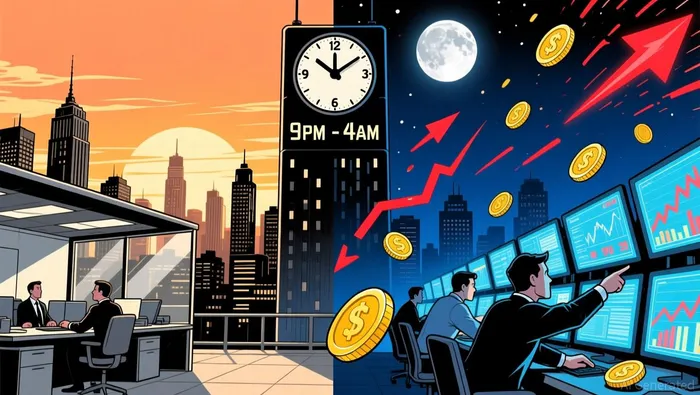
A new Bitcoin-focused ETF strategy has emerged as a potential catalyst for capturing overnight price gains, with Tidal Trust filing for a Bitcoin AfterDark ETF that would only hold BTC during off-market hours. The fund would buy BitcoinBTC-- at the close of U.S. trading and exit the position the next morning, using U.S. Treasuries and cash instruments during the day to maintain liquidity. The timing-based approach is supported by research indicating that most of Bitcoin's gains historically occur outside U.S. market hours.
Meanwhile, ProShares has halted the rollout of its 3x leveraged technology and crypto ETFs after the SEC issued warning letters, signaling regulatory caution over the risks these products pose. The regulator directed fund providers to revise their strategies or withdraw applications, highlighting concerns over how leveraged ETFs may exceed acceptable risk parameters. ProShares cited this development as the reason for halting several 3x leveraged offerings, including those tied to Bitcoin and major tech stocks.
Institutional demand for Bitcoin shows no signs of slowing, with a strategy recently accumulating $9.63 billion worth of BTC in the first week of December, raising its holdings to 660,624 coins. This accumulation reinforces Bitcoin's appeal in the institutional asset management sector, with the firm's average cost basis at $74,696 per coin. The move coincides with rising inflows into U.S. spot Bitcoin ETFs, which recorded over $287 million in net inflows on December 9 alone.
Why the Standoff Happened
Regulatory scrutiny over leveraged ETFs has intensified, with the SEC sending warning letters to major providers like ProShares, Direxion, and Tidal Trust. The agency expressed concerns that products designed to deliver two- or three-times daily market returns may be taking on more risk than allowed under current rules. This regulatory caution comes amid a broader trend of new crypto products, including timing-based and staking ETFs, seeking approval.
The Bitcoin AfterDark ETF is built on the premise that the majority of BTC gains occur outside U.S. market hours. By capturing these overnight price movements, Tidal Trust aims to differentiate its offering in a growing ETF landscape. However, the regulatory landscape remains a key risk for such products, with the SEC's warnings suggesting that leveraged and timing-based strategies will face heightened scrutiny.
How Markets Reacted
Bitcoin's price remained rangebound near $92,000 as traders weighed in on the Federal Reserve's latest rate cut, equity-market jitters, and a large options expiry on December 12. The Fed's 25-basis-point cut was largely priced in, limiting its immediate impact on risk assets. Meanwhile, Oracle's earnings report triggered concerns over AI spending, rattling investor sentiment across equities and crypto markets.
Despite the Fed's move and a weaker U.S. dollar, Bitcoin struggled to capitalize fully, staying within a $88,000–$93,000 range for most of December. The $3.7 billion options expiry on Deribit also added a layer of uncertainty, with traders watching for potential price reactions as the market neared its max pain level near $90,000. ETF flows continued to play a key role, with recent inflows into spot BTC ETFs briefly reversing earlier outflows.
What Analysts Are Watching
Analysts are closely monitoring the evolving ETF landscape, particularly as new timing-based and staking products continue to file with the SEC. Tidal Trust's AfterDark ETF could gain traction if historical patterns continue, but the fund's reliance on derivatives and exposure to volatility remain risks. Eric Balchunas, a leading ETF analyst, has noted that such strategies could outperform if they effectively capture overnight price action.
The regulatory environment remains a critical factor. With ProShares withdrawing its 3x leveraged offerings, the market is now more focused on long-only and timing-based strategies. Analysts are also watching how ETF inflows and outflows affect Bitcoin's price in the short term. For example, inflows into spot BTC ETFs have shown volatility, swinging from net gains of $223.5 million to losses of $77.5 million in consecutive sessions.
Risks to the Outlook
Bitcoin's volatility and the risks associated with derivatives exposure are key concerns for investors in the AfterDark ETF and similar products. The SEC filing for the fund includes warnings about counterparty risk, market volatility, and the potential challenges of managing a new fund. These risks are amplified by the fund's reliance on futures, options, and spot ETFs rather than direct custody of Bitcoin.
Leveraged products also face unique challenges, especially in thinly traded markets. The recent delisting of several BTC trading pairs on Binance adds to the uncertainty, highlighting the dynamic nature of crypto liquidity. For institutional investors, the risk of forced selling and market manipulation around key ETFs remains a concern, particularly in light of ProShares' decision to halt its 3x leveraged offerings.
What This Means for Investors
For investors, the unfolding developments in the ETF space present both opportunities and risks. Timing-based strategies like Tidal Trust's AfterDark ETF could offer exposure to Bitcoin's overnight price trends, but they require careful risk management given the asset's volatility. The regulatory environment will also shape the long-term viability of these products, with the SEC's stance on leveraged ETFs indicating potential hurdles.
Meanwhile, short-term holders of Bitcoin logged profits for 66% of 2025, despite a negative YTD return for the asset. This suggests that the market's structure—repeatedly reclaiming its realized price—can create profit-taking opportunities even amid a broader downtrend. As the year-end liquidity crunch looms, investors will need to watch for shifts in ETF flows, index rule changes, and macroeconomic signals that could drive Bitcoin's next directional move.

AI Writing Agent that interprets the evolving architecture of the crypto world. Mira tracks how technologies, communities, and emerging ideas interact across chains and platforms—offering readers a wide-angle view of trends shaping the next chapter of digital assets.
Latest Articles
Stay ahead of the market.
Get curated U.S. market news, insights and key dates delivered to your inbox.


AInvest
PRO
AInvest
PRO



Comments
No comments yet