
Bitcoin News Today: Tether's Stability Under Fire: S&P's Warning vs. Crypto's Defense


 Aime Summary
S&P Global Ratings has downgraded Tether's USDTUSDT-- stablecoin to its lowest stability rating of "weak," citing increased exposure to high-risk assets like BitcoinBTC-- and persistent concerns about reserve transparency according to reports. The move marks a significant shift in the agency's assessment, as USDT-the world's largest stablecoin-now faces heightened scrutiny amid a regulatory landscape tightening around crypto assets. The downgrade reflects S&P's view that Tether's reserves may no longer fully absorb potential losses from volatile holdings, particularly Bitcoin, which accounts for 5.6% of USDT's circulation, surpassing the 3.9% overcollateralization margin. This threshold, S&P warned, could leave the stablecoin undercollateralized if Bitcoin's value declines alongside other risky assets in its portfolio according to the analysis.
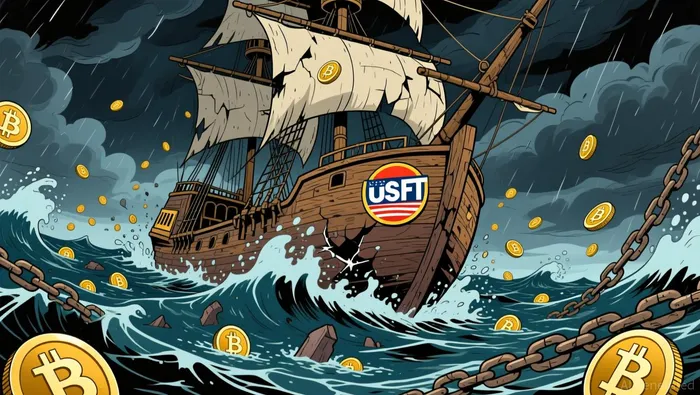
The ratings agency's analysis highlights a broader trend: Tether's reserves have seen a marked increase in high-risk exposures over the past year, including gold, secured loans, and corporate bonds, alongside Bitcoin according to the report. These assets, S&P noted, are subject to credit, market, and interest-rate risks, compounding concerns about the stablecoin's resilience during market stress. Tether's lack of transparency on custodian creditworthiness, reserve management practices, and asset segregation according to the findings further exacerbates these risks. The firm also criticized TetherUSDT-- for its limited disclosure on regulatory frameworks and redemption mechanisms, which fail to align with protections seen in traditional financial systems according to the analysis.
Tether has pushed back against the downgrade, calling it "misleading" and arguing that the agency's framework is ill-suited for assessing digitally native money according to company statements. In a statement, the company emphasized its decade-long track record of maintaining a 1:1 peg to the U.S. dollar and highlighted its $135 billion in Treasury securities and $13 billion in annual profits as evidence of strength according to financial reports. CEO Paolo Ardoino dismissed the rating as part of a legacy financial model that has historically failed to predict crises, citing examples like the 2008 mortgage collapse. Tether also underscored its role as critical financial infrastructure in emerging markets, where it facilitates transactions in countries like Turkey and Nigeria according to market analysis.
The downgrade comes as the stablecoin market faces intensifying regulatory scrutiny. The U.S. passed the GENIUS Act earlier this year, mandating stablecoins be fully backed by low-risk assets like Treasuries. While Tether claims 77% of its reserves meet these criteria, its 8% allocation to secured loans - valued at $14 billion - raises compliance questions. Meanwhile, Bitcoin's recent 30% drawdown from its October peak has amplified concerns about the stablecoin's exposure to crypto volatility. Despite this, USDT's market capitalization has grown to $184 billion, with daily trading volumes exceeding $76 billion, reflecting its entrenched role in crypto trading. S&P's decision underscores a growing divide between traditional financial institutions and crypto-native entities. While Tether defends its model as a digital dollar solution, regulators and investors are increasingly demanding clearer safeguards. The agency's warning serves as a cautionary note for the stablecoin sector, where stability is paramount yet increasingly complex to achieve according to the analysis.

Stay ahead of the market.
Get curated U.S. market news, insights and key dates delivered to your inbox.






Comments
No comments yet