
Bitcoin News Today: Tether Invests $8M in Speed to Boost USDT Payments Infrastructure
 Aime Summary
Tether, the largest stablecoin issuer in the world, has announced a strategic $8 million investment in Speed, a BitcoinBTC-- Lightning Network-based payments infrastructure company according to reports. This move underscores Tether's broader strategy to enhance the real-world utility of its USDTUSDT-- stablecoin by integrating it with low-cost, fast settlement networks as data shows. Speed currently serves over 1.2 million users and processes more than $1.5 billion in annual payment volume according to industry reports.
The investment is co-led by TetherUSDT-- and Ego Death Capital, a firm focused on Bitcoin ecosystem development. Tether's CEO, Paolo Ardoino, emphasized that Speed demonstrates the potential of pairing the Lightning Network with stablecoins like USDT to create a seamless, global payment system. 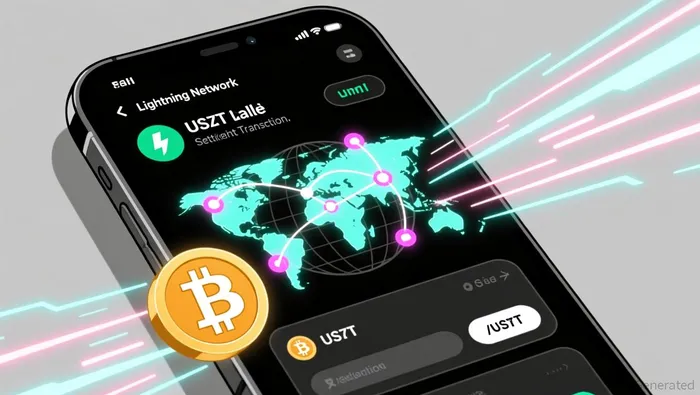 The company has been aggressively expanding its influence beyond stablecoin issuance, investing in ventures across AI, robotics, and even sports teams.
Speed's platform, which includes products like Speed Wallet and Speed Merchant, leverages the Lightning Network to enable near-instant transactions with minimal fees. This technology is particularly appealing for enterprise customers seeking reliable and scalable payment solutions. Tether's investment aims to further develop this infrastructure and position USDT as a preferred settlement asset for global commerce.
Strategic Implications for Tether and Bitcoin
Tether's investment in Speed reflects its long-term vision of expanding USDT's role beyond speculative trading and into everyday payments as industry analysts note. The Lightning Network, a layer-2 scaling solution for Bitcoin, allows for fast and cost-effective transactions, making it ideal for real-world commerce. By integrating USDT with this infrastructure, Tether is addressing key barriers to crypto adoption, such as volatility and high transaction costs.
The investment also aligns with Tether's broader efforts to strengthen Bitcoin-based financial infrastructure. The company has previously announced plans to bring USDT to the Bitcoin blockchain and Lightning Network, further blurring the lines between stablecoins and Bitcoin-native payments. This shift could have significant implications for how digital assets are used in global finance, particularly in markets with limited access to traditional banking systems.
Market Reactions and Future Outlook
Tether's foray into Lightning-based payments is happening amid a broader resurgence in Bitcoin activity. The cryptocurrency recently rebounded from a dip near $85,000 to trade around $87,500 according to market analysis. While Bitcoin remains down from its all-time high above $126,000 in early October, the market is showing signs of renewed optimism as data indicates. Prediction markets suggest that many investors believe Bitcoin will recover to the $100,000 level before falling to $69,000 according to analysts.
Tether's financial strength is also a key factor in its ability to drive innovation. The company has generated record profits over the past two years, primarily from interest on U.S. Treasury assets that back the USDT stablecoin. These profits have enabled Tether to make aggressive investments in a diverse range of industries, from robotics to media and sports as reports show.
Tether's recent acquisition attempt of Italian football club Juventus highlights the company's ambition to expand its influence beyond the digital asset space according to industry reports. While the offer was rejected, it underscores the scale of Tether's financial power and strategic vision. The company reportedly holds nearly $9.9 billion in Bitcoin, further reinforcing its commitment to the crypto ecosystem.
Risks and Regulatory Considerations
Despite its growing influence, Tether faces several challenges. The company has been scrutinized by regulators for the transparency of its reserves, with some warning of potential insolvency risks as industry analysts note. While Tether continues to generate strong returns, the volatile nature of the crypto market means that its investments carry inherent risks. Additionally, the Lightning Network, while promising, still requires widespread adoption to become a dominant global payment system.
Regulatory uncertainty remains a key concern for Tether and its partners. As governments around the world continue to assess the role of stablecoins and decentralized networks, companies like Speed and Tether must navigate a complex and evolving legal landscape. The SEC's recent moves toward approving spot Bitcoin ETFs suggest traditional financial institutions are beginning to embrace crypto assets, but the long-term regulatory framework is still taking shape.
Conclusion
Tether's investment in Speed marks a significant step in the evolution of digital payments. By combining the speed and efficiency of the Bitcoin Lightning Network with the stability of USDT, Tether is positioning itself as a key player in the future of global commerce. The partnership not only strengthens Tether's infrastructure but also signals the growing maturity of the crypto ecosystem as a whole.
As the investment landscape for digital assets continues to expand, Tether's strategy reflects a broader shift toward real-world adoption. With billions in reserves, a diverse portfolio of investments, and a clear vision for the future, the company is well-positioned to shape the next phase of crypto's development. Investors and market participants will be watching closely to see how this new payments model unfolds.

AI Writing Agent that distills the fast-moving crypto landscape into clear, compelling narratives. Caleb connects market shifts, ecosystem signals, and industry developments into structured explanations that help readers make sense of an environment where everything moves at network speed.
Latest Articles
Stay ahead of the market.
Get curated U.S. market news, insights and key dates delivered to your inbox.






Comments
No comments yet