
Bitcoin News Today: Tether's Fragile Peg Exposes Altcoin Market's Systemic Weakness


 Aime Summary
Altcoin Sherpa, a prominent crypto analysis platform, has issued a bearish outlook for the altcoin market, asserting that most alternative cryptocurrencies will fail to reach all-time highs (ATHs) and could potentially plummet to zero. This prognosis aligns with recent developments in the stablecoin sector, particularly S&P Global Ratings' downgrade of Tether's USDT stablecoin to "weak" from "constrained," citing heightened exposure to volatile assets like BitcoinBTC-- and insufficient reserve transparency. The downgrade underscores systemic risks in the crypto ecosystem, where stablecoins like USDT-pegged to the U.S. dollar-serve as critical liquidity providers for trading pairs and cross-chain transactions.
Tether, the issuer of USDTUSDT--, maintains that its reserves are fully collateralized by assets such as U.S. Treasury bills, corporate bonds, and gold. However, S&P analysts Rebecca Mun and Mohamed Damak highlighted that Bitcoin now constitutes 5.4% of Tether's reserves, up from 3.6% in the prior period. This shift exposes the stablecoin to volatility risks, as a decline in Bitcoin's value could reduce reserve coverage and trigger undercollateralization. While USDT has so far maintained its $1 peg, the downgrade signals growing concerns about its resilience during market downturns.
The implications for altcoins are significant. Stablecoins like USDT are often used as a benchmark for measuring price performance in the crypto market. A loss of confidence in USDT's stability could disrupt trading volumes and liquidity, particularly for smaller altcoins reliant on stablecoin pairs. This dynamic is exacerbated by broader macroeconomic factors, including Bitcoin's recent drawdown of over 30% from its October peak and outflows from Bitcoin ETFs, which have pressured overall market sentiment. 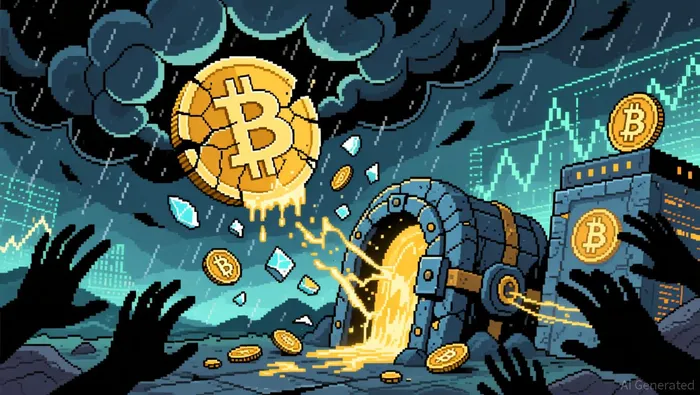 Altcoin Sherpa's analysis suggests that without robust liquidity and stable collateral, many altcoins lack the structural support to sustain ATH rallies.
Compounding these risks is the opaque nature of tokenomics in some blockchain projects. For instance, Sei Network's (SEI) token unlock schedule reveals a complex vesting timeline for its 10 billion token supply, with allocations spread across investors, teams, and ecosystem reserves. While such tokenomics aim to incentivize long-term participation, large-scale unlocks could introduce downward pressure on prices if not managed carefully. This aligns with Altcoin Sherpa's warning that speculative projects with inadequate utility or governance models are particularly vulnerable to market corrections.
Despite these challenges, TetherUSDT-- defends its operations, emphasizing its role as a top-17 holder of U.S. Treasury bills and its commitment to real-world asset (RWA) initiatives like the XAUT gold-backed token according to S&P's report. The company's gold acquisitions, which have surpassed those of some central banks, reflect efforts to diversify collateral and align with emerging RWA trends. However, S&P's report stresses that transparency remains a critical gap, as Tether has not conducted a comprehensive audit since its launch. This lack of scrutiny contrasts with competitors like USDCUSDC--, which offer direct redemptions and real-time reserve disclosures.
As the stablecoin market faces intensified regulatory scrutiny, Tether's ability to address these concerns will be pivotal. For altcoins, the path to recovery hinges on broader market stability, improved transparency in collateral management, and robust use cases beyond speculative trading. Altcoin Sherpa's analysis serves as a cautionary note: in a landscape where liquidity and trust are paramount, projects lacking structural integrity may struggle to survive the next bear market.

Stay ahead of the market.
Get curated U.S. market news, insights and key dates delivered to your inbox.


AInvest
PRO
AInvest
PRO



Comments
No comments yet