
Bitcoin News Today: Tether's S&P Downgrade Highlights Risks in Opaque Stablecoin Reserves


 Aime Summary
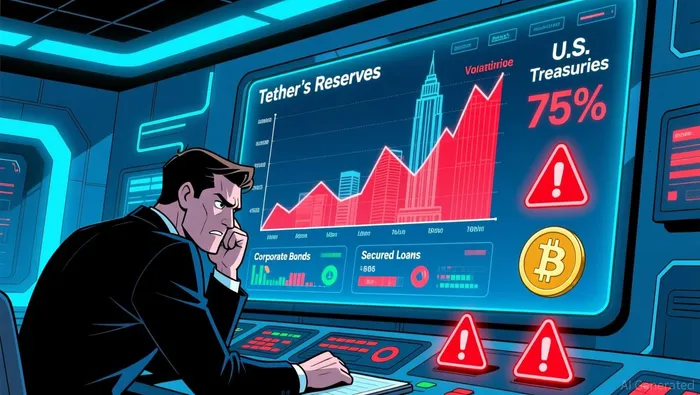
S&P Global Ratings has downgraded Tether's USDTUSDT-- stablecoin to its lowest stability rating of "5 (weak)," citing increased exposure to high-risk assets like BitcoinBTC-- and persistent gaps in reserve disclosure. The ratings agency highlighted that Bitcoin now accounts for 5.6% of USDT's reserves, surpassing the previously stated 3.9% overcollateralization buffer, raising concerns that a sharp drop in BTC's value could leave the token undercollateralized. S&P also flagged risks from other volatile assets in Tether's portfolio, including gold, corporate bonds, and secured loans, which lack transparency in valuation and creditworthiness.
Tether CEO Paolo Ardoino has strongly rejected the downgrade, accusing S&P of applying a "legacy framework" that fails to account for the scale and macroeconomic role of digitally native assets. In a public statement, Ardoino dismissed the critique as part of a broader "traditional finance" resistance to innovation, claiming TetherUSDT-- is "the first overcapitalized firm in the financial industry" with no "toxic" assets in its reserves. The company emphasized its quarterly independent attestations and a $181.2 billion reserve base, including $113 billion in U.S. Treasuries, to defend its stability.
The downgrade has sparked significant concern in China's underground crypto market, where USDT is a critical infrastructure for trading. Over 20 million Chinese users rely on the stablecoin to access digital assets despite the 2021 ban on crypto transactions. Social media platforms like Weibo and WeChat reflect mixed reactions, with some traders dismissing the downgrade as routine FUD (fear, uncertainty, and doubt) while others warn of catastrophic consequences if USDT's peg is disrupted. Conspiracy theories about rival stablecoins like USDCUSDC-- orchestrating the S&P move have also gained traction, with critics positioning them as more transparent and compliant alternatives.
S&P's analysis underscores broader regulatory scrutiny of stablecoins, which are now under the spotlight as the U.S. implements the GENIUS Act, requiring 1:1 backing by short-term government bonds and liquid assets. Tether's reserve composition, with 13% in volatile assets and 8% in secured loans, falls short of these standards, according to the agency. The firm has previously committed to phasing out secured loans but has not met that target, with such assets still valued at $14 billion as of September 2025 according to the agency.
The downgrade tests the resilience of USDT, which maintains a $184 billion market cap and has historically retained its peg through market downturns. However, S&P noted that Tether's limited transparency on custodian creditworthiness and lack of asset segregation could exacerbate risks during a crisis. For now, the stablecoin remains a linchpin in global crypto markets, particularly in regions with limited access to U.S. dollars, even as regulators and critics push for stricter oversight according to market analysis.

Stay ahead of the market.
Get curated U.S. market news, insights and key dates delivered to your inbox.


AInvest
PRO
AInvest
PRO



Comments
No comments yet