
Bitcoin News Today: Systemic Risks of Centralized Clouds Drive DePIN Interest Post-Outage


 Aime Summary
Cloudflare's global outage on November 18, 2025, disrupted major websites and cryptocurrency platforms, reigniting debates about the vulnerabilities of centralized internet infrastructure and fueling renewed interest in decentralized solutions like DePIN. The outage, triggered by an "unusual spike in traffic" to one of Cloudflare's services, caused widespread errors affecting services such as OpenAI's ChatGPT, Shopify, Elon Musk's X, and multiple crypto-related platforms including BitMEX and ToncoinTON-- according to reports. The incident underscored the fragility of centralized systems, with Cloudflare's status page reporting widespread 500 errors and API failures.
The outage cascaded into the crypto ecosystem, with block explorers like Arbiscan and DefiLlama experiencing downtime as reported. BitMEX confirmed outages tied to the CloudflareNET-- issues, while the incident pushed Cloudflare's stock (NET) down 3.5% in pre-market trading according to market data. The event followed a similar outage at Amazon Web Services (AWS) in October 2025, which disrupted major blockchains like Coinbase's Base and Infura according to analysis. Experts highlighted the systemic risks of centralized infrastructure, noting that a single point of failure can ripple across industries. Fadl Mantash, CISO at TribeTRIBE-- Payments, emphasized that "payments are particularly exposed" due to their reliance on interconnected cloud platforms, APIs, and authentication tools as stated in a report.
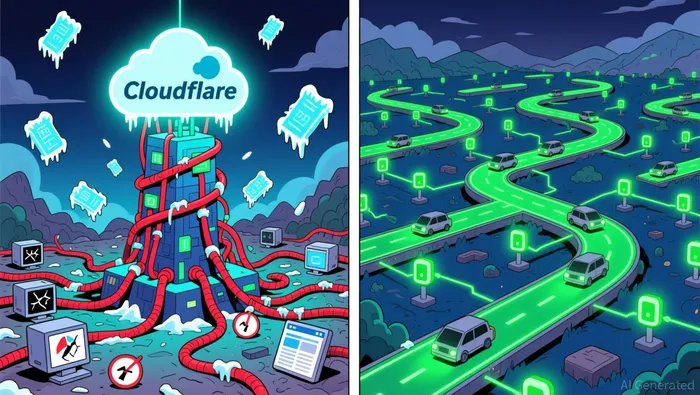 The outage amplified calls for DePIN (Decentralized Physical Infrastructure Networks), a model that leverages blockchain incentives to build and maintain real-world infrastructure. DePIN advocates argue that distributing infrastructure across decentralized nodes-such as underutilized PCs or community-run networks-reduces the risk of single-point failures according to industry experts. Nökkvi Dan Ellidason, CEO of Gaimin, a DePIN project focused on cloud infrastructure, stated, "We must move to a truly distributed cloud model. By harnessing existing globally dispersed resources, Gaimin is building a network where capacity is spread across regions and continents, making it difficult for a single error to take down the whole global system." as reported
Meanwhile, the blockchain's resilience during the outage contrasted sharply with Web2 disruptions. While centralized services faltered, on-chain transactions remained operational, reinforcing blockchain's appeal as a reliable alternative. Analysts noted that the event could drive short-term volatility in crypto markets, with BitcoinBTC-- (BTC) and EthereumETH-- (ETH) potentially benefiting from increased interest in decentralized solutions according to market analysis. Historical data suggests similar outages have correlated with a 2-5% rise in BTCBTC-- dominance metrics, as investors shift toward proven decentralized assets according to research.
The incident also highlighted broader infrastructure challenges. Tata Consultancy Services (TCS) and partners recently announced initiatives to build sovereign cloud infrastructure in East Africa and Australia, aiming to address data sovereignty concerns and selected by Lion to transition to modern cloud infrastructure. While these projects focus on regional resilience, the Cloudflare outage underscores the global need for diversified infrastructure strategies. As Mantash observed, "The digital economy's vulnerability has become evident. When a single provider experiences issues, the impact cascades across industries," a sentiment echoed in calls for both regional and global infrastructure diversification.

Stay ahead of the market.
Get curated U.S. market news, insights and key dates delivered to your inbox.




Comments
No comments yet