
Bitcoin News Today: Stablecoin's Volatile Foundation: Tether's Bitcoin-Gold Hedge Under Fire


 Aime Summary
Tether, the issuer of the largest stablecoin USDTUSDT--, faces mounting scrutiny over its hedging strategy, with analysts warning that a significant drop in the value of BitcoinBTC-- and gold could threaten the stablecoin's solvency. The concerns follow a downgrade from S&P Global Ratings, which cited an increase in high-risk assets backing USDT, and warnings from industry figures like Arthur Hayes, co-founder of BitMEX, who highlighted the risks of Tether's exposure to volatile markets. Tether's CEO, Paolo Ardoino, has dismissed the criticism, asserting the company's model is "overcapitalized" and free of "toxic" assets according to recent reports. However, the debate underscores growing unease over the stability of stablecoins amid shifting macroeconomic conditions.
Tether's reserve strategy has pivoted toward Bitcoin and gold in response to expectations of Federal Reserve rate cuts, which would reduce returns on traditional short-term assets like Treasury bills. According to Tether's latest attestation, Bitcoin now accounts for 5.6% of USDT's reserves, exceeding its 3.9% overcollateralization margin. Hayes argues this shift positions TetherUSDT-- for a rate-cut cycle but exposes it to a "multi-billion-dollar" risk if Bitcoin or gold prices decline sharply. A 30% drop in the value of these assets, he warns, could erase Tether's equity cushion, potentially triggering insolvency .
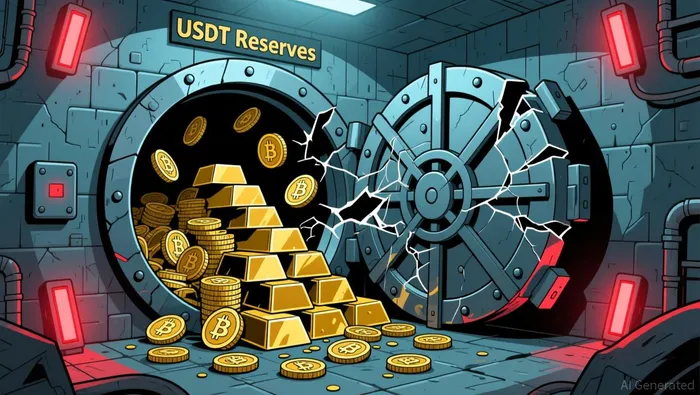
The risks are amplified by the inherent volatility of crypto and gold markets. Historical data shows Bitcoin has experienced over 50% drawdowns in previous cycles, raising questions about Tether's ability to absorb such shocks . S&P noted that while most USDT reserves remain in liquid assets, the agency emphasized the need for improved transparency in reserve composition and management. Tether's current hedging portfolio, estimated at $10–15 billion in gold and Bitcoin, could face pressure if market conditions deteriorate, particularly as USDT dominates 60% of the stablecoin market .
Market participants and exchanges are calling for greater transparency, with Hayes suggesting that major stakeholders may demand real-time balance sheet disclosures to assess solvency risks . The pressure comes as Tether defends its strategy, with Ardoino framing the criticism as a "loathing" from traditional finance toward innovative models. However, the company's reliance on high-risk assets has drawn comparisons to past crises in the crypto space, where opaque reserves led to collapses in confidence.
The situation highlights the delicate balance between hedging against fiat depreciation and maintaining stablecoin stability. As Tether navigates a volatile macroeconomic landscape, regulators and investors are likely to scrutinize its risk management practices more closely. Any further erosion in the value of its gold and Bitcoin holdings could not only jeopardize USDT's 1:1 peg but also ripple through the broader crypto market, where stablecoins underpin daily trading volumes exceeding $40 billion .

Stay ahead of the market.
Get curated U.S. market news, insights and key dates delivered to your inbox.


AInvest
PRO
AInvest
PRO



Comments
No comments yet