
Bitcoin News Today: Stablecoin's Shaky Foundation: S&P Downgrades Tether Over Risky Assets and Opaque Operations


 Aime Summary
S&P Global Ratings has downgraded Tether's USDTUSDT-- stablecoin to "weak" from "constrained," marking the lowest possible rating on its stability scale. The move reflects growing concerns over the composition of Tether's reserves, which now include higher-risk assets like BitcoinBTC-- and gold, as well as limited transparency in its operations. The ratings agency warned that a decline in the value of these assets could push USDT into undercollateralization, threatening its ability to maintain its 1:1 peg to the U.S. dollar.
The downgrade follows a shift in Tether's reserve strategy, with the stablecoin issuer increasingly allocating funds to alternative assets. As of September 30, 2025, high-risk holdings accounted for 24% of Tether's reserves, up 7% year-over-year. Bitcoin alone represented 5.6% of USDT's circulation, surpassing the 3.9% overcollateralization margin, according to S&P. This means Tether's reserves can no longer fully absorb potential losses from Bitcoin's volatility. This 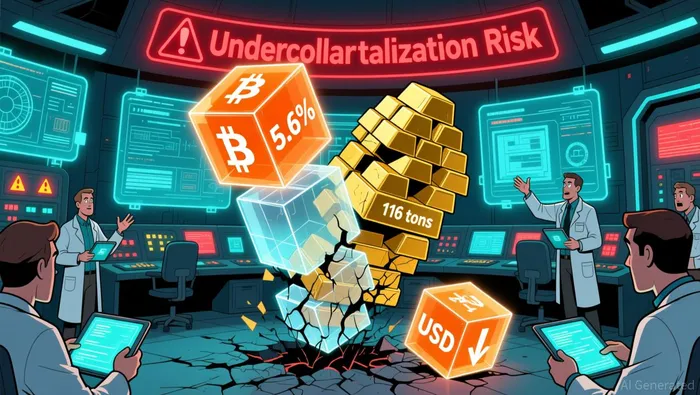 illustrates the growing risks in Tether's diversified holdings. The firm has also ramped up gold purchases, holding 116 tons of bullion-comparable to the reserves of central banks in South Korea and Hungary-as of October 2025.
Jefferies analysts noted that Tether's gold and Bitcoin acquisitions could influence broader gold markets. The stablecoin's gold purchases in the third quarter accounted for nearly 2% of global demand, while its Bitcoin stash totaled $9.9 billion at the end of Q3. Tether's aggressive diversification strategy, which includes investments in gold producers and secured loans, has raised questions about its risk management practices.
S&P highlighted additional structural weaknesses, including limited transparency in reserve management, a lack of asset segregation to protect against insolvency, and regulatory gaps. The agency also criticized TetherUSDT-- for providing insufficient details on the creditworthiness of its custodians and bank partners. These factors, combined with Bitcoin's recent 30% decline from its all-time highs, amplify risks for USDT holders.
Tether, which dominates 71% of the stablecoin market with a $184 billion circulation, has defended its strategy. The company argues that its reserves are sufficient to back USDT and emphasizes its role as a "digital dollar" offering stability and global accessibility. However, S&P noted that even with USDT's strong price stability during market turbulence, the downgrade signals a "neutral" rather than "negative" assessment, reflecting the evolving risk profile.
The downgrade underscores broader scrutiny of stablecoins as regulators and investors demand greater clarity. Tether's financial performance remains robust, with reported net profits exceeding $10 billion in the first nine months of 2025. Yet, the firm's reliance on high-risk assets and opaque operations could erode trust, particularly as Bitcoin's price volatility persists and gold markets face tightening supply .

Stay ahead of the market.
Get curated U.S. market news, insights and key dates delivered to your inbox.


AInvest
PRO
AInvest
PRO



Comments
No comments yet