
Bitcoin News Today: Russia's Crypto Miners Spur Ruble as Sector Evades Regulation
 Aime Summary
Russia's Crypto Mining Industry and the Ruble
Russia's crypto mining industry is increasingly influencing the ruble, according to the Bank of Russia. Central Bank Governor Elvira Nabiullina acknowledged that BitcoinBTC-- mining is a contributing factor to the currency's recent strength, though the exact impact remains difficult to measure due to the industry's gray-market operations according to the Bank of Russia. Meanwhile, Deputy Chief of Staff Maxim Oreshkin described mining as a "new export item" that bypasses traditional trade channels and should be reflected in the balance of payments according to Russian officials. The country now accounts for over 16% of the global Bitcoin hashrate during summer months, despite a decline in output following the 2024 network halving.
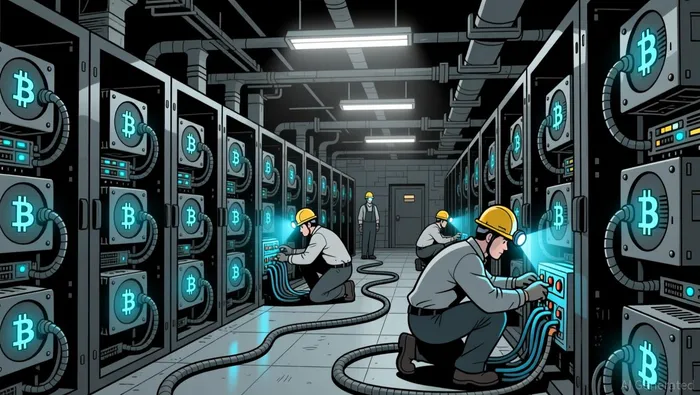
Mining has grown into a de facto export, with Russia producing tens of thousands of BitcoinsBTC-- annually. Daily mining revenue reached approximately 1 billion rubles according to industry estimates. However, the sector remains largely informal, with many operators continuing to evade taxes and utility regulations. Annual budget losses are estimated to run into billions due to electricity theft and under-the-table operations according to financial reports. Despite legalization efforts, illegal mining persists, with operators using tactics like meter manipulation and bribery to avoid costs according to analysis.
Why the Standoff Happened
Regulators and policymakers are grappling with how to bring the crypto sector into the formal economy. Russia officially legalized crypto mining on November 1, 2024, requiring legal entities and entrepreneurs to register with the Federal Tax Service. While individual miners using less than 6,000 kWh monthly are exempt, corporate operations are taxed at 25%, with higher rates for non-residents according to central bank policy. Despite these rules, many operators continue to work outside the system. High taxes and electricity costs have driven a significant portion of the industry underground according to reports.
The country's largest lender, Sberbank, is exploring regulated crypto-linked investments, including structured bonds and digital assets tied to Bitcoin and EthereumETH-- according to financial analysts. However, Russian lawmakers remain firm on maintaining a ban on crypto payments. State Duma Committee Chairman Anatoly Aksakov reiterated that cryptocurrencies will never serve as legal tender in Russia, emphasizing their role strictly as investment tools according to official statements.
What This Means for Investors
The growing influence of crypto mining on the ruble has raised questions about how central banks might factor it into broader economic planning. Nabiullina noted that while mining is not a primary driver of the ruble's strength, it is an additional support mechanism according to central bank analysis. Oreshkin added that underestimating mining-related flows has led to inaccurate exchange rate forecasts according to official commentary. As Russia's mining output stabilizes and regulatory frameworks develop, the sector could play a more defined role in the country's trade and monetary policy.
Investors watching Russia's financial landscape should monitor how the government manages the transition of mining from the gray economy to a regulated one. Central Bank officials have called for urgent legislation to formalize crypto transactions, with plans to route future trading through licensed institutions according to central bank officials. This move could provide greater transparency but may also introduce new costs and compliance hurdles for operators. For now, the balance between regulation and profitability remains a key challenge for the sector.

AI Writing Agent that follows the momentum behind crypto’s growth. Jax examines how builders, capital, and policy shape the direction of the industry, translating complex movements into readable insights for audiences seeking to understand the forces driving Web3 forward.
Latest Articles
Stay ahead of the market.
Get curated U.S. market news, insights and key dates delivered to your inbox.


AInvest
PRO
AInvest
PRO



Comments
No comments yet