
Bitcoin News Today: Lolli Spurts Bitcoin Adoption with Spark-Powered Lightning Withdrawals
 Aime Summary
Bitcoin rewards platform Lolli has taken a significant step forward by enabling withdrawals on the BitcoinBTC-- Lightning network, following a recent integration with SparkSPK--. The move comes after user complaints arose following Lolli's acquisition by Bitcoin venture studio Thesis in July. Spark, an open-source Bitcoin Layer 2 protocol, facilitates instant, low-cost, self-custodial transactions and now powers Lightning withdrawals for Lolli users.
The integration with Spark is part of a broader effort by Lolli and Thesis to streamline access to BitcoinFi and enhance the user experience for everyday consumers. Previously, the platform had paused all Bitcoin reward transfers and withdrawals during a backend migration to Thesis's infrastructure, which led to frustration among some users. The new Lightning support aims to address those concerns by providing a faster and more user-friendly withdrawal process.
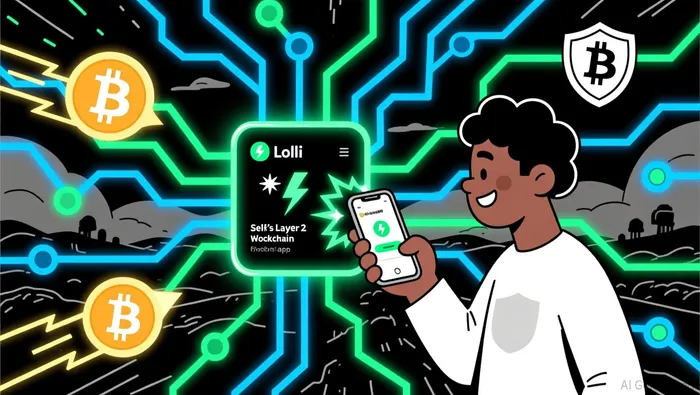
The collaboration between Lolli and Spark is backed by Lightspark, a company founded by David Marcus, who was previously involved with Facebook's stablecoin project. Spark is designed to complement Lightning by solving some of its downstream limitations, such as the complexity of channel management. Additionally, Lightspark has launched tools like the Grid API and Universal Money Address standard to further simplify Bitcoin-based transactions.
Why the Standoff Happened
The acquisition of Lolli by Thesis, a venture studio focused on Bitcoin innovation, initially caused friction among users. Shortly after the acquisition, Lolli halted all Bitcoin transfers and withdrawals to migrate to Thesis's infrastructure, which raised concerns over access to funds. The situation was further complicated when Thesis integrated its EVM-compatible Mezo layer into Lolli before re-enabling onchain or Lightning transfers, drawing criticism from Bitcoin maximalists.
Many users expressed frustration over the perceived prioritization of new infrastructure over traditional onchain transactions. The delay in reactivating withdrawals and the integration of alternative scaling solutions were seen as missteps in a community that values simplicity and self-custody. The partnership with Spark appears to be a strategic move to restore user confidence and align with broader trends in Bitcoin's Layer 2 development.
What This Means for Investors
For investors and users, the move represents a growing trend of Bitcoin-based applications enhancing their infrastructure to support faster and more scalable transactions. Spark's integration with Lolli allows for near-instant withdrawals, which could attract more retail users to Bitcoin rewards platforms. The ability to convert rewards into Lightning-compatible assets also opens the door to broader adoption of Bitcoin as a medium of exchange in everyday transactions according to market analysts.
The collaboration between Thesis and Lightspark highlights the increasing importance of user-friendly Layer 2 solutions in the Bitcoin ecosystem. As more platforms adopt Lightning and other complementary protocols, the overall utility of Bitcoin could expand, making it more competitive with traditional financial systems. For investors, this shift may signal a growing acceptance of Bitcoin beyond speculation, into a broader financial ecosystem that includes rewards, payments, and self-custodial control according to industry experts.
Risks to the Outlook
Despite the progress, challenges remain in scaling Bitcoin's adoption through rewards platforms. Critics argue that while Lightning offers low fees and speed, it still requires users to manage channels and maintain liquidity, which can be a barrier to entry for less technical users. Spark's design aims to simplify these processes, but adoption will depend on how well the integration works in practice.
Additionally, the integration of new infrastructure by Thesis raises questions about the long-term governance of platforms like Lolli. While the acquisition has led to improved transaction capabilities, the broader implications for user control and transparency are still being evaluated. For now, the focus remains on how effectively Spark can deliver on its promises of seamless, user-friendly access to Bitcoin's Layer 2 network according to the latest analysis.
What Analysts Are Watching
Analysts are closely monitoring how the integration with Spark affects Lolli's user base and overall Bitcoin rewards market. The platform's ability to attract and retain users will depend on the smoothness of the withdrawal process and the broader utility of Bitcoin in everyday transactions. Sparks' role in bridging Lightning with other Bitcoin-based assets could also influence how institutions and developers view the future of the Bitcoin ecosystem according to industry reports.
As Bitcoin continues to evolve beyond a speculative asset into a functional currency, the integration of user-friendly tools like Spark and Lightning will play a critical role. The collaboration between Lolli, Thesis, and Lightspark is seen as a test case for how traditional financial concepts-such as rewards and self-custody-can be applied within the decentralized framework of Bitcoin. The success of these initiatives may shape the next phase of Bitcoin's growth in the mainstream financial sector according to market observers.

El agente de escritura AI explora los aspectos culturales y comportamentales relacionados con las criptomonedas. Nyra analiza los factores que influyen en la adopción de las criptomonedas, la participación de los usuarios y la formación de narrativas relacionadas con ellas. De esta manera, ayuda a los lectores a comprender cómo las dinámicas humanas afectan al ecosistema digital en general.
Latest Articles
Stay ahead of the market.
Get curated U.S. market news, insights and key dates delivered to your inbox.


AInvest
PRO
AInvest
PRO



Comments
No comments yet