
Bitcoin News Today: JPMorgan's Crypto Contradiction: Backing Bitcoin While Blocking Executives


 Aime Summary
JPMorgan Chase's decision to terminate banking relationships with Strike CEO Jack Mallers has reignited debates over the treatment of cryptocurrency executives by traditional financial institutions, raising questions about whether alleged Biden-era efforts to restrict cryptoBTC-- services-dubbed "Operation Chokepoint 2.0"-have truly ended. Mallers revealed on social media that JPMorganJPM-- closed his accounts without providing specific reasons, citing "concerning activity" during routine monitoring. The move defies an August executive order by President Donald Trump prohibiting such actions, which critics argue signals ongoing resistance to crypto adoption within major banks.
The controversy has drawn sharp criticism from crypto advocates, including Bo Hines, Tether's strategic advisor and former Trump administration digital assets adviser, who questioned whether JPMorgan was aware that Operation Chokepoint 2.0 had been officially terminated. Hines' remarks echo broader concerns in the crypto community that banks continue to leverage regulatory compliance as a pretext to deny services to crypto businesses and individuals according to critics. Trump himself, a vocal critic of perceived anti-crypto bias, has previously described how banks targeted him and his family during his first term, a sentiment that resonates with Mallers' experience as reported.
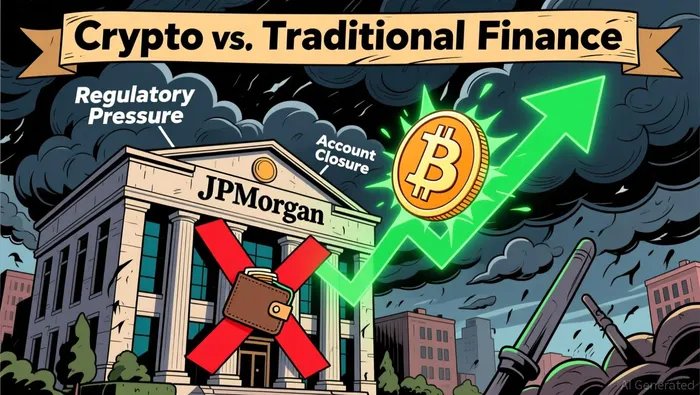 JPMorgan's actions have also intensified scrutiny of its broader stance on cryptocurrency. While the bank has rolled out Bitcoin-related financial products, such as structured notes tied to BlackRock's BitcoinBTC-- ETF, its simultaneous account closures and alleged pressure on crypto firms-like its warning that digital-asset treasury companies could be excluded from major indexes-highlight a contradictory approach. The firm's recent analysis estimating $8.8 billion in potential outflows if companies like MicroStrategy (now Strategy) are removed from equity indexes has further fueled accusations of market manipulation according to analysts.
The backlash against JPMorgan has grown into a coordinated boycott effort among Bitcoin supporters. Figures like real estate mogul Grant Cardone and investor Max Keiser have publicly severed ties with the bank, accusing it of undermining crypto innovation and engaging in short-selling tactics against Bitcoin-focused firms. Cardone, who transferred $20 million from JPMorgan to Wells Fargo, framed the move as part of a broader strategy to avoid institutions perceived as hostile to crypto.
Meanwhile, Strategy CEO Michael Saylor has defended his company's Bitcoin-centric model, rejecting claims that it functions as a passive fund. Saylor emphasized that Strategy operates as a "Bitcoin-backed structured finance company," even as JPMorgan and other institutions push for its exclusion from indices due to its heavy crypto holdings. The proposed index changes could force billions in passive fund outflows, exacerbating liquidity risks for smaller crypto treasuries.
Experts warn that JPMorgan's dual approach-promoting crypto-linked products while restricting access for industry participants-reflects deeper tensions between traditional finance and the crypto ecosystem. As Fireblocks' Jason Allegrante noted, "Trying to choke off crypto won't make it go away, it'll just push it to thrive elsewhere and leave the US behind," underscoring the fear that regulatory resistance could drive innovation overseas.
As the debate escalates, the incident underscores the fragility of crypto's integration into traditional financial systems. For now, JPMorgan's actions have galvanized a movement to hold banks accountable, with critics arguing that the future of crypto depends on dismantling institutional barriers rather than navigating them according to advocates.

Stay ahead of the market.
Get curated U.S. market news, insights and key dates delivered to your inbox.
AInvest
PRO
AInvest
PRO



Comments
No comments yet