
Bitcoin News Today: Jim Cramer boosts Bitcoin holdings as hedge against $37 trillion U.S. debt: CNBC
 Aime Summary
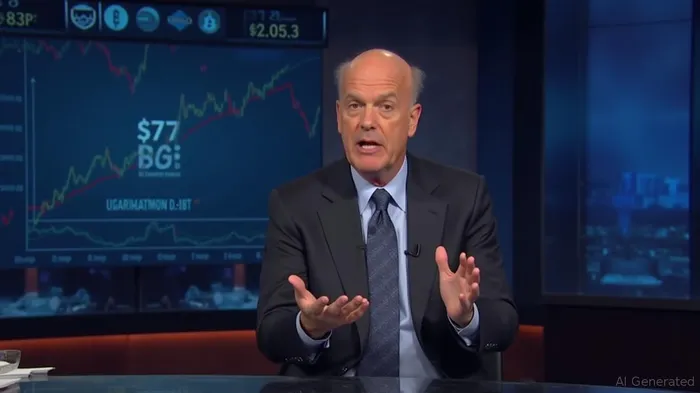
Jim Cramer, host of Mad Money and a veteran Wall Street commentator, has publicly increased his BitcoinBTC-- holdings, framing the cryptocurrency as a strategic hedge against the escalating U.S. federal debt, which now exceeds $37 trillion. During a July 2025 CNBC segment, Cramer emphasized Bitcoin’s potential as a long-term store of value, particularly in an environment marked by fiscal uncertainty and expansive government spending. His remarks underscore a growing institutional curiosity toward digital assets as alternatives to traditional safe-haven investments. “I think people want to hold some as a hedge against $37 trillion debt. They want to own it,” Cramer stated, reflecting a pragmatic view of Bitcoin’s role in diversified portfolios [1]. When directly asked if Bitcoin could withstand a financial crisis, he responded unequivocally: “Yes” [2].
Cramer’s rationale hinges on Bitcoin’s decentralized structure and capped supply of 21 million coins, which he argues position it as a counterbalance to fiat currencies vulnerable to devaluation in inflationary environments. His decision to accumulate Bitcoin extends beyond short-term speculation, focusing instead on long-term family wealth preservation. Cramer explicitly mentioned purchasing Bitcoin for his children, signaling a belief in its durability through economic turbulence. This shift in perspective is attributed to discussions with crypto advocate Anthony Pompliano, who has long championed Bitcoin’s utility as a systemic risk mitigator [1]. The evolving narrative reflects broader institutional acceptance of digital assets, with figures like Michael Saylor advocating large-scale Bitcoin accumulation as a defensive strategy against inflation and currency depreciation.
The U.S. debt debate has intensified as policymakers grapple with the implications of a $37 trillion deficit, raising concerns about inflation, interest rates, and fiscal sustainability. Cramer’s endorsement of Bitcoin aligns with a growing sentiment that traditional asset classes may insufficiently address these risks. His remarks also coincide with market jitters, including fluctuations in equities and commodities, as investors seek alternatives to conventional safe-haven assets like gold. While Bitcoin’s volatility remains a contentious point among critics, its decentralized nature and scarcity are increasingly viewed as strengths in scenarios where fiat currencies face erosion of purchasing power.
The implications of Cramer’s comments extend beyond individual investment strategies. By positioning Bitcoin as a hedge against U.S. debt, he has contributed to mainstreaming a narrative that challenges traditional economic paradigms. This perspective could influence broader policy discussions, particularly as governments assess the long-term consequences of fiscal expansion. However, the integration of cryptocurrencies into institutional portfolios remains cautious, with major firms exploring crypto-related investments while navigating regulatory and market uncertainties.
Cramer’s advocacy highlights the evolving intersection of technology, finance, and macroeconomic strategy. While Bitcoin’s future remains subject to regulatory and market dynamics, its utility in mitigating risks tied to sovereign debt and inflationary pressures has gained traction. For now, the market will continue to monitor how investors balance Cramer’s recommendations with broader macroeconomic indicators and evolving regulatory frameworks.
Sources:
[1] [Jim Cramer Says He’s Buying "A Lot" Of Bitcoin As Protection Against Spiraling US Debt](https://www.benzinga.com/crypto/cryptocurrency/25/07/46593175/jim-cramer-says-hes-buying-a-lot-of-bitcoin-as-protection-against-spiraling-us-debt-worried-about-my-kids)
[2] [Jim Cramer Suggests Bitcoin Could Potentially Withstand Financial Crisis Amid US Deficit Concerns](https://www.newsnow.com/us/Business/Economy)

Stay ahead of the market.
Get curated U.S. market news, insights and key dates delivered to your inbox.


AInvest
PRO
AInvest
PRO



Comments
No comments yet