
Bitcoin News Today: House Advances Crypto Regulation Bills After Record Vote
 Aime Summary
The U.S. House of Representatives has made significant strides in advancing two key legislative measures related to cryptocurrency regulation and defense spending. The CLARITY Act and the GENIUS Act were both pushed forward, marking a pivotal moment in the regulatory landscape for digital assets.
The CLARITY Act, officially known as the Digital AssetDAAQ-- Market Clarity Act, aims to provide clear definitions and regulations for digital assets, particularly Bitcoin, which would be classified as a commodity. This legislation is designed to offer a framework that protects decentralized assets while ensuring that the market operates within a structured environment. The GENIUS Act, on the other hand, focuses on stablecoin regulation, seeking to establish guidelines that would govern the issuance and use of stablecoins, which are digital currencies pegged to the value of another asset, such as the U.S. dollar.
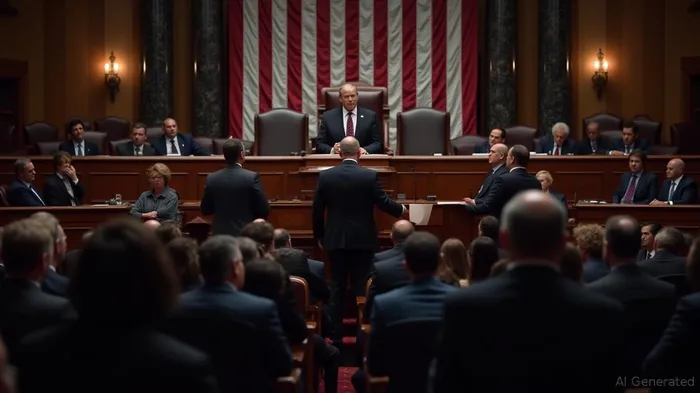
The advancement of these bills was not without its challenges. The House faced a prolonged stalemate, with the vote on the rule governing debate for the legislation lasting over seven hours and 24 minutes, setting a new record for the longest vote in the chamber's history. This gridlock was primarily due to disagreements among Republican lawmakers, particularly hard-line members who sought to strengthen provisions against a Central Bank Digital Currency (CBDC). The GENIUS Act, which includes measures to block the Federal Reserve from issuing a CBDC, was a point of contention. After extensive negotiations and a deal brokered by President Donald Trump, the hard-line Republicans agreed to support the legislation, paving the way for its advancement.
Rep. Marjorie Taylor Greene initially opposed the GENIUS Act but reversed her stance after amendments were made, aligning with Congressional actions aimed at financial privacy protection. The GENIUS Act is now poised to move to President Trump's desk for signature, while the CLARITY Act and the Anti-CBDC Surveillance State Act face an uncertain future in the Senate. The Anti-CBDC Surveillance State Act aims to prevent the Federal Reserve from issuing a CBDC, a move that has garnered support from those concerned about government overreach in the digital currency space. However, the Senate's approach to these bills remains unclear, as lawmakers there are expected to introduce their own versions of the legislation.
The passage of these bills represents a significant step forward in the regulation of digital assets in the United States. By defining Bitcoin as a commodity and establishing guidelines for stablecoins, the legislation seeks to create a more transparent and secure environment for digital currencies. However, the lack of Democratic support and the potential for further amendments in the Senate mean that the journey for these bills is far from over. As the legislative process continues, stakeholders in the cryptocurrency industry will be closely watching the developments, hoping for a regulatory framework that balances innovation with consumer protection.
Observers anticipate changes in liquidity and tradability of assets like BTC and ETH. Experts predict altered market liquidity, while institutional participation might increase regulatory compliance. Historical data shows similar acts drove increased capital inflow to DeFi platforms. The acts are poised to reshape market dynamics by regulating digital assets, creating uncertainty and opportunity. Potential outcomes include shifts in institutional investment and regulatory frameworks, informed by past market behaviors and trends.

Stay ahead of the market.
Get curated U.S. market news, insights and key dates delivered to your inbox.


AInvest
PRO
AInvest
PRO



Comments
No comments yet