
Bitcoin News Today: Ethereum's Green Shift Challenges Bitcoin's Legacy as Climate-Conscious Investing Rises
 Aime Summary
Bitcoin continued to face downward pressure, drawing in bargain hunters as it struggled to maintain a stable price. The cryptocurrency’s recent performance has sparked renewed interest among investors who see potential value in its deflationary properties, despite its well-documented volatility. Meanwhile, EthereumETH--, the second-largest cryptocurrency by market capitalization, has attracted attention for its unique supply dynamics and more sustainable approach to energy consumption.
Bitcoin’s appeal as an inflation hedge stems from its fixed supply of 21 million coins, with 19.9 million already in circulation. This built-in scarcity has led many to compare BitcoinBTC-- to gold, although it lacks the real-world utility of the precious metal. As of 2025, the coin remains a significant store of value but has yet to prove itself as a consistent hedge against inflation. The digital currency’s price fluctuation is a concern for investors looking for stability, as it has seen drops of over 50% on multiple occasions. The absence of a central authority and its reliance on decentralized mining means its value is subject to market sentiment and broader economic conditions.
Ethereum, in contrast, operates with a more dynamic supply mechanism. While it does not have a fixed supply cap, its EIP-1559 upgrade in 2021 introduced a token-burning mechanism that reduces the circulating supply during periods of high network activity. This innovation has allowed Ethereum to manage inflationary pressures effectively, making it an attractive option for investors seeking both utility and inflation resistance. Ethereum’s widespread use in decentralized finance (DeFi) and NFT marketplaces further enhances its utility and appeal to a growing investor base.
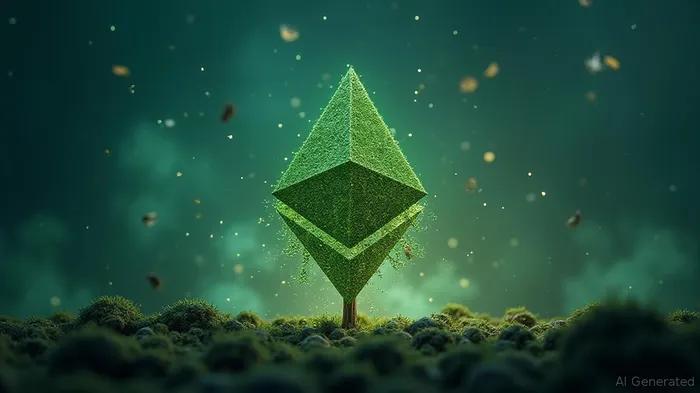
From an environmental perspective, Ethereum has made significant strides in reducing its carbon footprint. In September 2022, the network transitioned from a proof-of-work to a proof-of-stake model, slashing its energy consumption by over 99.9%. This shift has positioned Ethereum as a more sustainable option in the crypto space, particularly for ESG-focused investors. Bitcoin, on the other hand, still relies on an energy-intensive proof-of-work system, with its annual energy consumption estimated to rival that of small countries. While some mining operations are moving toward renewable energy sources, the broader industry has yet to fully mitigate the environmental impact of Bitcoin’s consensus mechanism.
The recent surge in Bitcoin’s price to a record $124,000 and Ethereum’s approach toward its $4,800 high has sparked renewed enthusiasm in the crypto market. Institutional adoption, regulatory developments, and favorable macroeconomic conditions have contributed to this rally. However, the underlying environmental concerns associated with Bitcoin’s energy-intensive mining process remain a barrier to broader acceptance, particularly among climate-conscious investors.
As the crypto market continues to evolve, the environmental performance and economic utility of major blockchains will play an increasingly important role in shaping investor preferences. Ethereum’s transition to a more energy-efficient model has set a new standard, while Bitcoin faces the challenge of maintaining its security and decentralization without exacerbating its environmental footprint. Both cryptocurrencies remain central to the ongoing debate around the future of digital assets and their place in the global financial system.
Source: [1] Bitcoin vs. Ethereum: Which Cryptocurrency Is the Best (https://finance.yahoo.com/news/bitcoin-vs-ethereum-cryptocurrency-best-125000570.html) [2] Bitcoin Price Hits $124000 Record High vs Ethereum (https://carboncredits.com/bitcoin-price-hits-124000-record-high-vs-ethereum-price-near-4800-which-crypto-is-greener/)

Stay ahead of the market.
Get curated U.S. market news, insights and key dates delivered to your inbox.


AInvest
PRO
AInvest
PRO



Comments
No comments yet