
Bitcoin News Today: El Salvador Defies IMF Warnings, Adds $100M Bitcoin to Reserves


 Aime Summary
El Salvador's government has sparked global attention by reportedly adding over $100 million worth of BitcoinBTC-- to its reserves in a single day, a move that defies its international financial commitments and intensifies scrutiny of its controversial cryptocurrency strategy. President Nayib Bukele confirmed the purchase of 1,098.19 Bitcoin (BTC) in the past seven days, bringing the country's total holdings to 7,474.37 BTCBTC--, valued at approximately $688 million as of November 18, 2025. The acquisition, made during a sharp market downturn, aligns with Bukele's long-standing "buy the dip" approach, which has seen the nation purchase one BTC daily since November 2022.
The purchase occurred as Bitcoin's price plummeted below $90,000-a six-month low-amid broader market volatility. El Salvador's Bitcoin Office reported the transaction at 6:01 p.m. Eastern Time on Monday, with Bukele sharing a celebratory "Hooah!" on X to mark the milestone. 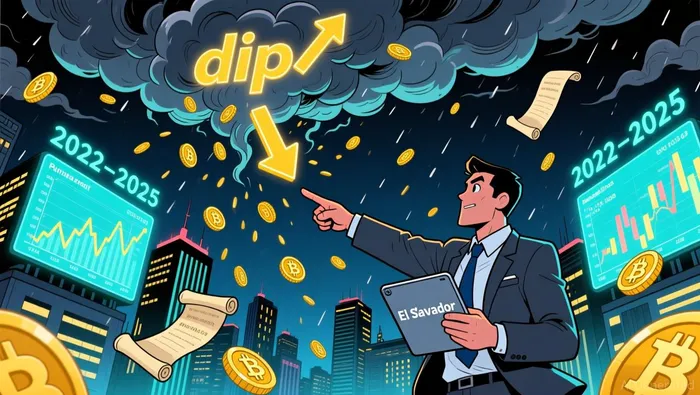 The move underscores the country's commitment to treating Bitcoin as a strategic asset, despite warnings from the International Monetary Fund (IMF) and global financial institutions.
The IMF's concerns stem from a $1.4 billion loan agreement signed in 2025, which explicitly prohibits new public-sector Bitcoin purchases. The fund has repeatedly urged El Salvador to halt its accumulation efforts, citing risks to financial stability and consumer protection. However, government officials, including Bitcoin Office director Stacy Herbert, have dismissed these concerns, arguing that the purchases are transparently recorded on the blockchain and reflect a policy of "freedom, transparency, and individual empowerment".
The discrepancy between official statements and the IMF's stance has created confusion. While two senior finance officials previously claimed El Salvador ceased new purchases in February 2025, Bukele and his team insist the recent acquisition is valid. The IMF has not commented on the latest buy, but a July report suggested increases in the nation's Bitcoin reserves were due to internal wallet consolidations rather than market purchases.
El Salvador's Bitcoin experiment, which began in 2021 when the country became the first nation to adopt the cryptocurrency as legal tender, remains polarizing. While the government promotes the move as a tool for financial inclusion and economic modernization, critics highlight its limited domestic adoption and vulnerability to market swings. The country's Bitcoin holdings have lost roughly $200 million in value since hitting a peak in October 2025.
The latest purchase also arrives amid broader geopolitical tensions. Bukele's administration is negotiating with U.S. officials over digital-asset regulations, while the IMF's loan conditions require scaling back Bitcoin's role in public programs, including the Chivo wallet initiative. Despite these constraints, El Salvador continues to position itself as a global leader in cryptocurrency adoption, with Bukele framing the $100 million buy as a strategic bet on Bitcoin's long-term potential.
---

Stay ahead of the market.
Get curated U.S. market news, insights and key dates delivered to your inbox.


AInvest
PRO
AInvest
PRO



Comments
No comments yet