
Bitcoin News Today: S&P Downgrade Exposes Tether's Risky Reserves and Transparency Gaps


 Aime Summary
S&P Global Ratings has downgraded Tether's USDTUSDT-- stablecoin to "5 (weak)," marking the lowest score on its 1–5 risk scale for stablecoins, citing increased exposure to high-risk assets and persistent gaps in transparency. The move underscores growing scrutiny of stablecoins, which are designed to maintain a stable value by pegging to fiat currencies like the U.S. dollar. TetherUSDT--, the issuer of USDT, now faces heightened pressure to address concerns over its reserve composition and disclosure practices as it navigates a rapidly evolving regulatory landscape.
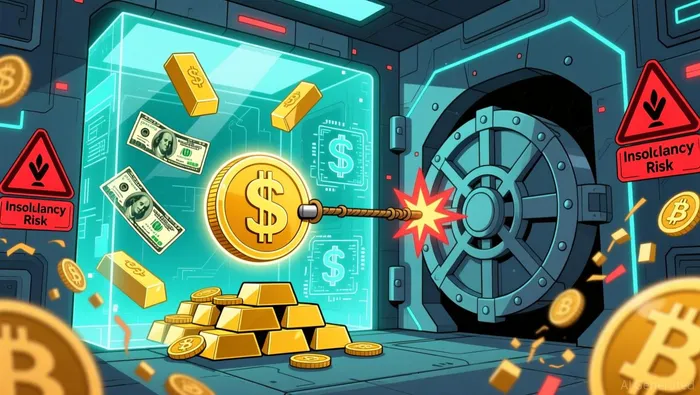
The downgrade reflects S&P's assessment that Tether's reserves now contain a higher proportion of volatile assets, including BitcoinBTC-- (BTC), gold, corporate bonds, and secured loans, which introduce credit, market, and liquidity risks according to S&P. Specifically, S&P highlighted that BTC accounts for 5.6% of USDT's circulation, exceeding the 3.9% overcollateralization margin. This means the reserve can no longer fully absorb potential declines in Bitcoin's value, risking undercollateralization if the cryptocurrency's price drops further. The agency also criticized Tether for limited transparency regarding custodians, counterparties, and reserve management, noting that its reserves are not segregated to protect against the issuer's insolvency.
Tether CEO Paolo Ardoino responded sharply to the downgrade, dismissing S&P's critique as a reflection of "loathing" from traditional finance toward companies challenging the status quo. In a statement on X, he framed the downgrade as part of a broader resistance to innovation in the financial sector, claiming Tether is "the first overcapitalized firm in the financial industry" with no "toxic" assets in its reserves. Ardoino accused S&P of applying outdated methodologies designed for conventional banks rather than digital asset issuers, arguing that Tether's model operates independently of legacy systems.
The controversy has exposed tensions between stablecoin issuers and regulators over transparency and risk management. While Tether maintains that its $184 billion in USDT issuance is backed by sufficient reserves-including 116 tons of physical gold- S&P emphasized that the composition of these assets remains opaque. The agency noted that even with short-term U.S. Treasury holdings, the lack of detailed disclosures about counterparties and reserve management weakens confidence in the stablecoin's stability. This has raised questions about the centralization risks inherent in stablecoins, which rely on trust in the issuer's financial health and governance.
S&P's downgrade comes as Bitcoin faces its worst monthly performance since 2022, with prices falling amid broader crypto market turbulence. According to CoinGecko, USDT's circulation has grown by $1 billion in November, reaching $184.4 billion. The divergence between market sentiment and Tether's resilience highlights the stablecoin's role as a critical liquidity tool in crypto markets, even as its governance model comes under increased scrutiny.
The debate over stablecoin centralization risks is likely to intensify as regulators worldwide push for clearer frameworks. S&P suggested that Tether could improve its rating by reducing exposure to high-risk assets and enhancing disclosure on reserve composition and counterparties. For now, the downgrade serves as a warning to stablecoin issuers that transparency and risk management will remain central to maintaining trust in the sector.

Stay ahead of the market.
Get curated U.S. market news, insights and key dates delivered to your inbox.






Comments
No comments yet