
Bitcoin News Today: Digital Sovereignty Clash: US-China Tensions Escalate Over $13B Bitcoin Seizure


 Aime Summary
China's cybersecurity agency has accused the U.S. government of orchestrating a $13 billion BitcoinBTC-- theft from a Chinese mining pool in 2020, sparking a diplomatic and geopolitical rift over cryptocurrency ownership and digital sovereignty. The National Computer Virus Emergency Response Center (CVERC) alleged that the U.S. seized 127,000 stolen bitcoins—originally taken in a hack of the LuBian mining pool—through a "state-level operation," framing the move as a provocative escalation in U.S.-China tensions, according to a Coinpedia report, a Bloomberg article, and a CoinCentral report. The U.S. government has denied the accusations, asserting the seizure was a lawful law enforcement action targeting criminal proceeds linked to Cambodian businessman Chen Zhi, as reported by a Coinpedia report, a CoinDesk piece, and a Bitcoin Magazine piece.
The dispute centers on a December 2020 cyberattack on LuBian, a major Chinese mining pool, which resulted in the theft of 127,426 BTC—valued at $3.5 billion at the time, according to a CoinDesk piece. 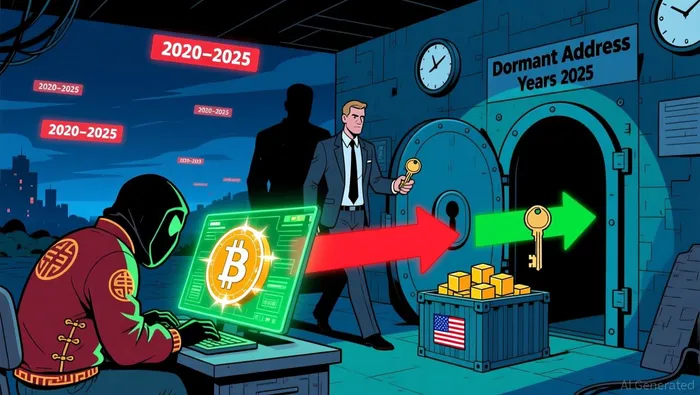 CVERC claims the hack was executed by a state-level actor, citing the sophistication of the attack and the delayed movement of the stolen funds, as reported in a Coinpedia report and a Bitcoin Magazine piece. For nearly four years, the bitcoinsBTC-- remained dormant before being transferred in mid-2024 to wallets later identified by blockchain analytics firm ArkhamARKM-- Intelligence as belonging to the U.S. government, according to a CoinDesk piece and a CoinCentral report. Chinese officials argue this timing and behavior deviate from typical cybercrime patterns, suggesting a coordinated, state-backed operation, according to a CoinDesk piece and a Bitcoin Magazine piece.
The U.S. Department of Justice (DOJ) defended the seizure, stating the bitcoins were linked to Chen Zhi's alleged $2 billion crypto fraud scheme and were confiscated as part of a civil forfeiture case in October 2025, according to a CoinDesk piece and a CoinCentral report. Federal prosecutors declined to detail how the DOJ gained control of the assets, fueling skepticism from Chinese authorities, who claim the U.S. failed to provide transparency or evidence of the funds' origins, according to a CoinDesk piece and a CoinCentral report. The seized bitcoins now represent the largest single forfeiture in U.S. history, valued at over $13 billion amid Bitcoin's recent price surge, according to a CoinCentral report.
The conflict has sent ripples through the crypto market, with Bitcoin trading near $105,000 as investors weigh the geopolitical implications. Analysts note that 0.65% of Bitcoin's total supply—roughly 127,000 coins—is now tied up in the dispute, potentially tightening liquidity and influencing long-term valuations, according to an Indian Express report. Meanwhile, the U.S. has bolstered its Bitcoin reserves to 325,000 BTC, worth approximately $36 billion, raising questions about government control over decentralized assets, according to a CoinCentral report.
CVERC has called for enhanced blockchain security measures, including multi-layered defenses and real-time monitoring, to prevent future state-sponsored attacks, according to a Bitcoin Magazine piece. The incident underscores the growing role of digital assets in international relations, with both nations leveraging cryptocurrency as a strategic tool in their broader rivalry, according to a Bitcoin Magazine piece and a CoinDesk piece.

Stay ahead of the market.
Get curated U.S. market news, insights and key dates delivered to your inbox.


AInvest
PRO
AInvest
PRO



Comments
No comments yet