
Bitcoin News Today: Crypto Industry Gains Political Ground in Washington Through Aggressive Lobbying and Trump Alliance
 Aime Summary
The crypto industry’s ascent in Washington has been marked by aggressive lobbying and strategic alignment with political leaders, notably Donald TrumpTRUMP--. Over the past seven years, Kristin Smith, a leading crypto lobbyist and current head of the SolanaSOL-- Policy Institute, has been instrumental in reshaping the political landscape around digital assets. Her efforts helped launch the Blockchain Association in 2018, long before most lawmakers had even heard of BitcoinBTC-- [1]. Through a combination of campaign contributions, grassroots organizing, and direct engagement with elected officials, the industry won significant policy victories, including the passage of the GENIUS Act, which laid out federal guidelines for stablecoins [1].
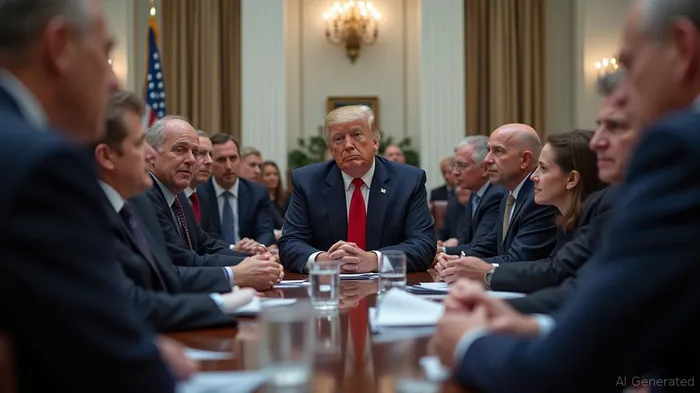
The crypto industry spent over $200 million to elect pro-blockchain candidates, including Trump, who became a vocal advocate for the sector. His influence was evident in the executive order establishing a strategic Bitcoin reserve and in his vocal support for crypto innovation. The alignment between Trump and major firms like CoinbaseCOIN-- and Ripple led to a broader shift in how the U.S. government approached digital assets. Agencies like the SEC, under Chair Paul Atkins, signaled a more innovation-friendly stance, launching initiatives such as “Project Crypto” to encourage new developments in tokenization and decentralized finance [2].
Despite these gains, the industry faces ongoing scrutiny, particularly after the collapse of FTX and the controversies surrounding interest-bearing stablecoins. However, lobbyists continue to push for broader legislative reform. The House passed the Clarity Act this summer, and the Senate is still deliberating. Smith estimates the bill has about a 60% chance of becoming law in the next year [1]. Should it pass, the Clarity Act could redefine how digital assets are regulated and integrated into the U.S. financial system.
To sustain this momentum, the industry has expanded beyond traditional lobbying. New PACs, such as one backed by the Winklevoss twins, have emerged with the goal of securing favorable political outcomes in the 2026 midterms. Additionally, groups like the American Innovation Project—a tax-exempt nonprofit focused on crypto education and policy—aim to continue shaping public opinion and legislative priorities [4].
While challenges remain, the crypto industry has undeniably gained a seat at the table in Washington. With continued support from influential lawmakers and industry leaders, the path to broader acceptance and regulation appears increasingly clear [1].
Source:
[1] title: How crypto's top lobbyist convinced lawmakers—and ... (url: https://fortune.com/crypto/2025/08/21/cryptos-top-lobbyist-trump-kristin-smith-crypto-playbook/)
[2] title: SEC Chair Paul Atkins Unveils Project Crypto, Greenlighting ICOs, Airdrops and More (url: https://decrypt.co/author/sanderlutz)

Stay ahead of the market.
Get curated U.S. market news, insights and key dates delivered to your inbox.
AInvest
PRO
AInvest
PRO



Comments
No comments yet