
Bitcoin News Today: Crypto's 2025 Downturn: Optimism vs. Lingering Fragility


 Aime Summary
The 2025 cryptocurrency downturn, marked by historic volatility and a $19 billion liquidation event in October, is being characterized by industry leaders as a calmer and more navigable bear market compared to the catastrophic collapses of 2022. Dragonfly Capital's Haseeb Qureshi, a prominent figure in the crypto space, has called it "the easiest bear market I've ever seen," attributing this resilience to solid fundamentals, functioning DeFi protocols, and the absence of cascading institutional failures that defined the 2022 crisis.
The October 2025 liquidation wave, the largest in crypto history, was triggered by U.S. President Donald Trump's 100% tariff on Chinese imports and threats of software export controls. This caused BitcoinBTC-- to drop 14% to $104,782, while EthereumETH-- fell 12.2% to $3,436.29. Despite these sharp declines, Qureshi argues that the current downturn lacks the systemic risks of 2022, when projects like Luna, FTX, and 3AC collapsed, destabilizing the market. 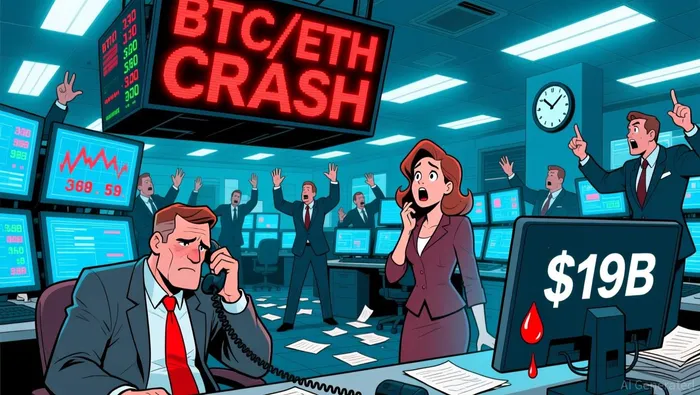 He emphasized that DeFi operations remain robust, transaction volumes are rising, and macroeconomic support signals stability.
The contrast between the two downturns is stark. In 2022, the collapse of major exchanges and stablecoins led to a domino effect of failures, eroding trust in the ecosystem. By contrast, the 2025 downturn has seen no major exchange collapses, and DeFi protocols continue to function without significant disruption. Qureshi highlighted that "fundamentals are great" and that the market's underlying infrastructure is now more resilient. This view aligns with broader trends, including increased institutional adoption and integration with traditional finance, which have bolstered liquidity and network health.
However, not all observers share Qureshi's optimism. AltLayerALT-- founder YQ raised concerns about the sustainability of crypto's value proposition, noting that many OGs have exited the space due to fading narratives and weak liquidity in small-cap tokens. YQ questioned whether projects like infrastructure or social platforms truly create real-world value, with speculation-driven assets like memes and prediction markets dominating the current cycle.
The debate reflects broader uncertainties about the market's trajectory. While Qureshi and others point to improving fundamentals, critics argue that the $19 billion liquidation event underscores lingering fragility. Bloomberg analysts confirmed the crypto market entered a bear regime in October, citing weakened ETF flows and reduced institutional participation. Bitcoin's price, which had surged 40% since the 2024 U.S. election, now trades below $100,000, with key support levels at $93,000.
Macroeconomic factors further complicate the outlook. Trump's trade policies created a "perfect storm" for crypto by spooking liquidity providers and triggering panic selling. Meanwhile, the U.S.-China trade truce, while easing some tensions, remains fragile with both nations maintaining strategic chokepoints on critical materials. These dynamics highlight the interplay between crypto and global markets, where policy shifts and geopolitical rivalries increasingly dictate liquidity and investor sentiment.
Despite the volatility, some see opportunity. The expansion of Bitcoin DeFi (BTCFi) into platforms like HederaHBAR-- and the growth of liquid staking protocols suggest a maturing ecosystem where Bitcoin is no longer just a store of value but a foundational asset for lending, trading, and yield generation. Binance has positioned BTCFi as a driver of adoption, noting its potential to reinforce Bitcoin's long-term value.
In conclusion, the 2025 downturn, while volatile, appears to lack the systemic risks that plagued 2022. Qureshi's optimism is rooted in improved fundamentals and a healthier DeFi landscape, but the market remains sensitive to macroeconomic and geopolitical shifts. As traders brace for further volatility, the focus will be on whether policy clarity and liquidity improvements can solidify the path to recovery. Bitcoin's price now trades below $100,000.

Stay ahead of the market.
Get curated U.S. market news, insights and key dates delivered to your inbox.


AInvest
PRO
AInvest
PRO



Comments
No comments yet