
Bitcoin News Today: British Engineer Abandons 12-Year Search for $944M Bitcoin Hard Drive
 Aime Summary
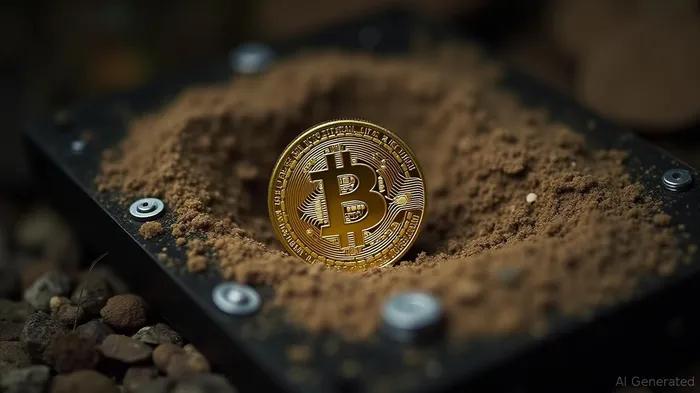
James Howells, a British IT engineer from Newport, Wales, has officially ended his 12-year quest to recover a hard drive containing 8,000 Bitcoin. The drive, discarded in a landfill in 2013, was estimated at $600,000 at the time but is now worth approximately $944 million, given Bitcoin’s current valuation of around $118,000 per coin [1]. Despite multiple attempts using advanced technology and partnerships with investment firms, Howells has concluded that the device is irretrievable [2].
Howells first engaged with Bitcoin in 2008, mining between 400–800 BTC daily using a Dell XPS laptop. By 2009, he was among the first five miners of the digital assetDAAQ--. The laptop eventually stored over 32 Kilobytes of encrypted private keys, representing a massive Bitcoin accumulation [1]. The accidental disposal of the drive in 2013 marked the beginning of a long and ultimately unsuccessful search. The hard drive is buried under 25,000 cubic meters of waste at the Newport landfill, with local authorities citing environmental risks and the device’s potential degradation as reasons to block retrieval efforts [1].
His story, often compared to the infamous "Bitcoin pizza" transaction, has become a key anecdote in the cryptocurrency community. It underscores the early-stage risks of digital asset management, where secure storage solutions and recovery protocols were not yet established [2]. Many early adopters lost significant holdings due to similar issues, making Howells' case a cautionary tale for modern investors. The incident highlights the critical importance of proper key management and the emergence of decentralized storage solutions that now dominate the market [1].
The recent surge in Bitcoin’s price has heightened the symbolic value of the lost hard drive. Analysts have pointed to two macroeconomic factors influencing Bitcoin’s trajectory: the U.S. Dollar Index (DXY) and the global M2 money supply. Both currently favor Bitcoin, with the DXY declining and M2 reaching record levels. These indicators suggest potential for further price appreciation [4]. However, the market remains volatile, with sharp swings observed in 2025. Investors must balance the potential for growth with the risks of regulatory changes and inflationary pressures. The likelihood of Federal Reserve rate cuts and broader monetary easing could support Bitcoin’s upward trend, though the correlation between macroeconomic shifts and crypto performance is not guaranteed [4].
Howells’ story also reinforces the narrative of Bitcoin as a store of value. The inability to recover lost coins highlights the asset’s inherent scarcity, a key driver of demand as institutional adoption grows and central banks expand liquidity [4]. Unlike traditional assets, Bitcoin’s immutability means that lost coins are permanently gone—a characteristic that has become increasingly relevant in the evolving crypto landscape [1].
As the search for the hard drive concludes, Howells’ experience serves as both a personal tragedy and a vivid illustration of the maturing digital asset industry. The lessons drawn from such cases are expected to shape the development of more secure and user-friendly storage solutions in the future [1].
Sources:
[1] DecaturMetro. (2025). Man abandons 12-year search for lost hard drive. https://www.decaturmetro.com/man-abandons-12-year-search-for-lost-hard-drive-containing-e742-million-in-bitcoin/
[2] Instagram. (n.d.). James Howells, a British IT engineer from Newport, Wales. https://www.instagram.com/p/DM6MIhsvFen/
[4] Nasdaq. (2025). These 2 indicators suggest Bitcoin could soon double. https://www.nasdaq.com/articles/these-2-indicators-suggest-bitcoin-could-soon-double

Stay ahead of the market.
Get curated U.S. market news, insights and key dates delivered to your inbox.


AInvest
PRO
AInvest
PRO



Comments
No comments yet