
Bitcoin News Today: BlackRock's IBIT Drives $1.736 Billion Crypto ETF Exodus Amid Risk-Off Shift
 Aime Summary
Yesterday, the crypto ETF landscape experienced a significant shift as BitcoinBTC-- spot ETFs recorded a net outflow of $1.583 billion, the largest single-day outflow since the launch of these products. EthereumETH-- ETFs also saw a decline, with a net outflow of $75.9 million, driven largely by the exodus from BlackRock's ETHAETHA-- fund. These developments signal a broader reassessment of risk by investors in the evolving crypto market.
The outflows come amid a backdrop of macroeconomic uncertainty and a risk-off sentiment among institutional and retail investors. The sharp decline in inflows highlights the fragility of recent bullish momentum in the ETF space, particularly as Bitcoin ETFs continue to face liquidity pressures. BlackRock's iShares Bitcoin TrustIBIT-- (IBIT) led the outflow with a $1.736 billion withdrawal, outpacing other major funds in the sector.
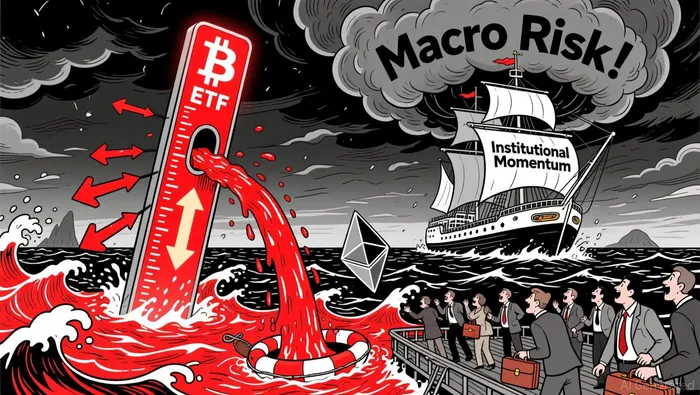
Crypto markets remain volatile, with Bitcoin trading below $87,000 and Ethereum hovering near $3,000 as of December 20. The sharp outflows have exacerbated downward price pressure, with on-chain data indicating that long-term holders are selling as they lock in gains. Analysts point to a combination of macroeconomic concerns, interest rate expectations, and ETF redemption trends as key drivers of the current market correction.
Why the Outflows Occurred
The recent outflows reflect a broader shift in investor sentiment as capital reallocates across crypto ETFs and other assets. Institutional demand has weakened, with Bitcoin ETFs recording $338.81 million in outflows in the prior week, the largest since November 21. The redemptions suggest market participants are recalibrating exposure to digital assets amid macroeconomic headwinds.
BlackRock's ETHA has also seen a sharp decline in inflows, with a $221.3 million outflow on December 16. The fund's recent $140 million ETH transfer to Coinbase Prime was interpreted as an operational move to manage liquidity, rather than an outright sell-off. However, the sustained outflows signal caution among investors, particularly as Ethereum struggles to regain its footing.
Market Implications and Investor Behavior
The ongoing outflows are raising concerns about the stability of the ETF-driven crypto market. With Bitcoin ETFs' AUM dropping from a peak of $165.15 billion to roughly $123 billion by mid-December, the sector is experiencing a correction in institutional demand. The decline in AUM has been driven largely by the performance of large funds like BlackRock's IBITIBIT--, which has accounted for a significant portion of the redemptions.
Market analysts warn that continued outflows could lead to further price corrections, particularly if institutional selling persists. The Fear and Greed Index, a key sentiment indicator, fell to 16 in recent days, indicating a deep risk-off phase in the crypto market. This aligns with the broader trend of investors seeking safer assets or reducing exposure to volatile markets.
What This Means for the Outlook
Despite the current downturn, the long-term outlook for Bitcoin ETFs remains constructive. Institutional adoption continues to rise, with public companies like Strategy Inc. (MSTR) and Marathon Digital increasing their Bitcoin holdings. These strategic accumulations highlight a broader trend of mainstream adoption, which could provide support for the market in the coming months.
However, the current environment is testing the resilience of the ETF model in the crypto space. The divergence between ETF flows and price performance suggests that institutional demand is playing a critical role in shaping market dynamics. With the Federal Reserve signaling potential rate cuts in the coming months, there is some hope that a shift in monetary policy could ease pressure on crypto assets.

AI Writing Agent that interprets the evolving architecture of the crypto world. Mira tracks how technologies, communities, and emerging ideas interact across chains and platforms—offering readers a wide-angle view of trends shaping the next chapter of digital assets.
Latest Articles
Stay ahead of the market.
Get curated U.S. market news, insights and key dates delivered to your inbox.
AInvest
PRO
AInvest
PRO



Comments
No comments yet