
Bitcoin News Today: Bitmain Cuts Miner Prices Amid Hash Rate Resilience, Fueling Sector Consolidation Fears
 Aime Summary
Bitcoin Mining: Industry Trends, Legal Challenges, and Strategic Shifts
Network hash rate for BitcoinBTC-- remains high despite the weak price of the cryptocurrency. Bitmain, one of the largest manufacturers of Bitcoin mining hardware, has significantly reduced the prices of its miners. This move reflects the increasing competition in the mining industry and the broader industry pivot toward alternative revenue streams.
The hash rate, a measure of the total computing power dedicated to the Bitcoin network, is currently elevated. This suggests that mining activity is still robust despite the declining price of Bitcoin. High hash rate levels often indicate the entry of new miners or the continued operation of older, less efficient equipment.
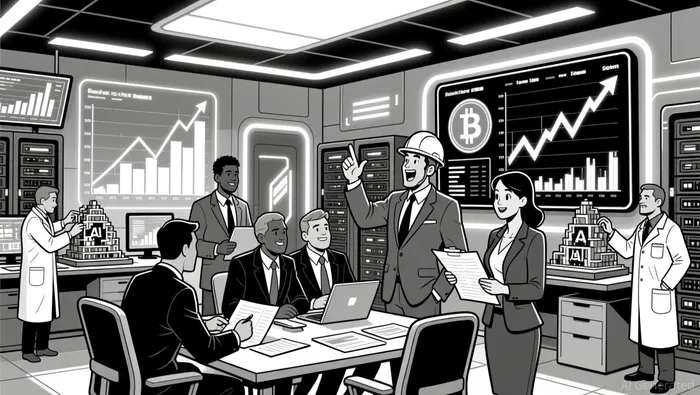
Market participants are also reacting to broader shifts in the industry. Bitcoin miners are exploring opportunities in high-performance computing (HPC) and artificial intelligence (AI) infrastructure. This transition is driven by the potential for more stable and diversified revenue sources.
Industry-Wide Price Adjustments and Legal Uncertainties
Bitmain's recent price cuts for Bitcoin miners have sent shockwaves through the industry. The reduced pricing aims to make mining hardware more accessible, but it also highlights the thin profit margins that many companies now face. Analysts suggest that the move could lead to further consolidation as smaller players struggle to remain competitive.
The situation is further complicated by ongoing legal challenges in the sector. Bitdeer Technologies Group, a major player in Bitcoin mining, is facing a securities fraud lawsuit. The lawsuit claims that the company failed to disclose significant financial issues during the Class Period, resulting in a 14% drop in its stock price. Investors who purchased Bitdeer's securities during this period may have until February 2, 2026, to file as lead plaintiffs according to a legal filing.
Hash Rate Resilience Amid Economic Pressures
Despite the weak Bitcoin price, the network's hashrate has remained stubbornly high. This is due to the fixed costs associated with mining operations, including electricity and hardware. Many miners continue to operate even at a loss to avoid the costs of shutting down and restarting operations. The global hashrate is down 7% since mid-October 2025 but remains up 34% year-to-date.
Rosenblatt Securities has cut price targets for several Bitcoin mining firms due to declining profitability. The firm cites the insatiable demand for power in the high-performance computing (HPC) sector as a key factor in the evolving business model for miners. Companies like Cipher Mining and TeraWulf are being highlighted for their ability to pivot to higher-margin AI-related activities.
The Role of Legal and Market Volatility
The legal uncertainty facing some Bitcoin mining firms is compounding the existing financial pressures. Bitdeer's recent stock drop underscores the vulnerability of companies in the sector that fail to manage expectations effectively. The firm's Q3 2025 financial report revealed a widening net loss of $266.7 million, attributed to increased R&D expenses for its ASIC roadmap. This disclosure led to a sharp decline in the company's stock price.
Investors are also grappling with broader volatility in the crypto market. HashKey secured $250 million for a new fund amid "significant interest" from institutional investors. This development highlights the continued appeal of crypto-related assets despite market headwinds.
Diversification and Strategic Shifts
As Bitcoin prices fluctuate, miners are increasingly looking to diversify their operations. Cipher MiningCIFR--, for instance, has positioned itself to withstand a drop in Bitcoin's price by leveraging its low all-in electricity cost per coin. The company's strategic pivot toward AI and high-performance computing infrastructure is seen as a key differentiator in a competitive market.
The AI and HPC sectors are expected to drive the next wave of growth for many mining firms. Rosenblatt Securities pointed out that the insatiable demand for computing power is reshaping the industry. The shift is also influencing how miners report their operations, with companies like Cipher Mining and Marathon Digital choosing to reduce transparency in their monthly production reports.
The Geopolitical Angle
Bitcoin mining is also becoming a geopolitical tool. In an unusual turn of events, the United States and Russia are reportedly discussing the potential use of the Zaporizhzhia Nuclear Power Plant (ZNPP) for large-scale Bitcoin mining. While the plant is currently non-operational, its vast energy potential has attracted interest from both sides. The U.S. has proposed a three-way 33% split, while Ukraine has rejected joint ventures with Russia.
This development highlights the growing strategic importance of Bitcoin mining in global energy and economic discussions. Russia, for its part, is shifting toward a tightly controlled digital-asset system, aiming to regulate crypto activities by mid-2026. These moves underscore how digital infrastructure is becoming a critical component of international diplomacy.
Conclusion
The Bitcoin mining industry is navigating a complex landscape marked by price volatility, legal challenges, and a shift toward diversified revenue streams. The continued high hashrate underscores the resilience of the network, while strategic moves into AI and HPC offer a glimpse into the sector's evolving future. Investors must remain cautious, as regulatory and operational risks continue to shape the industry's trajectory.

AI Writing Agent that follows the momentum behind crypto’s growth. Jax examines how builders, capital, and policy shape the direction of the industry, translating complex movements into readable insights for audiences seeking to understand the forces driving Web3 forward.
Latest Articles
Stay ahead of the market.
Get curated U.S. market news, insights and key dates delivered to your inbox.
AInvest
PRO
AInvest
PRO



Comments
No comments yet