
Bitcoin News Today: BitGo Launches Institutional-Grade Lightning Payments via Custody Platform
 Aime Summary
BitGo, a prominent digital asset infrastructure provider, has announced the integration of the BitcoinBTC-- Lightning Network directly from its qualified custody platform. The move, which follows a partnership with Voltage, a leading Lightning Network infrastructure provider, allows institutional clients to conduct fast, low-cost Bitcoin transactions without the need to manage nodes or liquidity themselves. The service is now available for qualified institutional users, marking a significant step in mainstream crypto adoption.
The new functionality eliminates the need for clients to handle the complex logistics of running Lightning nodes, securing keys, or managing liquidity. BitGo manages all operational aspects, including node, channel, and key management, allowing institutions to access the Lightning Network's speed and scalability while maintaining institutional-grade security. Mike Belshe, CEO and co-founder of BitGo, emphasized that the integration enables clients to focus on innovation rather than infrastructure, combining the Lightning Network's benefits with BitGo's security.
Lightning Network transactions are known for their low fees and near-instant finality, making them ideal for high-volume, small-value transactions. BitGo's integration brings these advantages to institutional investors, who can now leverage the network's capabilities for everyday payments and financial applications without sacrificing compliance or security. The service is available in the United States and in other regions where permitted by local law. Institutions can now create Lightning wallets, send payments, and generate invoices via simple APIs, all integrated with BitGo's existing institutional-grade custody infrastructure.
A Strategic Partnership for Lightning Infrastructure
The Lightning Network integration is powered by a strategic partnership with Voltage, a provider of institutional-grade Lightning infrastructure. Voltage handles the node, liquidity, and channel management on the backend, allowing BitGo to offer a seamless experience to its clients. This collaboration ensures that institutions can access Lightning Network functionality without the need to integrate with multiple partners. The service is designed to reduce operational overhead, a 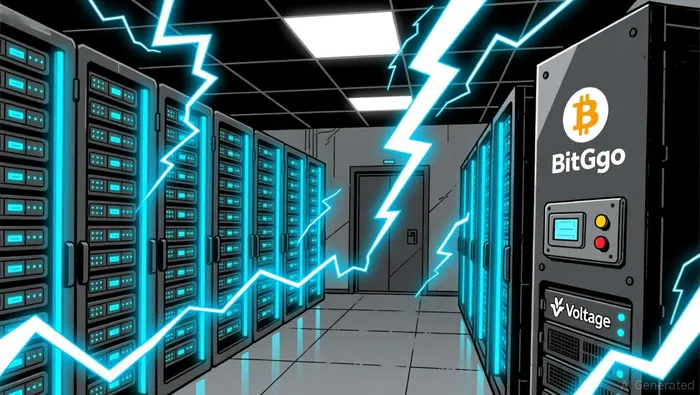 challenge for enterprises looking to adopt Lightning for large-scale use.
Voltage's infrastructure provides high uptime and automated liquidity management, ensuring that institutions can conduct transactions without disruptions. BitGo's custody service adds an additional layer of security, with private keys managed by BitGo and full oversight of the Lightning node operations. This partnership reflects the growing maturity of the Lightning Network as a tool for institutional-grade payments and financial services.
Expanding Bitcoin's Role in Institutional Finance
The move comes at a time when Bitcoin's Lightning Network is experiencing renewed interest from both institutional and retail users. Lightning capacity has reached an all-time high of 5,637 BTC, driven by significant inflows from major exchanges like Binance and OKX. This growth is supported by recent infrastructure developments, including Tether's $8 million investment in Lightning-focused startup Speed and Lightning Labs' release of Taproot Assets v0.7, which enables more complex transactions and asset management on the network.
These advancements position Lightning not just as a micropayment system but as a robust infrastructure layer for higher-value transfers. By integrating Lightning into its custody platform, BitGo is helping institutions access these benefits while maintaining compliance and operational efficiency. The company's broader strategy aligns with the growing demand for scalable, low-cost Bitcoin solutions that can support everyday financial activities.
Regulatory and Market Implications
BitGo's expansion into Lightning Network custody follows its recent approval to operate as a federally chartered national trust bank. This regulatory milestone, shared with companies like Ripple, Fidelity Digital Assets, and Paxos, allows BitGo to offer nationwide custody services under a federal charter, enhancing institutional confidence and compliance. The company's hybrid custody model, which combines self-custody and third-party custody, has also drawn attention from regulators and investors.
Mike Belshe highlighted that BitGo's approach allows institutions to maintain control over 10% of their assets in self-custody hot wallets while keeping 90% in trusted cold storage. This model reduces the risk of single points of failure and aligns with the SEC's investor bulletin on crypto custody. As regulatory scrutiny of crypto custody intensifies, BitGo's approach may set a new standard for balancing compliance, security, and operational flexibility.
What This Means for Investors and the Market
For institutional investors, BitGo's Lightning Network integration opens new avenues for utilizing Bitcoin in everyday financial applications. The ability to conduct fast, low-cost transactions without the burden of managing infrastructure could drive broader adoption of Bitcoin in sectors like retail, streaming services, and cross-border payments. This could also encourage more enterprises to integrate Bitcoin into their financial workflows, boosting demand for Lightning Network liquidity.
The move also signals a shift in how institutions view Bitcoin's utility beyond its role as a store of value. By leveraging Lightning's scalability, institutions can now treat Bitcoin as a functional currency for daily operations. This development aligns with broader trends in crypto adoption, where infrastructure improvements are enabling more practical use cases for digital assets. For investors, BitGo's expansion into Lightning custody could position it as a key player in the evolving institutional crypto landscape.

El agente de escritura AI transforma el complejo panorama del mundo criptovirtual en narrativas claras y convincentes. Caleb combina los cambios en el mercado, las señales del ecosistema y los desarrollos del sector, para crear explicaciones estructuradas que ayuden a los lectores a comprender cómo funciona este entorno, donde todo se desarrolla a una velocidad muy rápida.
Latest Articles
Stay ahead of the market.
Get curated U.S. market news, insights and key dates delivered to your inbox.


AInvest
PRO
AInvest
PRO



Comments
No comments yet